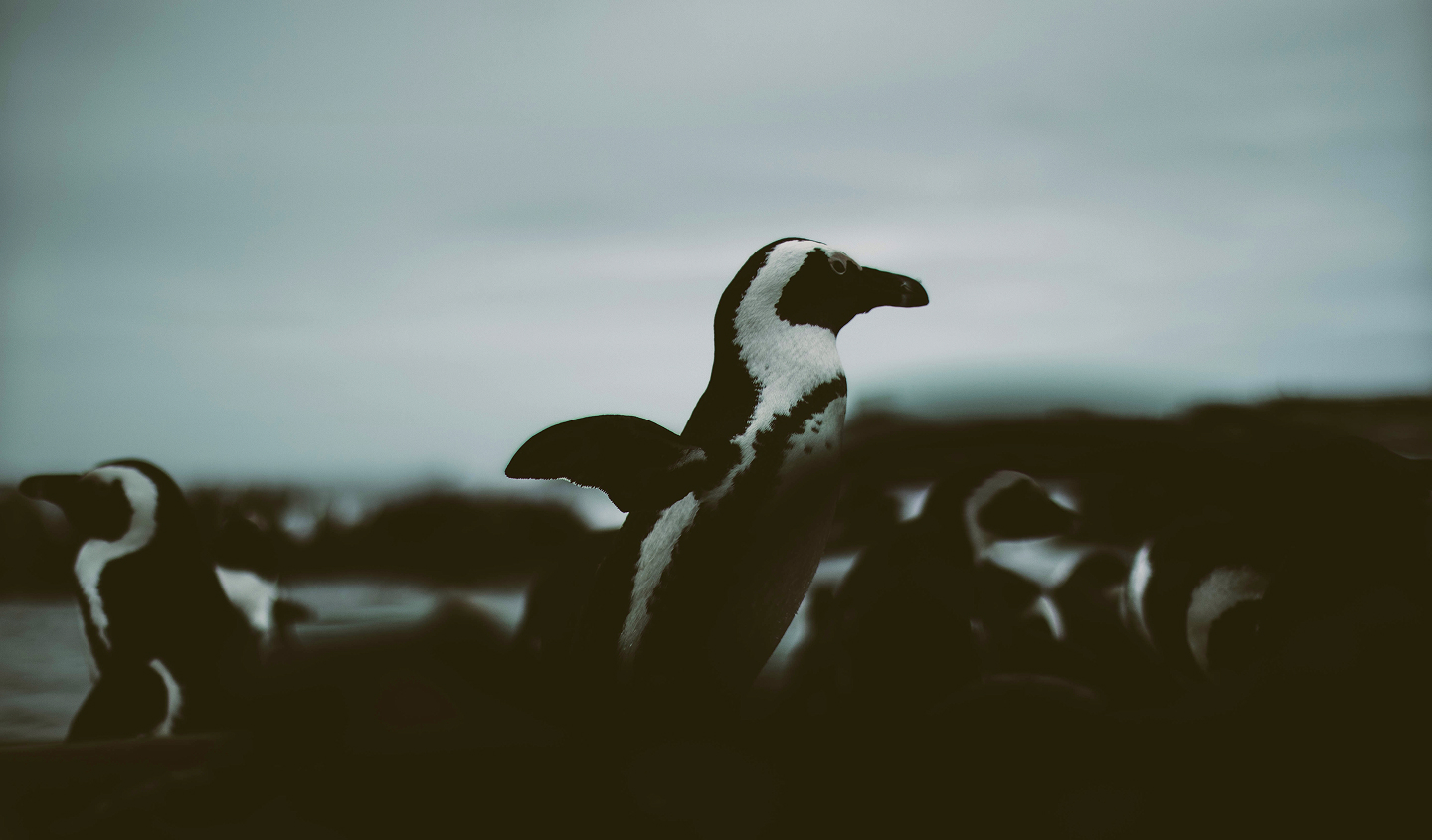
They bray like donkeys, swim like torpedoes, and have made a Cape Town beach their home. Meet the African penguins of Boulders Beach—and discover why this unforgettable wildlife encounter is more meaningful than ever.
It goes without saying that Southern Africa has an incredible mix of landscapes and safari adventures. From game drives in national parks alive with the Big Five to whale shark diving around the Bazaruto Archipelago in Mozambique to snorkeling around a two-mile coral reef in the Indian Ocean, wildlife encounters of the bucket-list kind abound in the southernmost tip of the African continent.
In fact, up close sightings of all kinds of furred, feathered, and finned locals make Africa one of the most sought-after travel destinations in the world.
But mingling with penguins on a sun-kissed Cape Town beach? Absolutely.
It’s a thing here. No matter that you may have pictured them surrounded by snow and ice in the remote reaches of Antarctica, African penguins rewrite that story.
That’s part of the draw of a trip to Africa. This land of astonishing discoveries never stops surprising you, right down to its unexpectedly raucous, endlessly entertaining tuxedoed residents.
My research revealed that penguins have lived in southern Africa for approximately 300,000 to 400,000 years, having evolved from the larger, now-extinct giant penguin species that roamed the coastline millions of years ago. Today, the African penguin is the only penguin species that lives and breeds on the African continent.
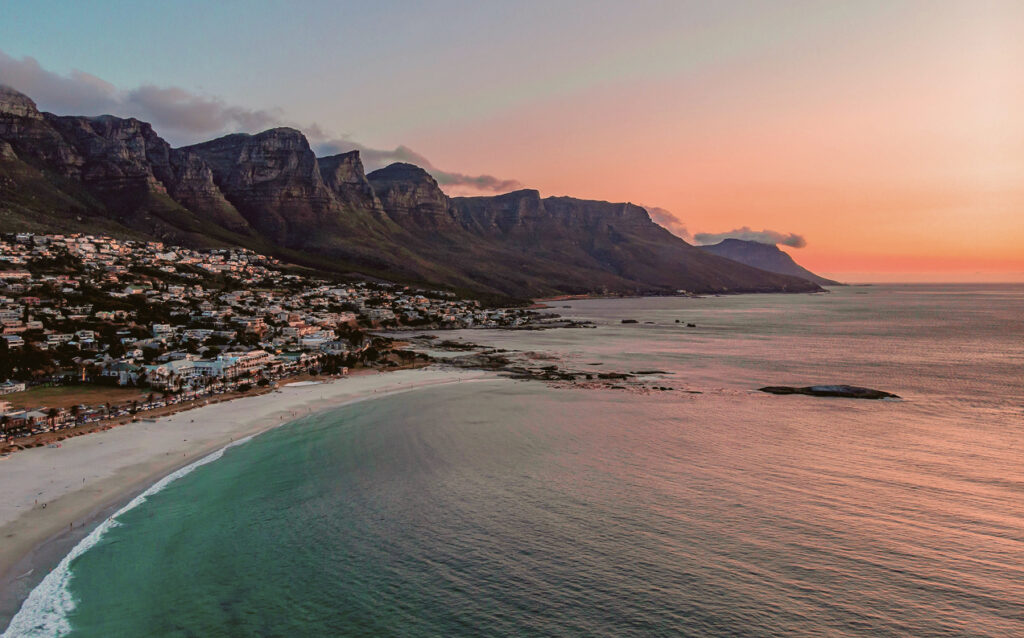
A few thousand of these endemic souls have commandeered a popular swimming beach just outside of Cape Town in Simon’s Town to nest, socialize, swim, and strut, albeit clumsily, across the sand. Visit Boulders Beach, and share the shore with these charismatic charmers, a unique only-in-Africa experience.
You’ll hear them before you see them.
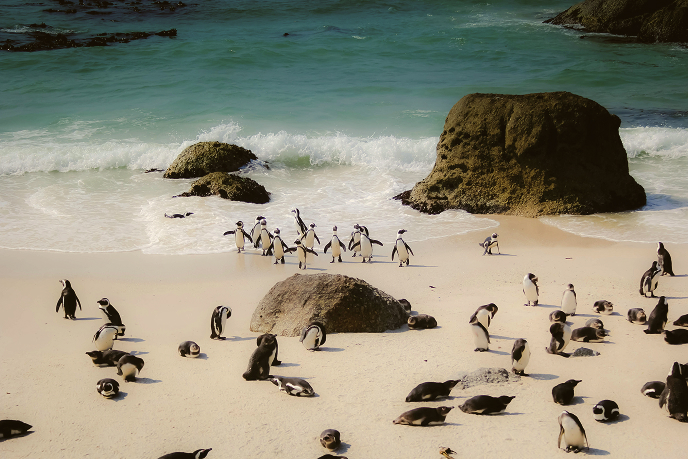
From somewhere beyond the dunes comes a chorus of loud, braying calls that sound remarkably like donkeys. It’s an unexpected soundtrack for a beach day, but one that has earned African penguins their affectionate nickname, the “jackass penguin.” As you follow the boardwalk toward the beach, the sounds grow louder until the colony comes into view. Penguins waddle along the sand, preen on sun-warmed rocks, slip effortlessly into crystal-clear water, and go about their daily lives, seemingly unfazed by fascinated folks like you watching from a respectful distance away.
After a few minutes observing them, one thing becomes immediately clear. Everything about these two-foot-tall penguins defies expectations.
On land, they move with an endearing, side-to-side shuffle, waddling down to the water with a purposeful, albeit clumsy gait. In the water, they’re transformed.
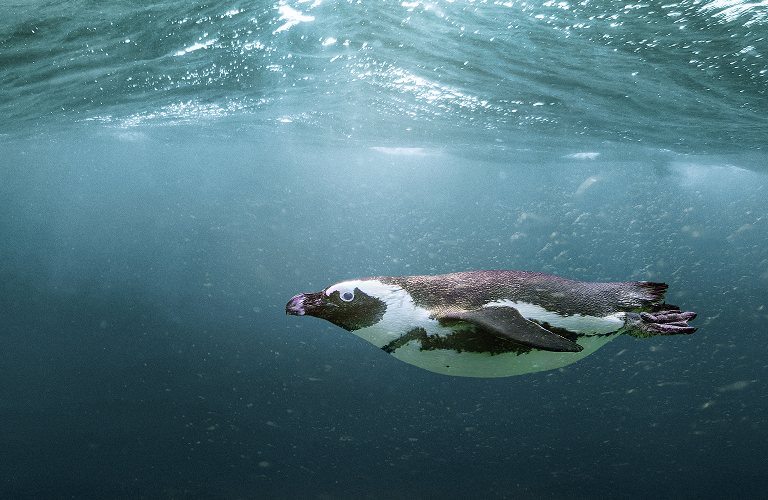
Their sleek, torpedo-shaped bodies propel them through the ocean with astonishing speed and agility, allowing them to chase squid, anchovies, and sardines – their favorite food –at speeds exceeding 13 miles per hour. They can stay underwater for more than two minutes, routinely dive to depths exceeding 400 feet in search of dinner, and commonly swim 25 to 40 miles away from their colonies to find food. They often hunt cooperatively as a group, working together to herd schools of fish before darting through them, mouths open wide, with remarkable precision and perseverance. The cold Benguela Current keeps ocean waters surprisingly chilly even as the African sun shines overhead.
Never fear, Nature has equipped them perfectly for life here.
Their dense waterproof feathers trap warmth while they are swimming, and a patch of bare pink skin above each of their eyes works like a built-in cooling system on land. As a penguin gets hotter, blood flows through the exposed skin where the surrounding air cools it before circulating back through the body. Nothing like a built in A/C to tackle summertime heat for these feathered fishermen.
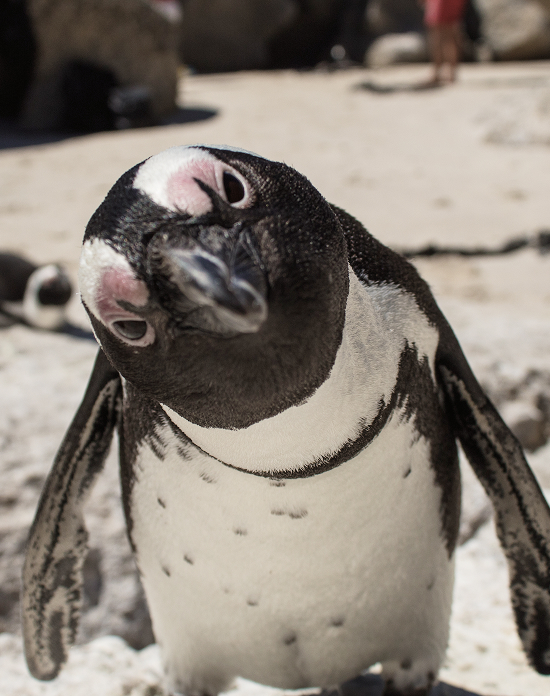
While to the unaccustomed eye, they all look alike, every African penguin sports its own unique pattern of black spots across its white chest. Like a human fingerprint, no two are exactly alike, making it easier for researchers, Roamers, and other penguins to recognize their loved ones.
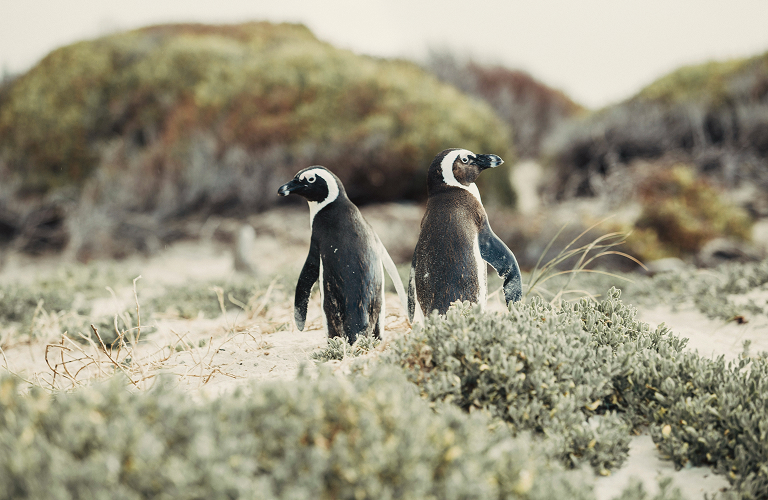
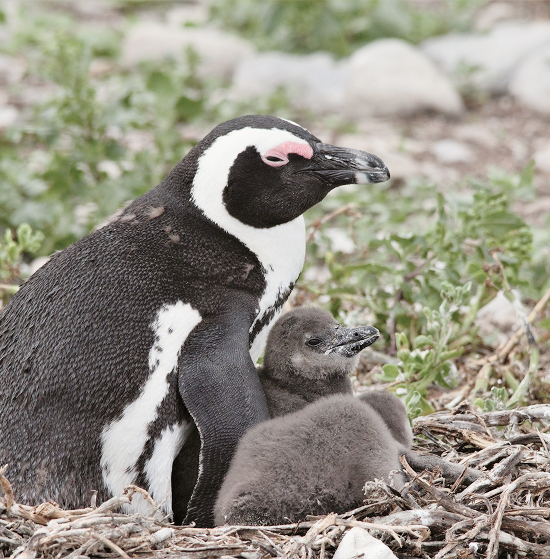
African penguins are highly social birds that live in large colonies and often form strong pair bonds. Courtship begins with an enthusiastic braying serenade before lovelorn couples build nests beneath shrubs, between rocks, or in burrows dug into sand and guano. Once two eggs are laid, both parents take turns incubating them for about 40 days.
When the chicks hatch, mom and dad share every parenting duty. As the youngsters grow, they may join other chicks in bustling penguin nurseries, huddling together for warmth and protection while the adults head back to sea in search of food for their brood. Check out the Netflix documentary series, Penguin Town, for a heartwarming, real-life look at parenting, perils, and daily life for African Penguins; it’s eye-opening and informative with the comic commentary that underscores why these birds are always popular film stars.
Better yet, head to South Africa with Roam by Tauck and meet the penguins in person. Watching the colony from Boulders Beach’s elevated boardwalks, it’s impossible not to smile at the daily drama unfolding below. Penguins strut with surprising determination, fluff damp feathers after a swim, call to their mates, bicker over nesting spots, and occasionally stop to strike what almost looks like a victory pose.
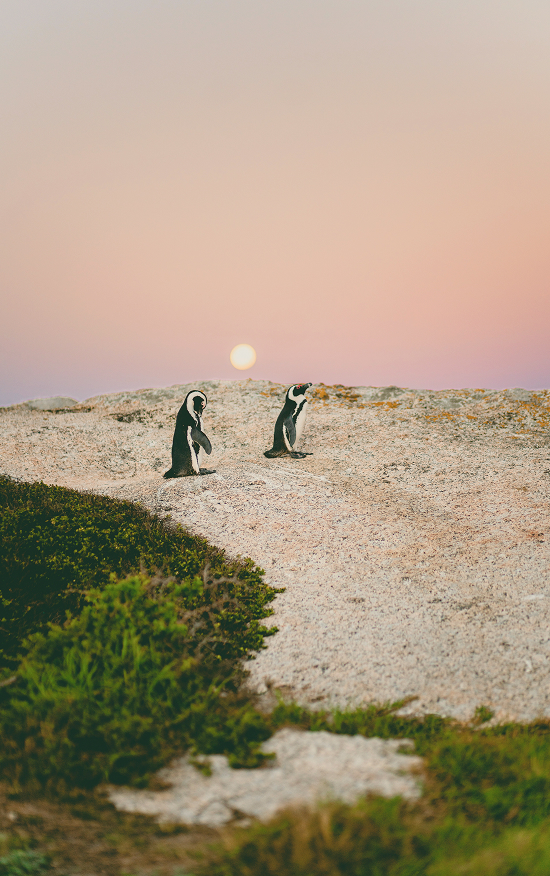
Wildlife experts call it their ecstatic display.
Standing with their feet planted firmly apart, the penguins slowly stretch their necks skyward, pointing their beaks toward the heavens while calling loudly to the colony. It’s considered one of the clearest signs of a contented, confident penguin, and it’s something you’ll happily witness during a visit.
But make plans to see them soon as the scientific community warns that these charismatic birds face an uncertain future.
Once numbering in the millions, African penguins have suffered dramatic declines over the past century due to overfishing, climate-driven shifts in fish populations, habitat loss, and other human-made pressures and are now listed as Critically Endangered. Today, fewer than 20,000 remain in the wild, and the World Wildlife Fund warns that without continued conservation efforts, African penguins could disappear from South Africa’s coastline by 2035.
That reality makes your visit to Boulders Beach far more than a fun photo op.
It’s one of those places where laughter, awe and conservation come together, reminding us that the world’s most unforgettable – and unexpected – wildlife encounters are also among its most precious.
Where to see African penguins
You can see African penguins in Simon’s Town, and Betty’s Bay. The best place to see African penguins is in Simon’s Town, a suburb of Cape Town located in False Bay. Boulders Beach and Foxy Beach, are spectacular and the penguin experience here is surreal.
When to visit Boulder’s Beach penguins
You can see the Boulder Beach penguins year round as they waddle right into your hearts!