There are some experiences that look incredible on screen. And there are others that can only be understood in person.
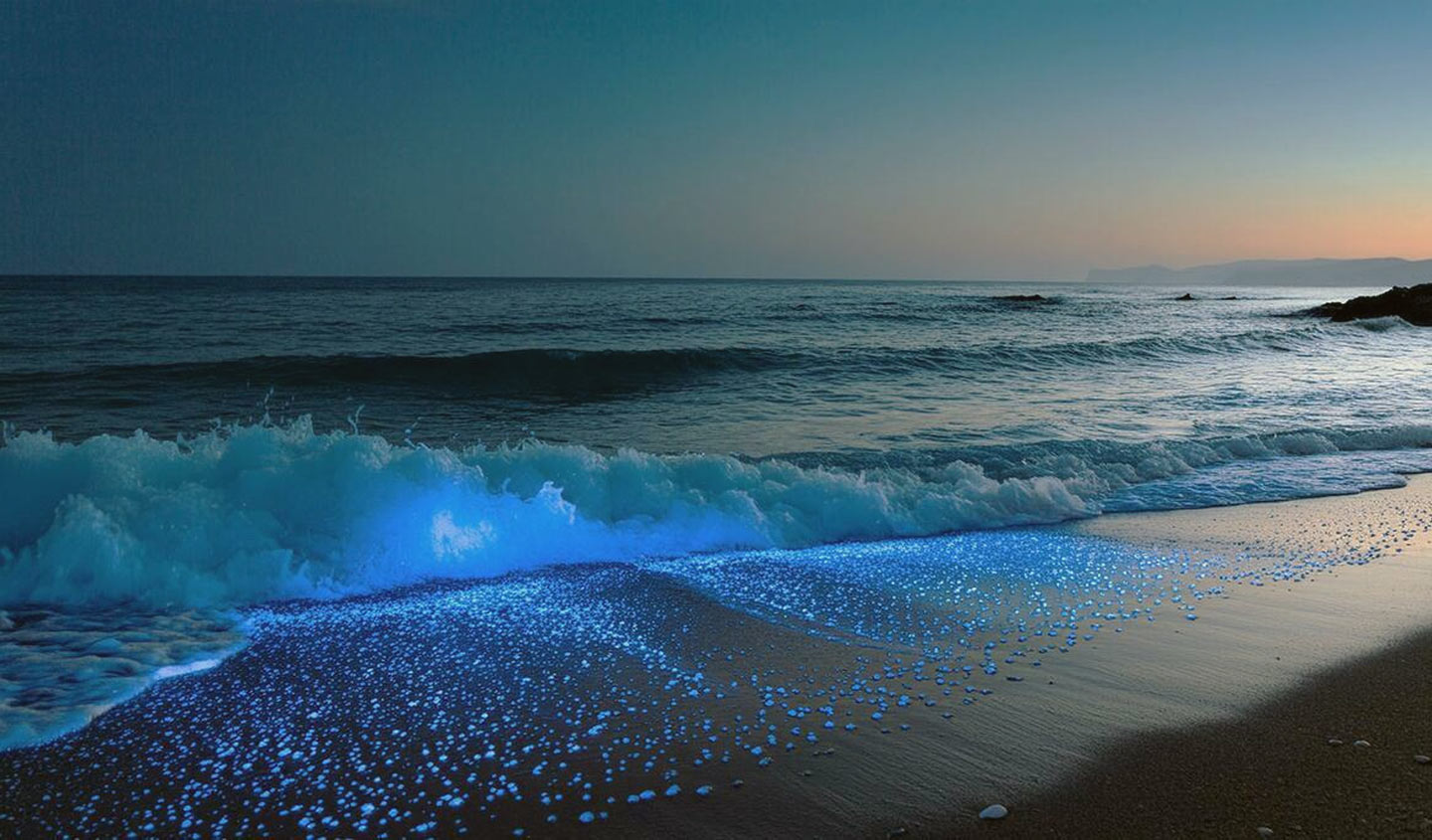
Bioluminescent kayaking on Tomales Bay falls squarely into the second category. As darkness settles in, millions of microscopic organisms light up the water with every paddle stroke, creating an almost unbelievable display of electric blue beneath the night sky.
By now, you may be wondering: Couldn’t I just pull up a YouTube video? Is it really that different in person?
It’s a fair question. As an avid YouTube watcher myself, I spend hours watching DIY projects, interviews, travel videos, home repairs, and just about everything in between. Video is an incredible way to learn, discover, and experience places from afar.
But it’s not a one-to-one replacement.
So yes, I could send you a YouTube video. You’d see the same glowing water. You’d understand what it looks like. I could even describe the way the bay sparkles around you, as if someone scattered stars across the surface of the sea.
But to answer your question.
Yes, it really is that different in person.
Because a video only lets you see it.
Being there lets you feel it.
Because a video can’t recreate the silence that settles over the water. It can’t capture the slight resistance of your paddle, or what it’s like to trail your hand through the sea and feel millions of tiny organisms drift between your fingers, each one lighting up for just an instant before disappearing back into the darkness.
That’s something you can only understand by being there. It’s like what the late, great Robin Williams said in Good Will Hunting:
“If I asked you about art, you’d probably give me the skinny on every art book ever written. Michelangelo, you know a lot about him. Life’s work, political aspirations, him and the pope, sexual orientations, the whole works, right? But I’ll bet you can’t tell me what it smells like in the Sistine Chapel. You’ve never actually stood there and looked up at that beautiful ceiling.”
And that’s the beauty of travel. It isn’t just about seeing remarkable places or checking destinations off your bucket list. It’s about the moments that stay with you long after you return home: the aroma of an unexpected meal, the view from your bedroom window, the feeling of ancient stone beneath your fingertips, or the glow of millions of tiny organisms as your paddle hits the water.
So, if you’d like, here’s that YouTube video of the bioluminescent kayaking ride.
But something tells me you’d rather experience it for yourself.
So everyone has heard of sushi, ramen, tempura, tonkatsu, and of course, the ever-popular (and increasingly expensive) Kobe beef.
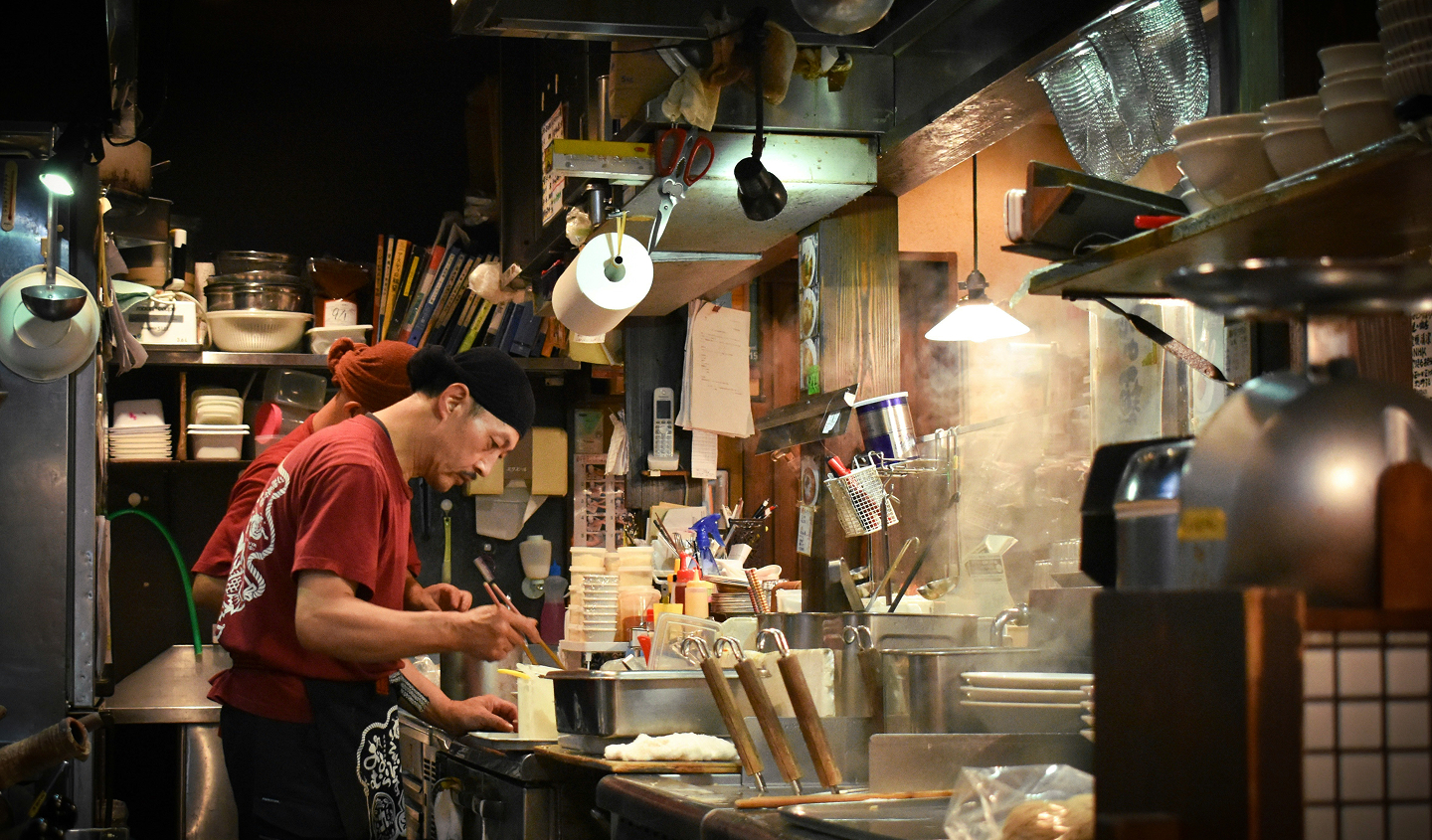
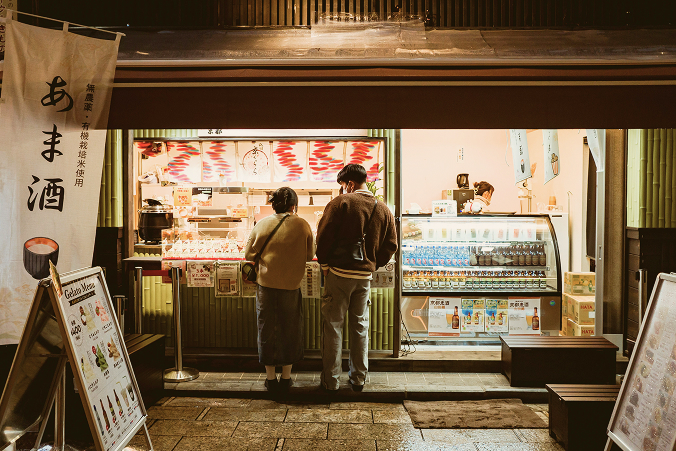
But what about the dishes you don’t hear about? The ones found at street vendors, train stations, convenience stores or small, hole-in-the-wall kitchens. The flavors that don’t always make it into guidebooks, aren’t labeled Michelin-starred and aren’t featured on the Food Network but are worth the journey on their own.
That, my friends, is the real question.
So get ready to slip into your favorite travel-day look because we’re off on a journey through Japan, just be sure to bring your appetite, because there’s plenty to savor along the way.
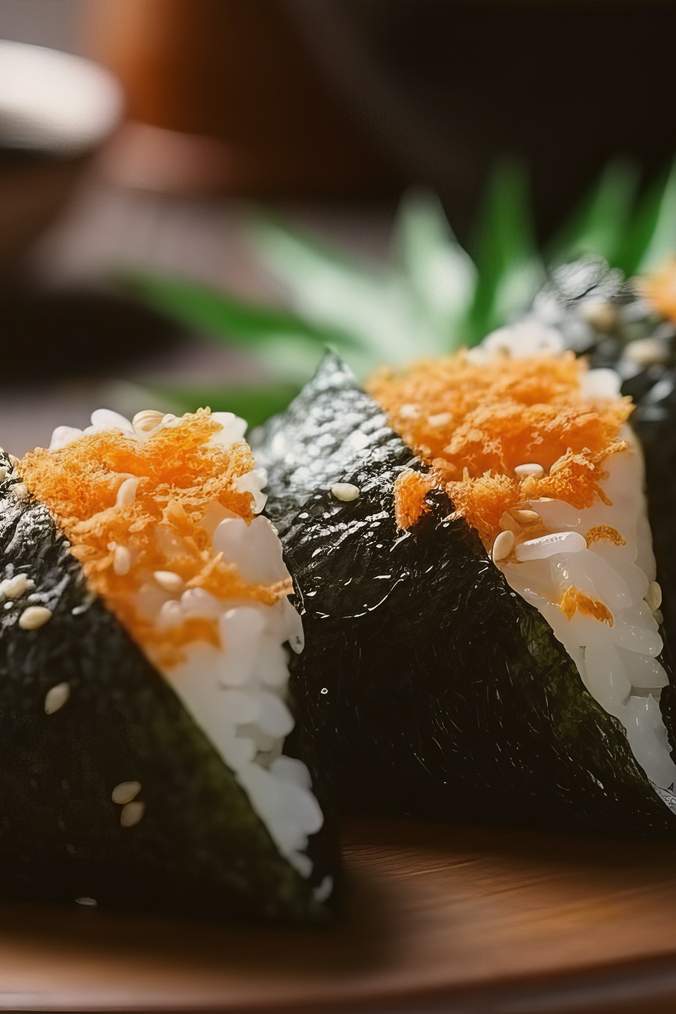
ONIGIRI (おにぎり)
WHAT IS IT?
Rice balls made from steamed white rice, typically shaped into triangles or cylinders and wrapped in nori (seaweed). Fillings vary, but popular options include salted grilled salmon, pickled plum (umeboshi), tuna mixed with Japanese mayonnaise, or simmered seaweed.
HOW DO YOU EAT THEM?
Onigiri are designed to be eaten by hand and are a common grab-and-go snack found in convenience stores, train stations, and markets across Japan.
Zunda (ずんだ)
What is it?
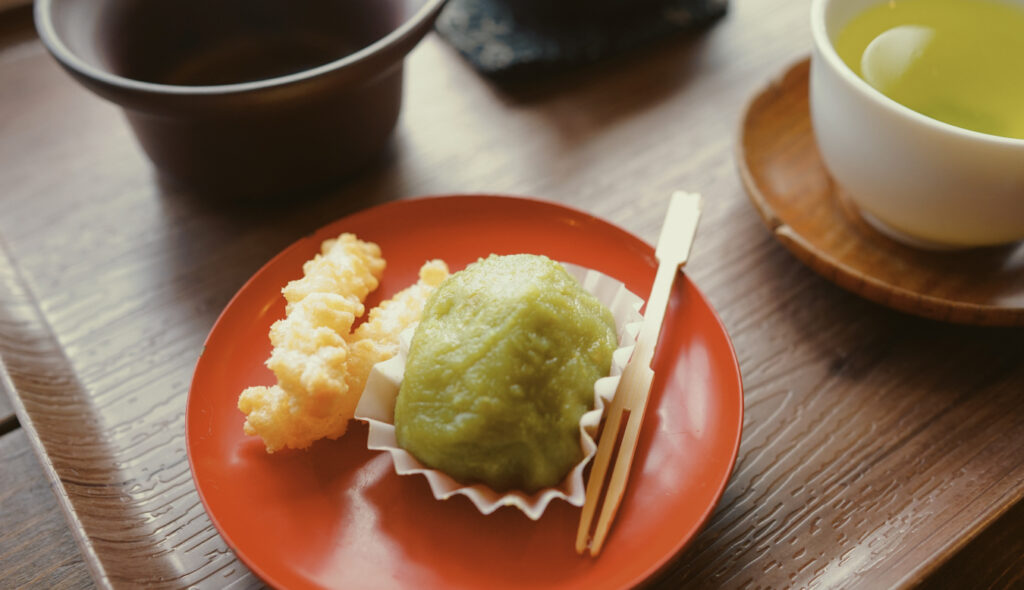
Zunda is a regional specialty made from mashed edamame. The beans are boiled, then lightly crushed and mixed with sugar and a pinch of salt to create a paste that’s both sweet and slightly savory.
How do you eat them?
Zunda is traditionally served over mochi (rice cakes), but you can also find it used in desserts like ice cream, milkshakes, and pastries.
Hitsumabushi (ひつまぶし)
What is it?
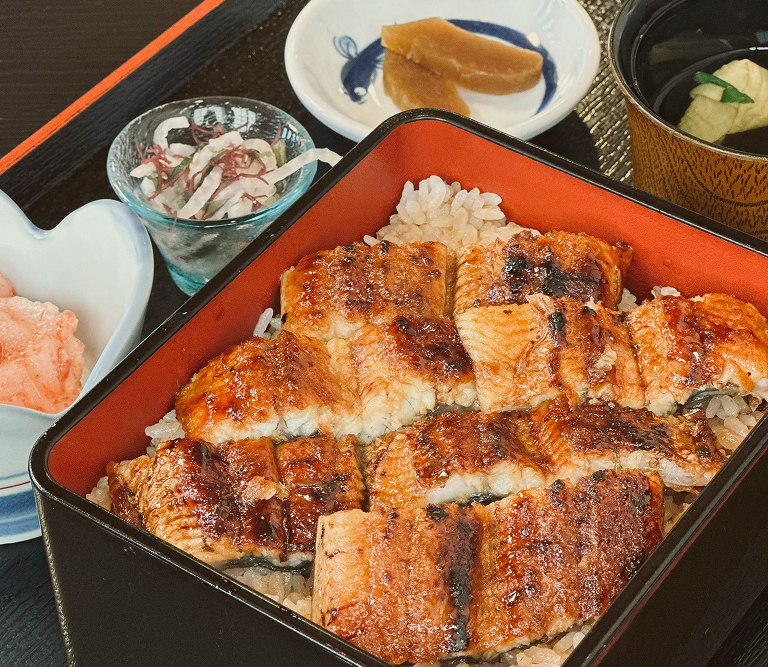
A specialty created in the city of Nagoya. Hitsumabushi is centered around grilled eel (unagi) served over rice.
HOW IS IT EATEN?
Hitsumabushi is typically divided into portions. Your first taste is meant to be enjoyed as-is with subsequent tastings meant to be enjoyed with added condiments like wasabi and green onion, and finally with hot dashi broth poured over to create a soup-like dish known as ochazuke.
Tsukemen (つけ麺)
What is it?
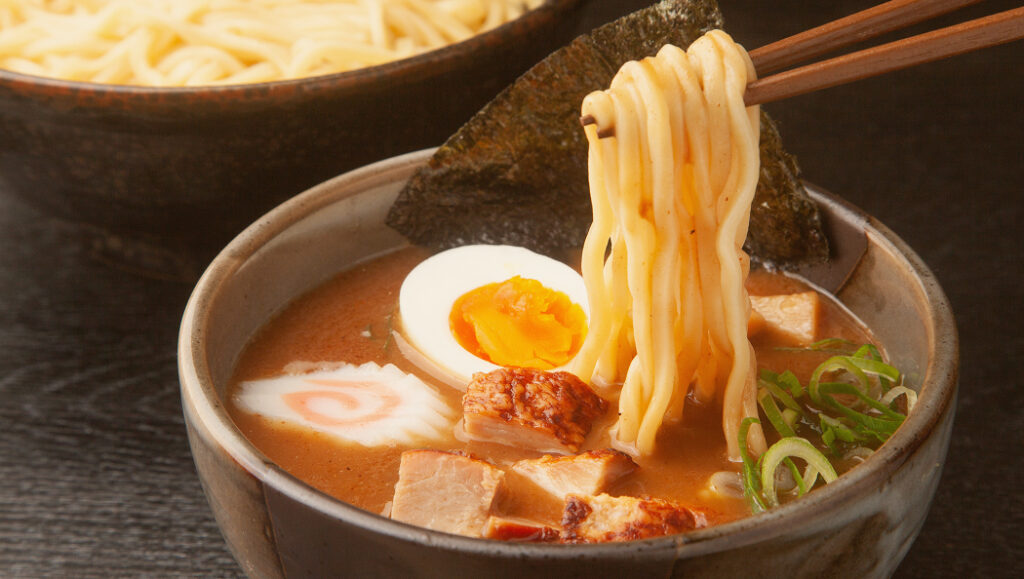
Tsukemen is a noodle dish served cold or at room temperature.
How do you eat them?
Tsukemen is served with a side of broth that is much more concentrated than typical ramen and served on the side for dipping. This allows for a stronger, richer flavor with each bite.
Okonomiyaki (お好み焼き)
What is it?
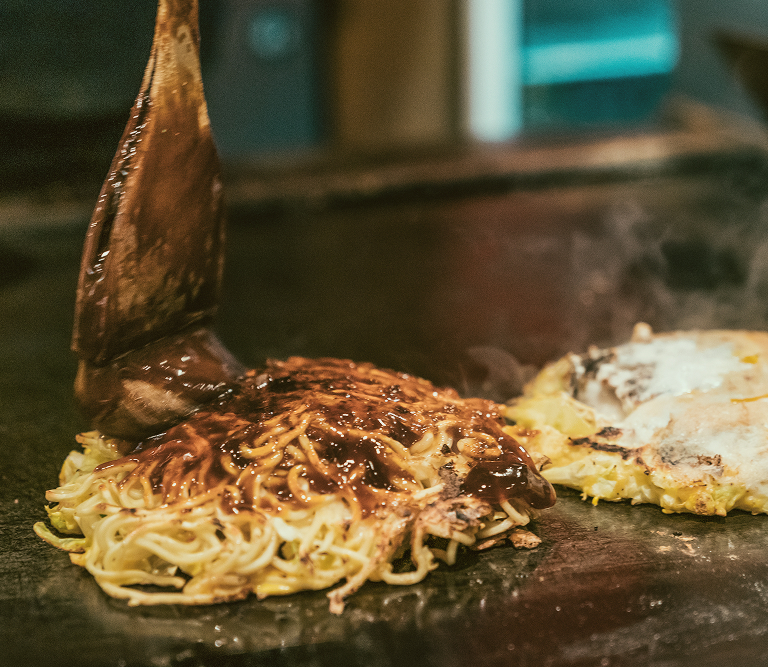
Okonomiyaki is a savory pancake made from a batter of flour, egg, and shredded cabbage, mixed with ingredients like pork belly, seafood, or vegetables. It’s cooked on a griddle and topped with a sweet-savory sauce, Japanese mayonnaise, dried bonito flakes, and seaweed powder. How do you eat them?
How do you eat it?
In some regions of Japan, it’s prepared at the table and eaten straight from the grill. In Osaka, everything is mixed into a savory pancake. However, in Hiroshima, Okonomiyaki is layered and often includes noodles, with foodies noting that the two versions feel like two completely different dishes.
Takoyaki (たこ焼き)
What is it?
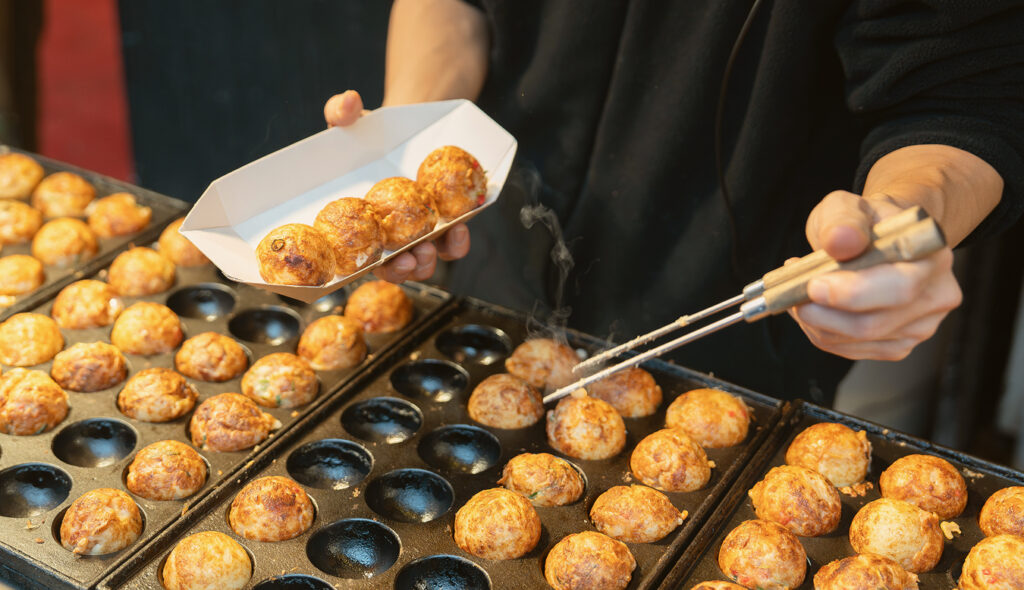
Takoyaki consists of small, round balls of batter filled with diced octopus, pickled ginger, green onion, and tempura scraps.
How do you eat them?
They’re cooked in a special molded pan, turned continuously to achieve their shape, and typically topped with sauce, mayonnaise, bonito flakes, and seaweed before being eaten hot.
These are just a few of Japan’s dishes worth exploring, truthfully there are thousands out there, waiting for you with an open mouth and an empty stomach.
Every region, every city in Japan tells its story through food. Seek out what’s local to where you are because what you taste in one place might not be replicated the same way in another.
Even the most familiar dishes reveal surprising depth. Ramen, soba, udon, each of these dishes carries its own regional identity, its own nuance, much like barbecue sauce across the United States. Travel between cities, and you’ll find entirely different expressions of the same dish.
And while Kobe beef often takes center stage, it’s only part of a much richer picture. Regions like Kagoshima, Matsusaka, and Omi each produce exceptional beef with their own distinct character and same with pork and chicken.
So, grab a guidebook, learn a few Japanese phrases and take to the streets on Tokyo, Kyoto & The Seto Inland Sea because the more you look, the more Japan reveals itself.
It’s what we sprinkle on French fries or quietly add to a dish that’s a little bland… because we don’t want to insult the host. At the end of the day, salt is just salt… right?
Wrong.
When I first started researching this article, I wondered the same thing. What actually differentiates salt? As an amateur chef myself, I knew I preferred kosher salt over table salt, and I’ve always loved the crunch of flaky finishing salt on a freshly toasted slice of sourdough. But I never really stopped to ask why.
That question is really the heart of the story.
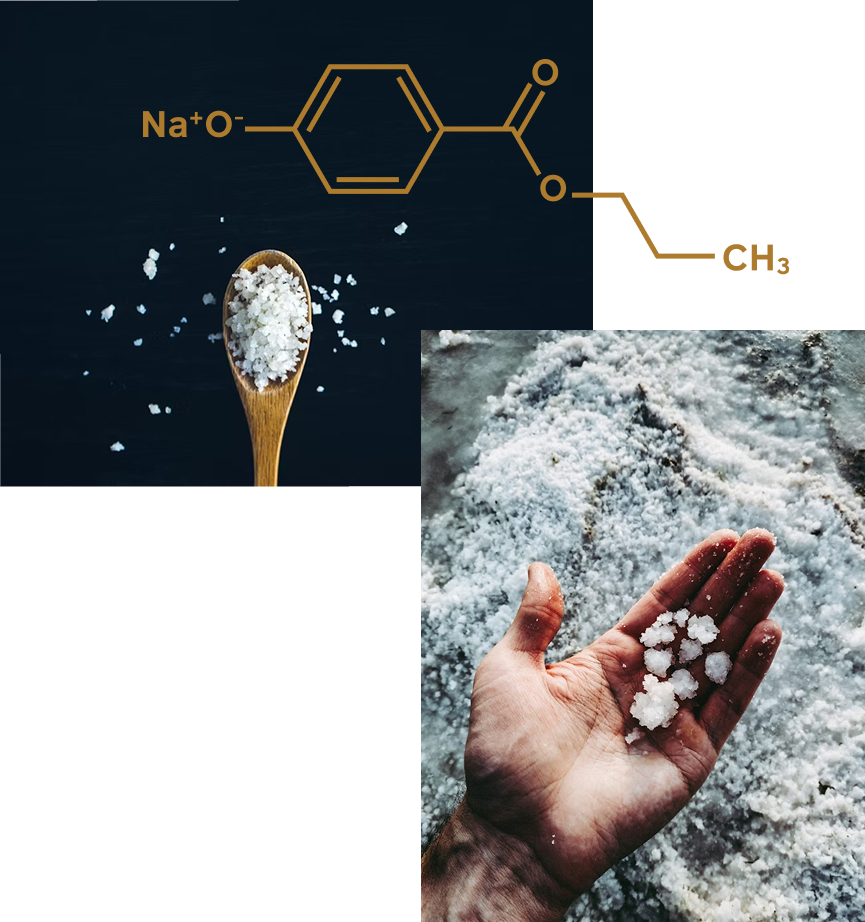
Because while all salt is technically sodium chloride (NaCl, for the science enthusiasts out there) the differences in crystal size, mineral content, and moisture can dramatically change how salt tastes and feels.
Yes, salt has texture and unbeknownst to me, it sure has personality.
The Many Personalities of Salt
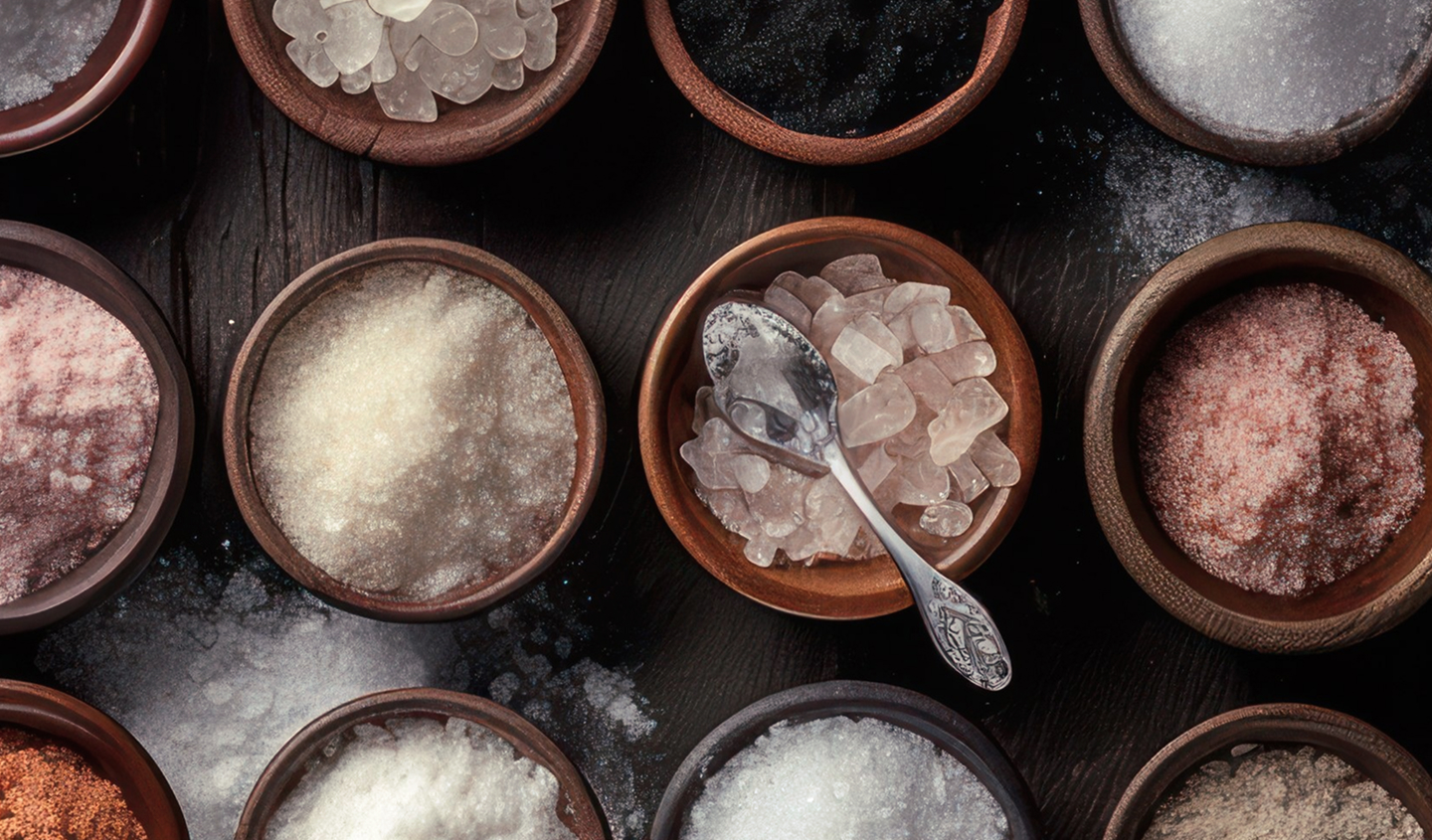
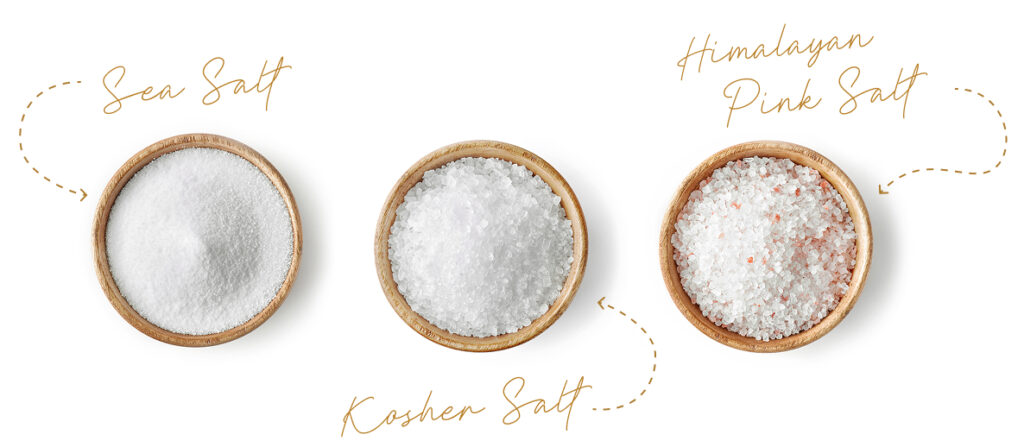
Take kosher salt, for example. It’s easily recognizable thanks to its large, irregular crystals. Because of this structure, and because it typically lacks additives like iodine, kosher salt has a clean, mild flavor.
Those larger crystals dissolve more slowly on your tongue, creating a gradual, balanced salinity instead of a sharp burst. That’s one of the reasons it’s a staple in professional kitchens around the world. Without additives, it also avoids the slightly bitter or metallic aftertaste that iodized salts can introduce.
Then we have sea salt.
Sea salt is produced through the evaporation of seawater and often contains trace minerals like magnesium, calcium, and potassium. These subtle mineral notes give sea salt a slightly more complex flavor, sometimes even a faint briny quality allowing you to really indulge in that “ocean flavor.”
Sea salt can be fine or coarse. Fine grains dissolve quickly, making them ideal for sauces, soups, and baking. Coarse sea salt, on the other hand, is perfect as a finishing touch, adding a pleasant crunch to grilled vegetables, roasted meats, or fresh salads.
And of course, we have to talk about everyone’s favorite pink celebrity: Himalayan pink salt.
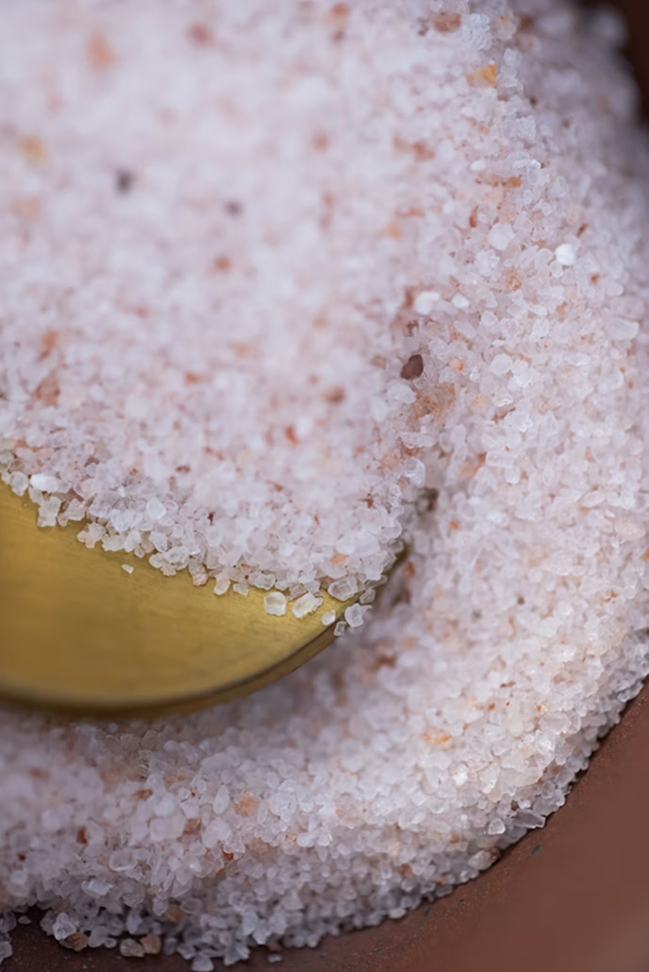
This vibrant salt has surged in popularity over the past decade. Its rosy hue comes from trace amounts of iron oxide trapped within the crystal structure. Beyond its eye-catching color, Himalayan salt carries a slightly earthy flavor and is often used as a finishing salt, both for taste and presentation. That pop of pink can turn a beautifully plated dish into something even more visually striking.
Does It Really Matter?
At this point you might be thinking:
“Okay, this is interesting, but it’s still just salt.”
But salt is no different from many other ingredients we obsess over in the culinary world.
You can taste the difference between a $25 bottle of vodka and a $200 one. Between a standard steak and a beautifully aged cut. Between supermarket vegetables and produce grown in someone’s backyard garden.
Salt works the same way.
Better ingredients elevate the entire experience.
THE ROLLS-ROYCE OF SALT
Which brings us to what some chefs call the Rolls-Royce of salt.
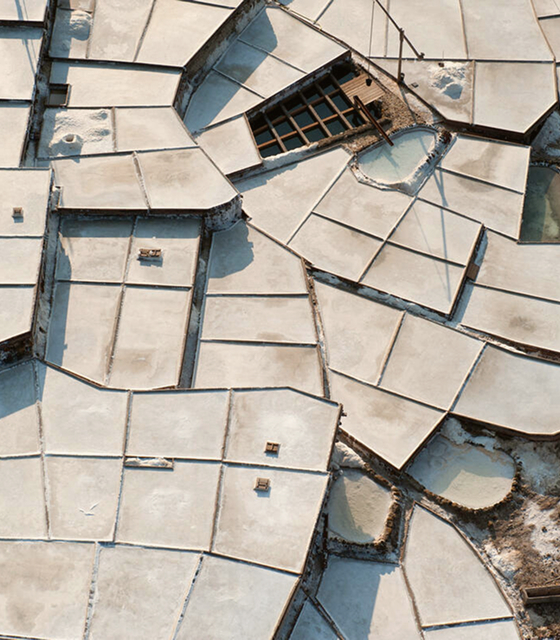
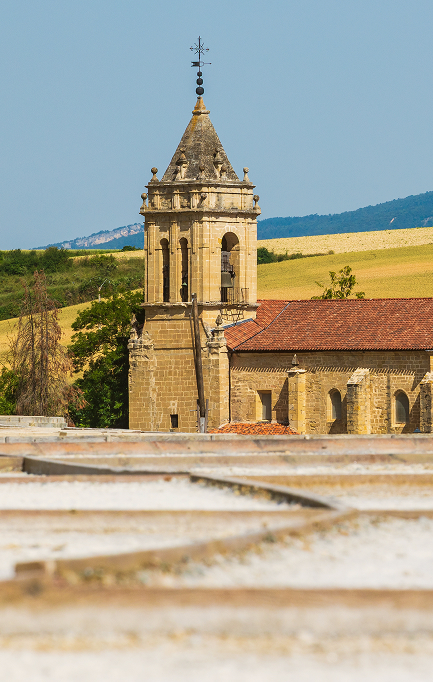
Hidden in Spain’s Basque Country lies Añana Salt Valley, a remarkable landscape where salt has been harvested for more than 7,500 years. These ancient salt flats remain in continuous operation today, though the site is now protected as both a cultural landmark and a living tradition.
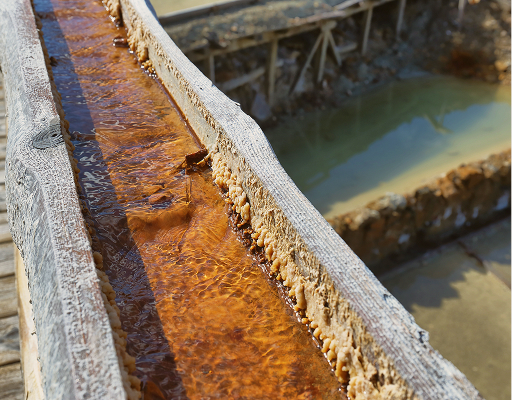
Mineral-rich spring water flows through a network of wooden channels and terraces before slowly evaporating under the sun, leaving behind delicate salt crystals.
The result is Sal de Añana, one of the rarest and most highly regarded salts in the world.
This artisanal spring salt is prized for its clean, bright flavor and delicate texture. Its crystals often form light flakes that first crunch gently, then dissolve smoothly on the tongue, enhancing food rather than overpowering it.
Because production remains small and traditional, Sal de Añana is rarely found in supermarkets. Instead, it is most often used in high-end restaurants or purchased directly at the valley itself.
But what makes Añana truly special is the community behind it.
Generations of local families have worked these terraces, maintaining centuries-old harvesting methods and preserving the valley’s unique cultural heritage. Many of the workers today come from families who have harvested salt here for generations, keeping the tradition alive while ensuring the landscape remains relevant for the future.
What Does a Salt Tasting Feel Like?
A salt tasting might sound unusual, but it’s surprisingly like a wine or beer tasting.
You notice the texture of the crystals, the way they dissolve on your tongue, and the subtle differences in flavor, whether mineral, briny, earthy, or bright.
Some salts feel delicate and airy. Others deliver a bold crunch. Some dissolve instantly, while others linger.
It’s as much about texture as it is taste.
And like any tasting, the key is simple: slow down and pay attention.
A Taste of Spain
When you venture on our San Sebastián & Rioja journey, you’ll have the exclusive opportunity to visit Añana Salt Valley and take part in a salt tasting of one of the rarest salts in the world.
Standing among terraces that have been producing salt for thousands of years, it becomes clear that something as small as a grain of salt can carry centuries of craftsmanship, tradition, and flavor.
So the next time you’re making a margarita with a salted rim, maybe don’t reach for the table salt.
Instead, ask yourself a better question:
Fine or coarse? Kosher or pink Himalayan?
Because once you start tasting the difference… salt is never just salt again.
You’ve seen the masks. You’ve heard the rumors. You may have even rolled your eyes.
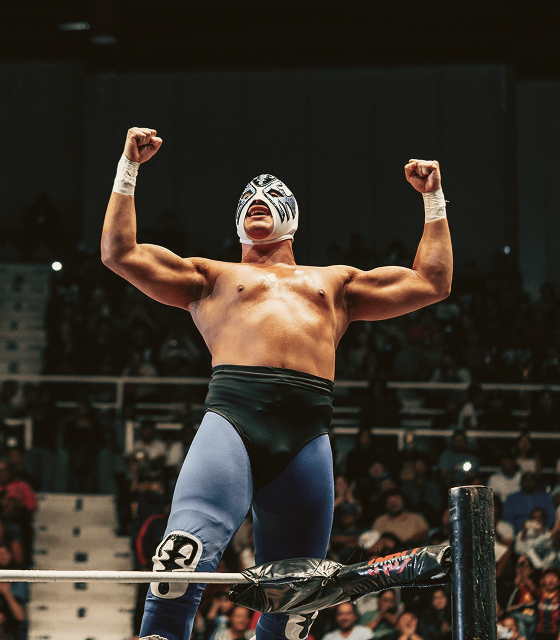
Lucha Libre, Mexico’s beloved brand of professional wrestling, can seem, at first glance, like pure spectacle. Flashy costumes. Over-the-top characters. Heroes and villains locked in gravity-defying combat. It begs the question: is it authentic cultural expression… or just a glorified tourist trap? To answer that, we need to step into the ring… and back in time.
The Birth of a Legend
The roots of Lucha Libre stretch back to the mid-19th century, when Mexico was under French intervention. French soldiers practiced Greco-Roman wrestling during their time in the country, and the Mexican public took notice. That European style began to evolve, taking on new life as it blended with local flair, athleticism and storytelling.
By the early 20th century, wrestling troupes from Italy and beyond were touring Mexico, introducing new techniques and rivalries that captivated growing audiences. But it was in 1933 that Lucha Libre truly was born. Enter Salvador Lutteroth, the visionary founder of Empresa Mexicana de Lucha Libre (EMLL), the country’s first major wrestling promotion. From there emerged legends the likes of El Santo, Blue Demon, and Mil Máscaras, masked icons who transcended the ring to become folk heroes and cultural symbols in the Lucha Libre world.
more than a match
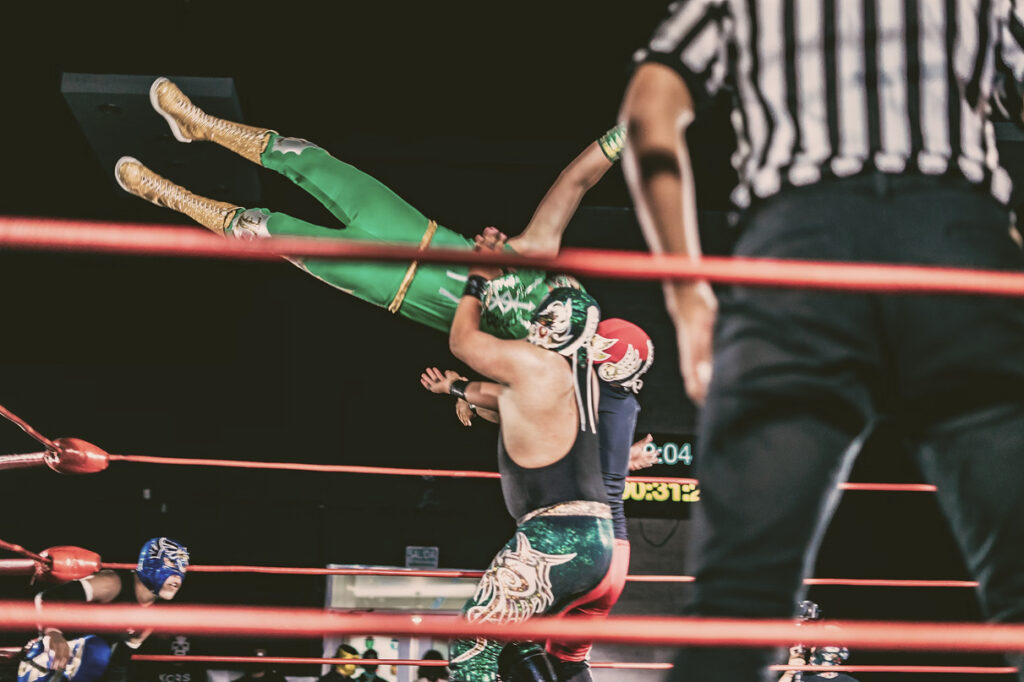
Today, Lucha Libre is defined by speed, athleticism and theatricality. Luchadores soar from ropes in high-flying arcs. Técnicos (the “good guys”) battle rudos (the “bad guys”) in a choreographed dance of drama and acrobatics. Masks are sacred, representing identity, honor, and sometimes even family lineage.
And yes, it’s loud.
It’s chaotic.
It’s emotional.
But beneath the camp and comedy is something deeply embedded in Mexican culture. For generations, families have packed into arenas on Friday nights, cheering for their heroes, booing the villains, and passing down allegiances like heirlooms. The pageantry may feel playful, but the passion is real.
So… Is It Cheesy?
Let’s be honest. It can feel a little… cheesy at first glance. The masks are bold. The storylines dramatic. The theatrics unapologetic.
But here’s the thing, so is opera. So is ballet. So is Broadway. Lucha Libre is Mexico’s live-action telenovela, its athletic theater, it’s a working-class epic no different than the works of Shakespeare or Homer. It reflects themes of justice, rebellion, honor and humor. It’s both parody and poetry. And like all great cultural traditions, it knows not to take itself too seriously.
A night out in Mexico City
On our tour through Mexico City, it’s one of the rare group experiences that unfolds after sunset, and that’s part of the magic.
The neon lights flicker on. The crowd hums with anticipation. Vendors weave through the aisles with snacks and cold cervezas. You settle into your seat as the music blasts and masked warriors make their grand entrances.
It’s not just a show; it’s a night out.
Much like catching a playoff game back home, attending Lucha Libre is about energy, camaraderie and letting yourself be swept up in something communal. It’s laughter. It’s suspense. It’s cheering shoulder to shoulder with locals who’ve been coming for years. And on a Roam by Tauck tour, it becomes something even more special, a shared memory. A story you’ll retell over tacos the next day.
The Verdict
So, is Lucha Libre a tourist trap?
Only if you stay on the surface.
Look closer and you’ll find a living, breathing piece of Mexican heritage—equal parts athleticism, artistry and attitude. It may wear a mask, but its cultural significance is anything but hidden.
Lean in. Embrace the drama. Cheer for the técnico. Boo the rudo.
And let yourself have a little fun.
Because after all, what’s travel without a bit of spectacle?
My wife and I walked into the 1 Michelin-starred Otto Geleng on a warm summer night in early August. We had just gotten married the week prior, and she had booked this experience as a surprise to celebrate our wedding.
The restaurant welcomed us with a panoramic view of the Sicilian coastline. Jazz played softly. Silverware clinked gently against porcelain. A quiet hum of conversation hovered in the air.
Upon arrival, the maître d’ welcomed us and led us to a reception table. There, with menus in hand, we were asked to select our evening’s meal, so that the experience could begin the very moment we sat down.
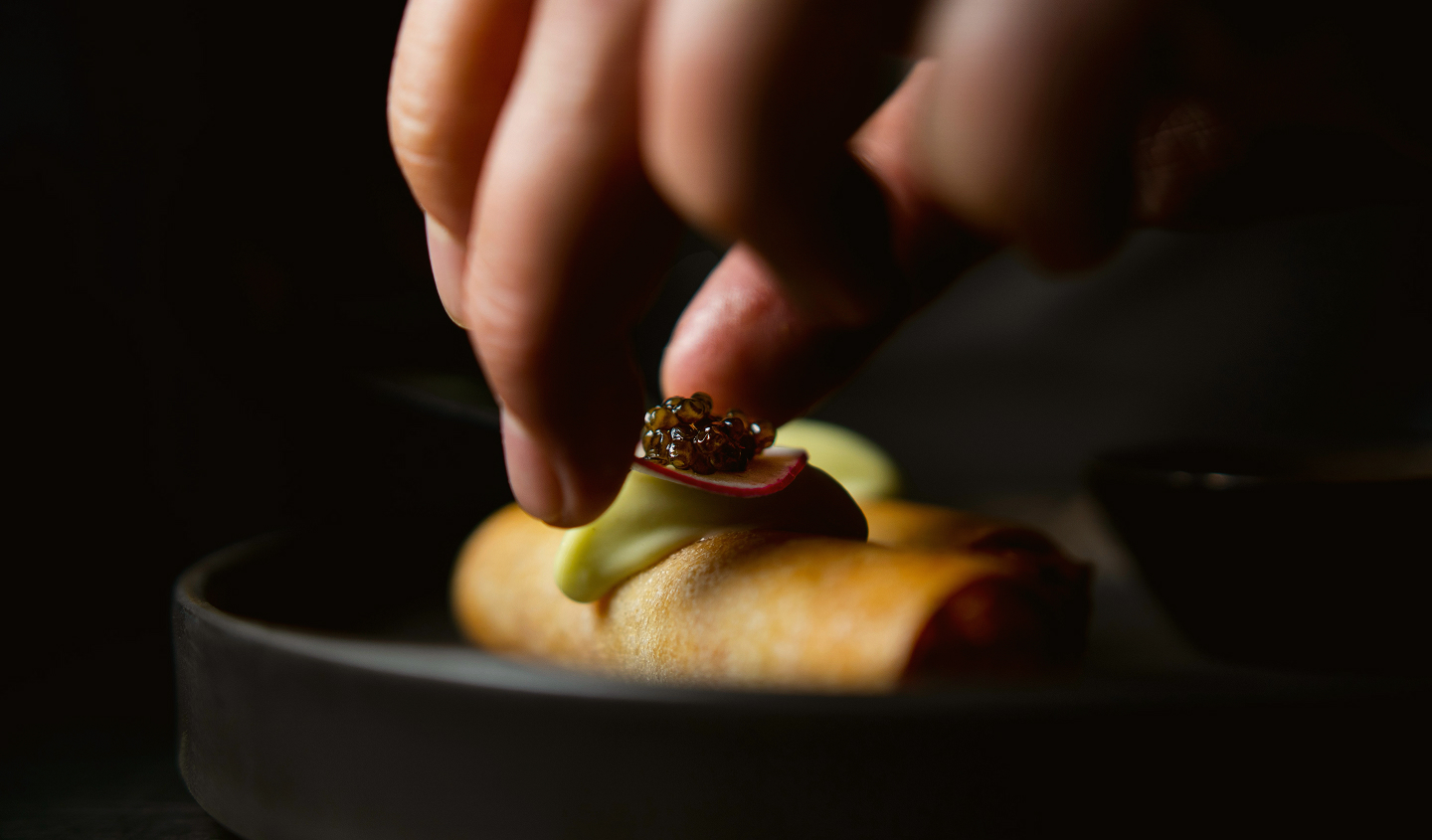
We were welcomed with a complimentary cocktail and an array of small bites designed to awaken the palate—assorted nuts, puffed chips, and delicate arancini. Each flavor offered a preview of what was to come, a savory overture that hinted at the experience ahead. In that moment, I knew: this would be no ordinary meal.
Soon after, we were escorted to our table. As we settled in, the Sicilian sunset unfolded before us—marking the end of the day, and the beginning of something entirely new.
Our meal began with the introduction of the water menu. Yes, you read that right. A water menu. 16 different types of water, 8 still and 8 sparkling, from across the world.
There was not a doubt in my mind. We stayed true to the spirit of Sicily and went with a bottle of sparkling water from Mt. Etna.
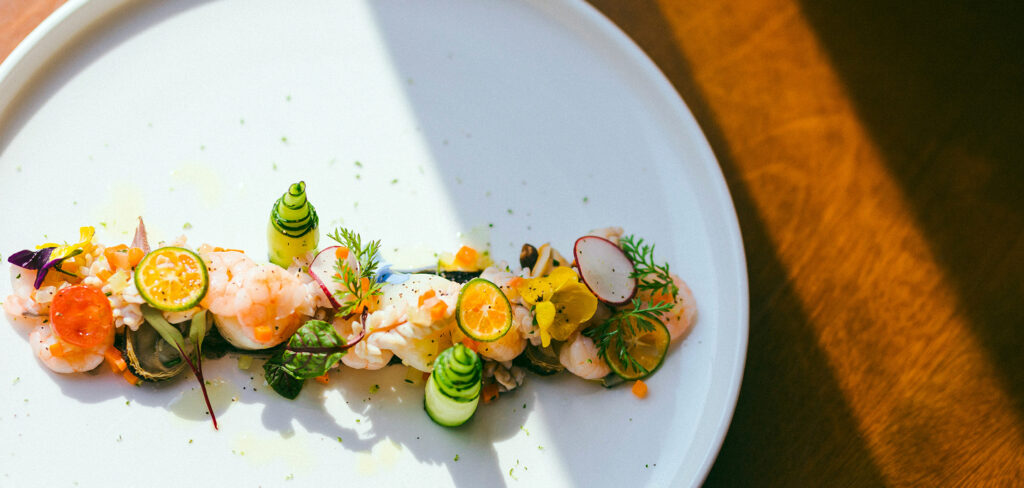
From there, the meal unfolded like a symphony. We’d selected the fish menu, which, course by course, painted a portrait of the Sicilian coast. The cuisine spoke in poetic, confident strokes—each ingredient chosen with purpose. Every dish told a story of place, of season, of the creative soul behind it all: Chef Roberto Toro.
Scallop – mussel emulsion, cucumber, garlic
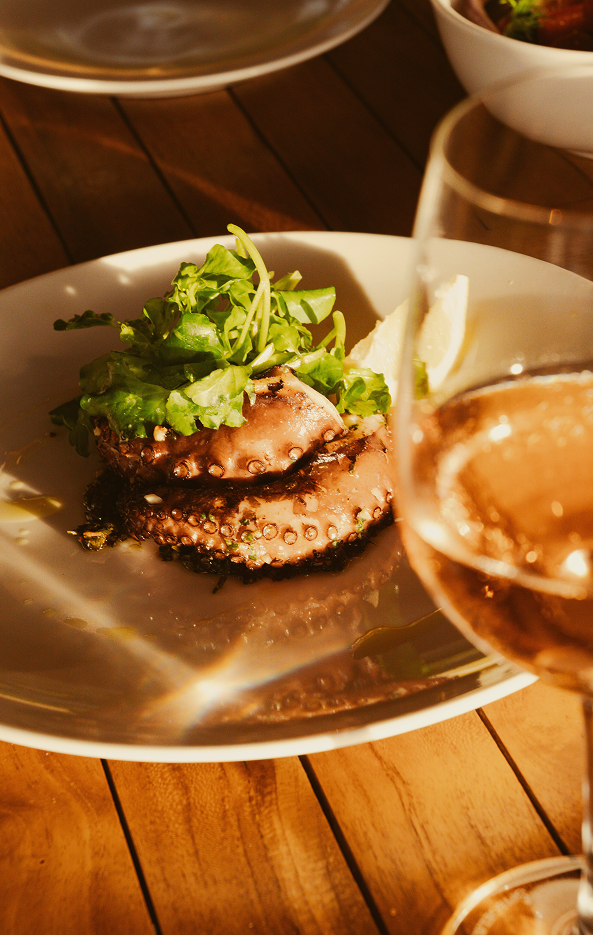
Octopus – escarole, spring onion, wild fennel
Linguine -roasted pepper extract, shrimp, sesame
Amberjack -fennel, leche de tigre, sea grape
Entre temps: Lemon – basil, bergamot
It was an experience we would never forget.
“Food is our common ground, a universal experience”
James Beard
Since I was a kid, I’ve had a love and appreciation for fine dining. As an avid Top Chef fan, I fondly remember my father and I spending hours on the couch talking about the different dishes, chefs, flavor combinations and challenges. I remember thinking, “ew that’s gross,” or, “that looks good, I’d probably try that.”
That early curiosity evolved into a deeper fascination with the world of fine dining—the precision, the artistry, the unspoken language between technique and taste.
Today, food is much more than just a plate (or bowl, ramekin, spoon) of food, it’s become an expression of self, where chefs become artists and dishes are canvases with your senses as the sole audience member.
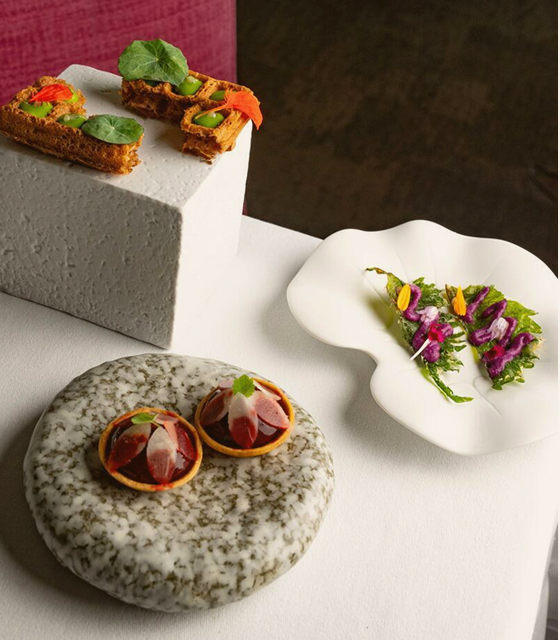
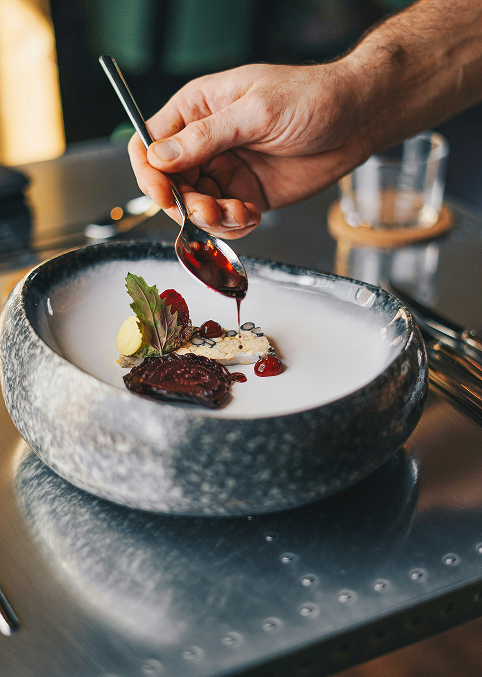
Nowhere is that more evident than in a Michelin-starred restaurant. Here, every detail matters. Every plate tells a story—part nostalgia, part innovation. A dish of this caliber is both personal and universal. It speaks without words.
A Michelin star is an indication of excellence. According to Michelin, “A star is awarded to restaurants offering outstanding cooking: We take into account five universal criteria: the quality of the ingredients, the harmony of flavours, the mastery of techniques, the personality of the chef as expressed through their cuisine and, just as importantly, consistency both across the entire menu and over time.”
Some have called the ranking system “the only guide that matters.” Famous French chef, Maxime Meilleur, compared earning three stars to “winning the gold medal at the Olympics.”
Regardless, since its inception in 1900, there is not an ounce of doubt that the Michelin Guide has helped transform cooking into the art form it is today. With its yearly updates, annual rankings and multiple brands, Michelin has reinvented the food world and paved the way for the evolution of modern fine dining.
But what does it take to get a star? What defines how many a restaurant gets? What are they judged on? And what does that dining experience look like?
“Food can bring people together in a way nothing else could.”
Yotam Ottolenghi
According to the guide itself, restaurants are judged for the food and the food alone. While there is a misconception that the guide judges an establishment based on their decor and wine list, Michelin’s stance (in regards to wine) is that any establishment serious about their food will be serious about their wine as well.
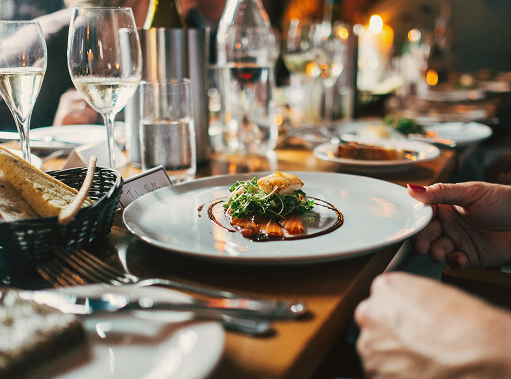
Generally speaking, Michelin-starred restaurants tend to be smaller, more intimate, and offer immersive, detail-oriented service. Reservations are often required—some months in advance, depending on the restaurant. Others may require only a week’s notice.
Defining a star
1 Star: “A very good restaurant in its category” (Une très bonne table dans sa catégorie) A one star restaurant represents good food, utilizing high-quality ingredients, expert cooking techniques, distinct flavors, personal touches and plate-to-plate consistency at every visit.
2 Stars: “Excellent cooking, worth a detour” (Table excellente, mérite un détour) A two star restaurant separates itself from a 1 star and is characterized by its use of high-quality ingredients, the ability to see the chef’s distinct personality in their dishes, and a refined, inspired, and masterfully prepared dining experience from start to finish.
3 Stars: “Exceptional cuisine, worth a special journey” (Une des meilleures tables, vaut le voyage). And at the very top of the mountain lies the coveted 3 Michelin stars. An achievement so rare that only 157 restaurants in the world* have been awarded this distinction. At a three Michelin star restaurant, the restaurant is the destination. The crowning achievement of dining, here the food is not just of the highest quality, but the artistry of the chef is on full display. Service is spectacular.
*Denotes recent rankings and 45 qualifying countries.
No matter our background, no matter where we come from, food is a universal language, one that speaks in flavor, aroma, and memory. Ingredients transcend borders. Dishes carry stories. A single bite can transport us to a childhood kitchen or a faraway land.
As Top Chef alum and Season 22 winner Tristen Epps-Long once said, “food is the one true connecting force in this world.” And he’s right. Food bridges cultures. It passes down tradition. It invites us to slow down, gather together, and share something real.
A Michelin-starred meal is never just about what’s on the plate. It’s artistry. Soul. A celebration of heritage and the people behind the flavors. That’s why food is never an afterthought on our journeys—it’s a cornerstone.
We believe that to truly understand a destination, you have to taste it. Not just through what’s served, but through how it’s served, where it’s sourced, and why it matters. Every restaurant we choose, every dish we spotlight, is thoughtfully selected to immerse you deeper into the culture and character of a place.
Because whether it’s a family-run trattoria tucked along a Tuscan hillside or a celebrated tasting menu in Tokyo, we know that a meal can become a memory. And in the end, those are the flavors that stay with us.
We look forward to sharing a meal with you. Prost and Bon appétit!