You’ve seen the masks. You’ve heard the rumors. You may have even rolled your eyes.
Lucha Libre, Mexico’s beloved brand of professional wrestling, can seem, at first glance, like pure spectacle. Flashy costumes. Over-the-top characters. Heroes and villains locked in gravity-defying combat. It begs the question: is it authentic cultural expression… or just a glorified tourist trap? To answer that, we need to step into the ring… and back in time.
The Birth of a Legend
The roots of Lucha Libre stretch back to the mid-19th century, when Mexico was under French intervention. French soldiers practiced Greco-Roman wrestling during their time in the country, and the Mexican public took notice. That European style began to evolve, taking on new life as it blended with local flair, athleticism and storytelling.
By the early 20th century, wrestling troupes from Italy and beyond were touring Mexico, introducing new techniques and rivalries that captivated growing audiences. But it was in 1933 that Lucha Libre truly was born. Enter Salvador Lutteroth, the visionary founder of Empresa Mexicana de Lucha Libre (EMLL), the country’s first major wrestling promotion. From there emerged legends the likes of El Santo, Blue Demon, and Mil Máscaras, masked icons who transcended the ring to become folk heroes and cultural symbols in the Lucha Libre world.
more than a match
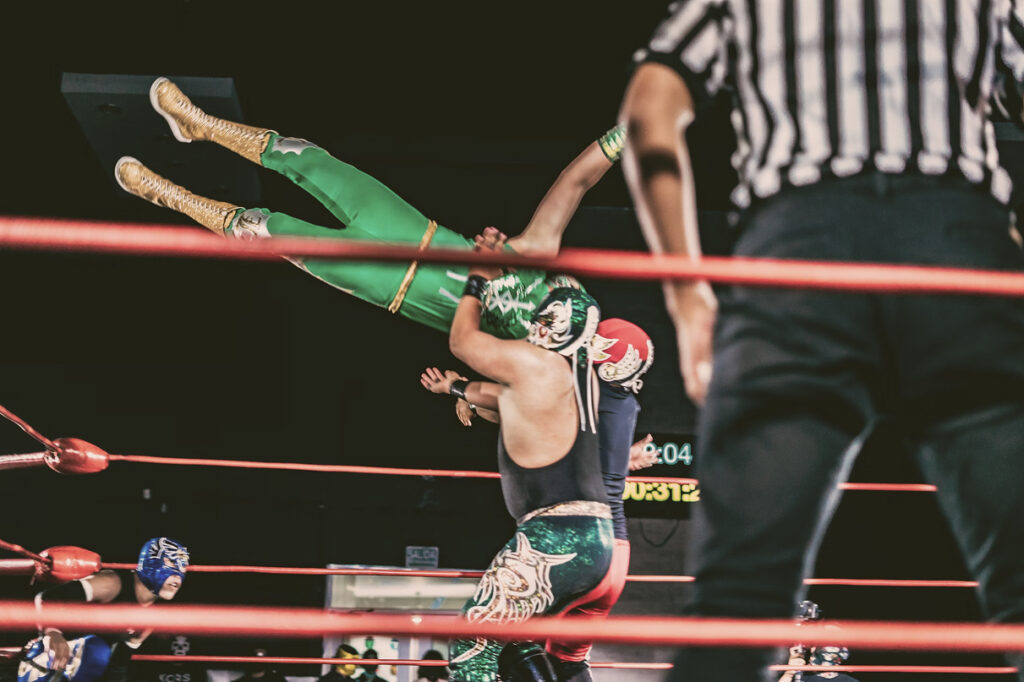
Today, Lucha Libre is defined by speed, athleticism and theatricality. Luchadores soar from ropes in high-flying arcs. Técnicos (the “good guys”) battle rudos (the “bad guys”) in a choreographed dance of drama and acrobatics. Masks are sacred, representing identity, honor, and sometimes even family lineage.
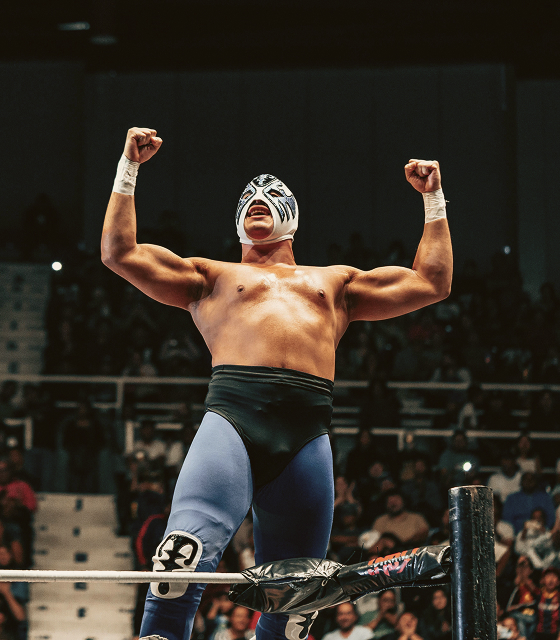
And yes, it’s loud.
It’s chaotic.
It’s emotional.
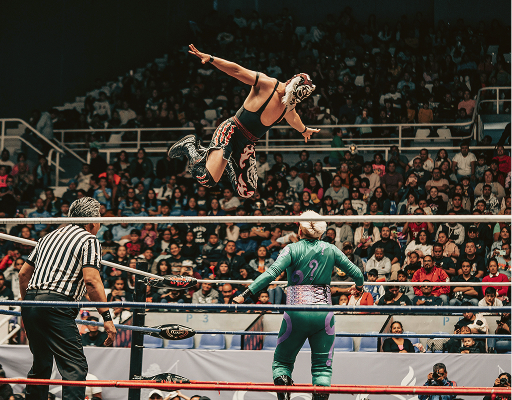
But beneath the camp and comedy is something deeply embedded in Mexican culture. For generations, families have packed into arenas on Friday nights, cheering for their heroes, booing the villains, and passing down allegiances like heirlooms. The pageantry may feel playful, but the passion is real.
So… Is It Cheesy?
Let’s be honest. It can feel a little… cheesy at first glance. The masks are bold. The storylines dramatic. The theatrics unapologetic.
But here’s the thing, so is opera. So is ballet. So is Broadway. Lucha Libre is Mexico’s live-action telenovela, its athletic theater, it’s a working-class epic no different than the works of Shakespeare or Homer. It reflects themes of justice, rebellion, honor and humor. It’s both parody and poetry. And like all great cultural traditions, it knows not to take itself too seriously.
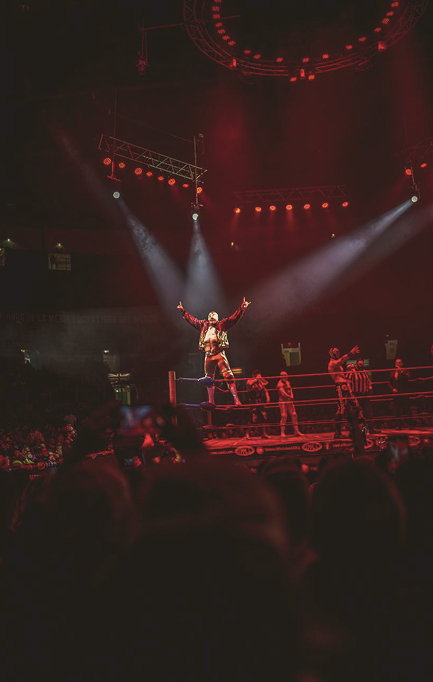
A night out in Mexico City
On our tour through Mexico City, it’s one of the rare group experiences that unfolds after sunset, and that’s part of the magic.
The neon lights flicker on. The crowd hums with anticipation. Vendors weave through the aisles with snacks and cold cervezas. You settle into your seat as the music blasts and masked warriors make their grand entrances.
It’s not just a show; it’s a night out.
Much like catching a playoff game back home, attending Lucha Libre is about energy, camaraderie and letting yourself be swept up in something communal. It’s laughter. It’s suspense. It’s cheering shoulder to shoulder with locals who’ve been coming for years. And on a Roam by Tauck tour, it becomes something even more special, a shared memory. A story you’ll retell over tacos the next day.
The Verdict
So, is Lucha Libre a tourist trap?
Only if you stay on the surface.
Look closer and you’ll find a living, breathing piece of Mexican heritage—equal parts athleticism, artistry and attitude. It may wear a mask, but its cultural significance is anything but hidden.
Lean in. Embrace the drama. Cheer for the técnico. Boo the rudo.
And let yourself have a little fun.
Because after all, what’s travel without a bit of spectacle?