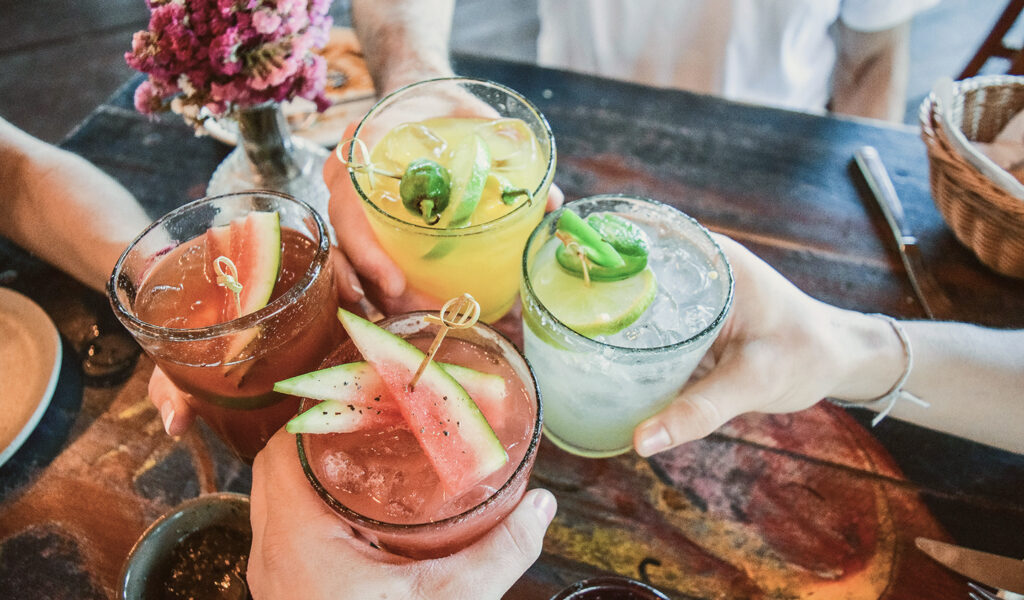
Everyone has a margarita story. Some involve spring break and questionable decisions. Others just a salted rim, a rooftop sunset, and a feeling that life is very much in your favor. And, good news, if you don’t have a margarita story yet… it’s really not that hard to make one that feels truly yours.
Because here’s the thing: margaritas aren’t just a cocktail. They’re a choose-your-own-adventure in a glass.
The Margarita Capital of the World
While yes, the margarita has gone global, Mexico is still its beating heart. In fact, Mexico City is home to the world’s best bar – Handshake Speakeasy – and has several other spots ranked among North America’s finest, according to Travel + Leisure. So, whether you’re sipping a mezcal margarita under the glow of modern mixology, or ducking into a casual cantina for a classic version with a plate of tacos, you’re not just drinking a cocktail – you’re tasting Mexico’s past and present in a glass.
THE FOUNDATION
Like all good things, the margarita starts simple…
2 oz agave tequila
1 oz Cointreau or triple sec
1 oz lime juice (freshly squeezed – it’s worth the effort)
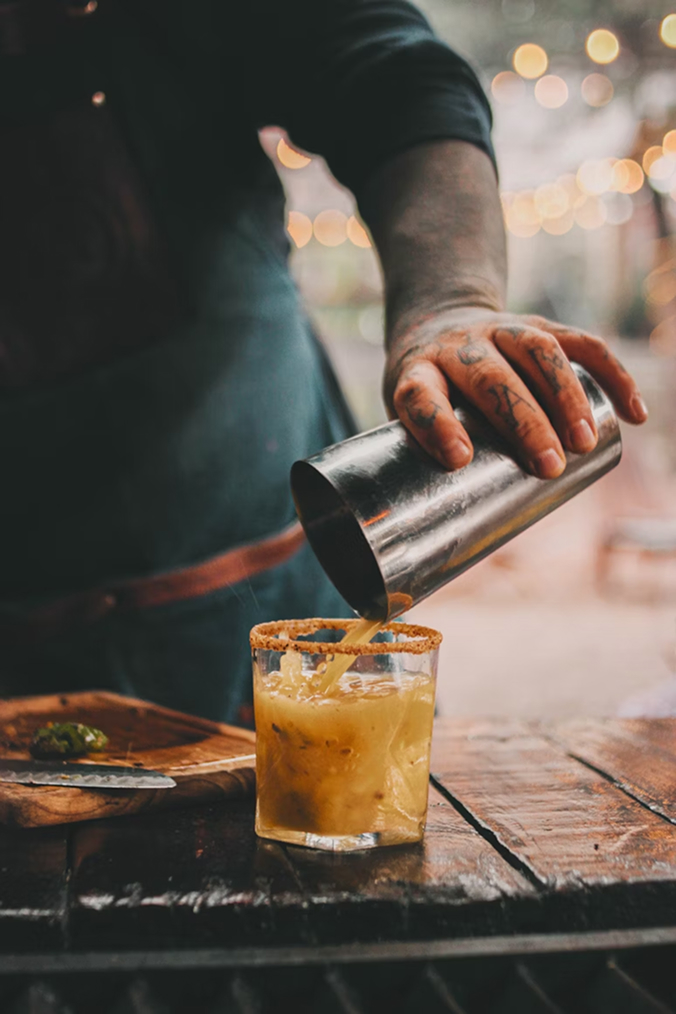
Shake it with ice. Salt the rim. Pour. Sip. Chill.
This is the baseline. Think of it as “Mr. Brightside.” Always a hit, endlessly covered.
what’s your style?
Here’s where margaritas really flex their muscles: customization. The margarita’s genius is its balance of structure and freedom. It has an identity no matter what you do to it – and somehow, the more you tweak it, the more “you” it becomes.
THE SPIRIT Tequila blanco, reposado, añejo, or go smoky with mezcal. Each one tells a different story.
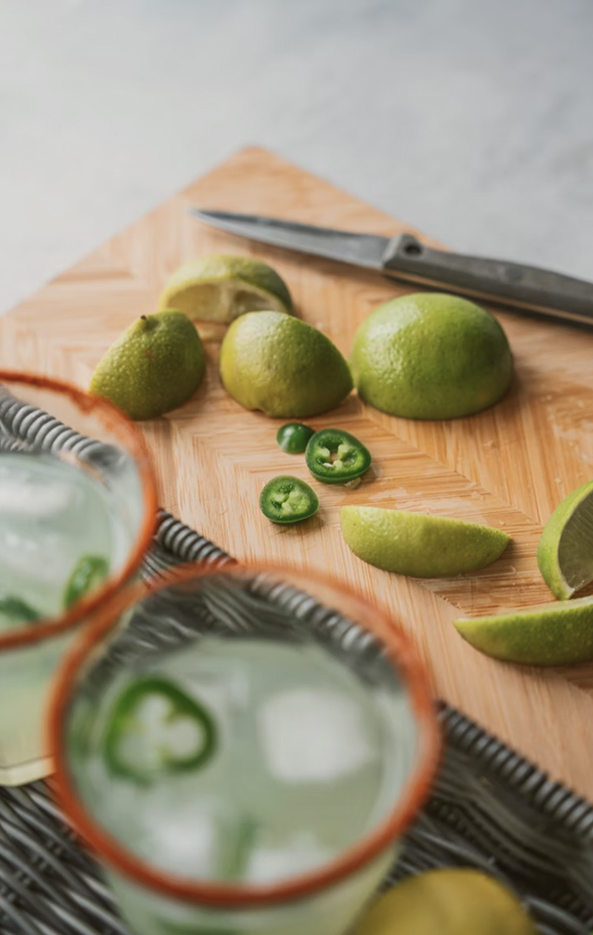
THE FLAVOR Mango, hibiscus, passionfruit, cucumber, jalapeño, coconut, pumpkin spice (if you must). If it grows, you can probably shake it into a margarita.
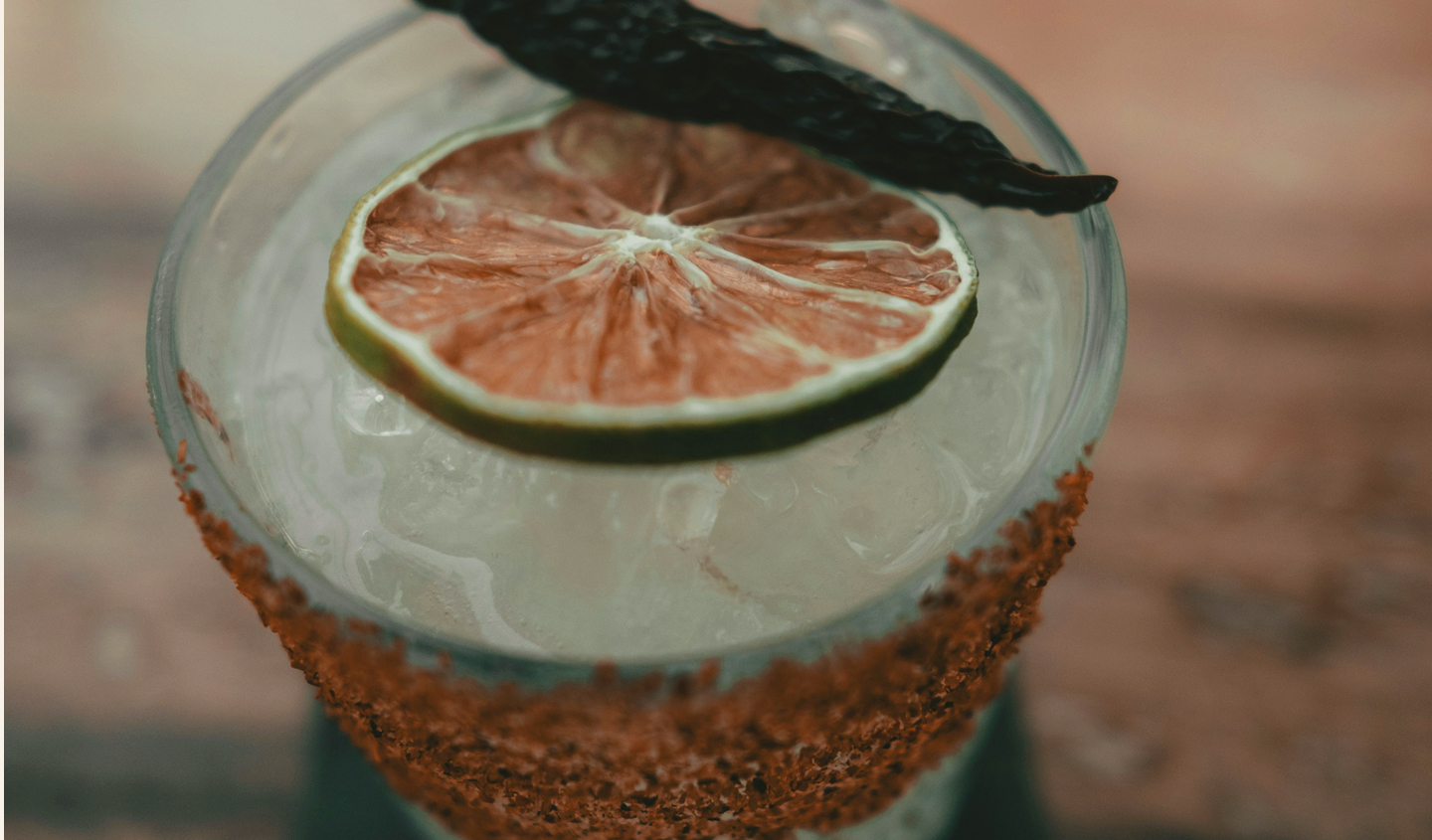
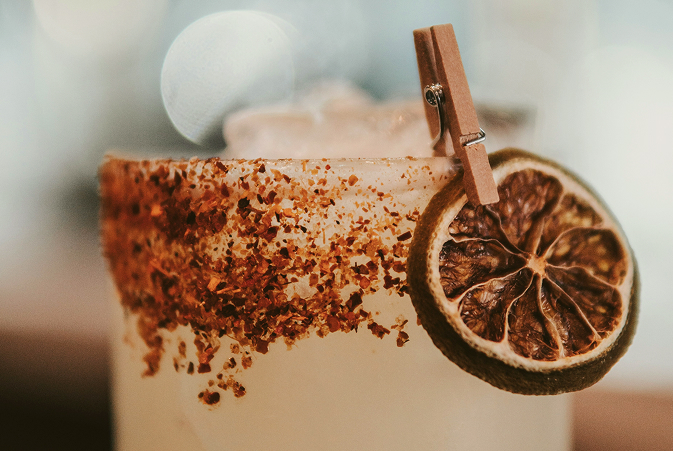
THE RIM Classic salt, spicy Tajín, hibiscus sugar, black lava salt. Seriously – what other drink makes you want to lick the glass like a margarita does?
THE STYLE On the rocks, frozen, skinny, Cadillac. (No judgment if you still drink out of that plastic yardstick from Cancun in 1998).
There you have it. The world’s most customizable cocktail, and the second-best way to escape the everyday – your way.
What About Those Frozen Slushies?
As with most cocktails, the margarita origin story is foggy at best – which feels fitting, honestly. What we do know is that margaritas became iconic in Mexico because of the ingredients: tequila made from native agave, limes that grow everywhere, and a culture that has always celebrated balance – sour, sweet, salty.
Fast forward north of the border and suddenly you’ve got neon-colored slushies pouring out of frozen machines. Fun? Yes. Authentic? Not at all. More of a remix, really. Catchy, but you still crave the original.
So, What’s All This Have to Do with Travel?
At Roam by Tauck, we believe the best journeys are like the best margaritas: a strong foundation, and then plenty of freedom to make it your own. We set the stage. You choose the flavors. Maybe it’s an afternoon rooftop cocktail. Maybe it’s a taco tour. Or maybe it’s just a quick detour down a tiled side street that becomes your favorite photo of the trip. Just like the drink, the magic is in the freedom to personalize.
The Final Sip
So, are margaritas in fact the world’s most customizable cocktail? We think so. But the better question might be: how do you take yours?
Salt or Tajín? Tequila or mezcal? On the rocks or frozen?
There are no wrong answers – only great stories.
And if you’re ready to make your next margarita memory in the place where it all began, check out our journey to Mexico City & San Miguel de Allende. We’ll bring the tequila.
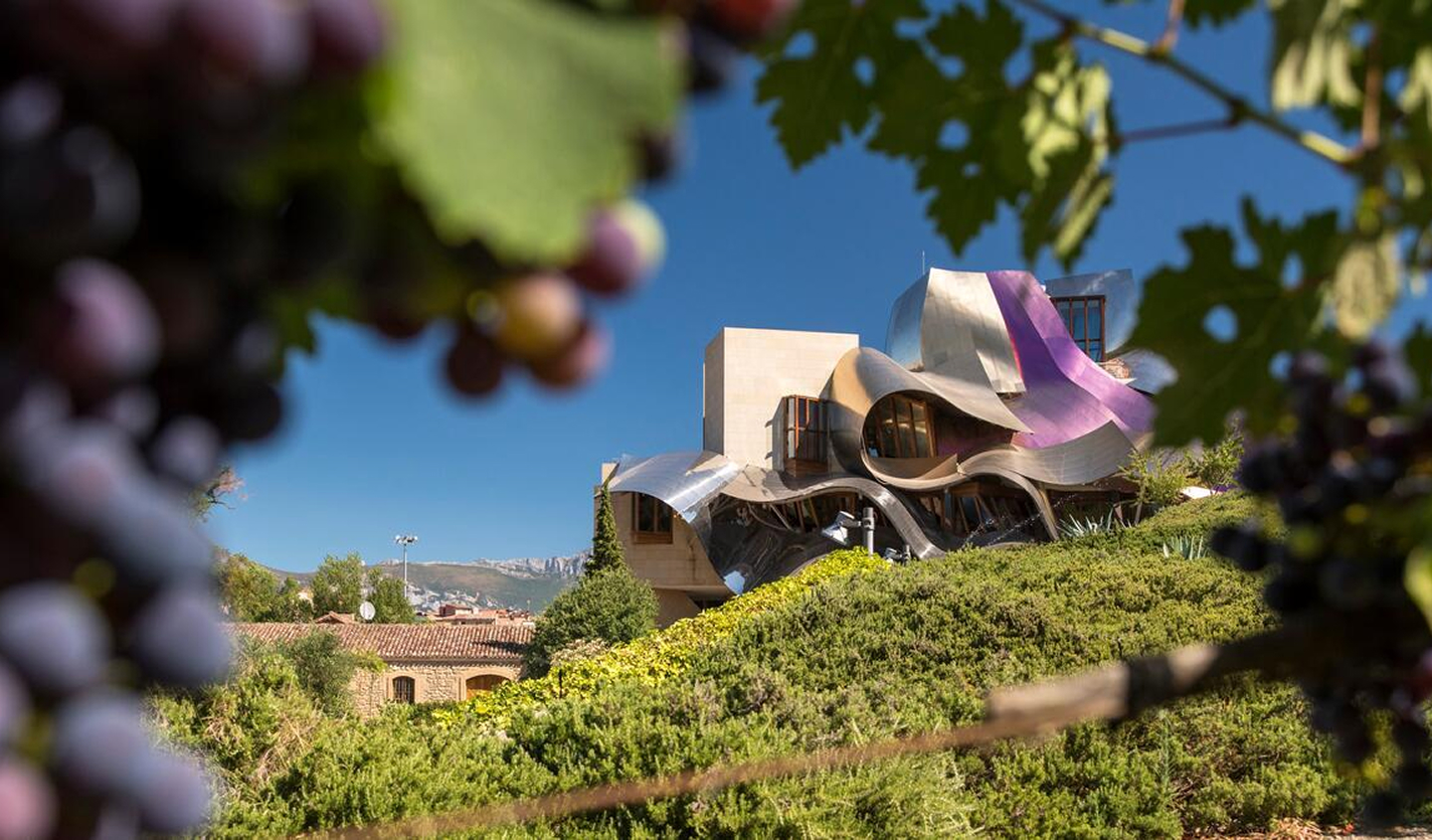
When you think of a medieval town in Northern Spain’s Basque Country with fewer than a thousand inhabitants, you probably think of winding, narrow streets, stone walls, bell towers, and churches. But Elciego, a small town dating back to the Roman Era, challenges that narrative. The hard-to-miss avant-garde Hotel Marqués de Riscal rises from this town and becomes a luxurious sanctuary for the senses.
Redefining modern architecture
Lead with a question, not a statement, is a philosophy that world-renowned architect Frank Gehry embraced throughout his career. Known as one of the most influential architects of the late 20th century and recipient of the prestigious Pritzker Architecture Prize, Gehry has always chased two simple words: Why not?
That pursuit has given the world icons such as the Guggenheim Bilbao, the Louis Vuitton Foundation in Paris, and Walt Disney Concert Hall in Los Angeles. To Gehry, architecture is art meant to spark curiosity, inspire interpretation, and hold your gaze. The five-star Marqués de Riscal, a Luxury Collection Hotel, is no exception.
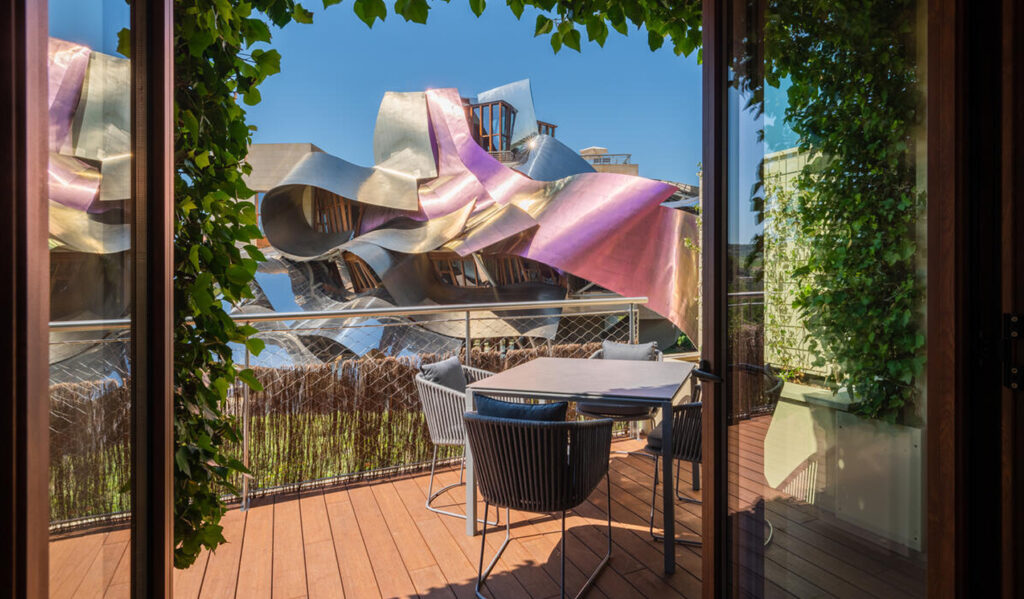
Its shimmering ribbons of titanium and steel rise unexpectedly above a horizon of Rioja Valley vineyards. Its façade curves and bends in ways that seem impossible – fluid and undeniably genius. It’s the kind of building you stare at, then tilt your head, then stare again – like a wine label you’re not sure how to pronounce but know will be good.
With every peak and ripple, it captures the metamorphosis of wine – its wave-like surfaces evoke tangled vines, the roundness of oak barrels, and the graceful pour into a glass.
The building’s colors do more than stand out against the orange and clay tones of the village below. Each shade has meaning: pink for the wine, gold for the mesh once used to protect bottles, and silver for the foil on the cap. From every angle, the building shows transformation, turning liquid into architecture and tradition into innovation.
CENTURIES OF WINE EXCELLENCE
But don’t let the contemporary exterior fool you. This is not just design for design’s sake – it is architecture rooted in centuries of wine culture.
Behind the futuristic façade lies a vineyard with one of the longest and most celebrated histories in Rioja. Founded in 1858, Marqués de Riscal was the first to bottle wine in the region. Within five years, it won its first awards, and by 1895, it became the first non-French wine to receive the Diploma of Honor at the Bordeaux Exhibition.
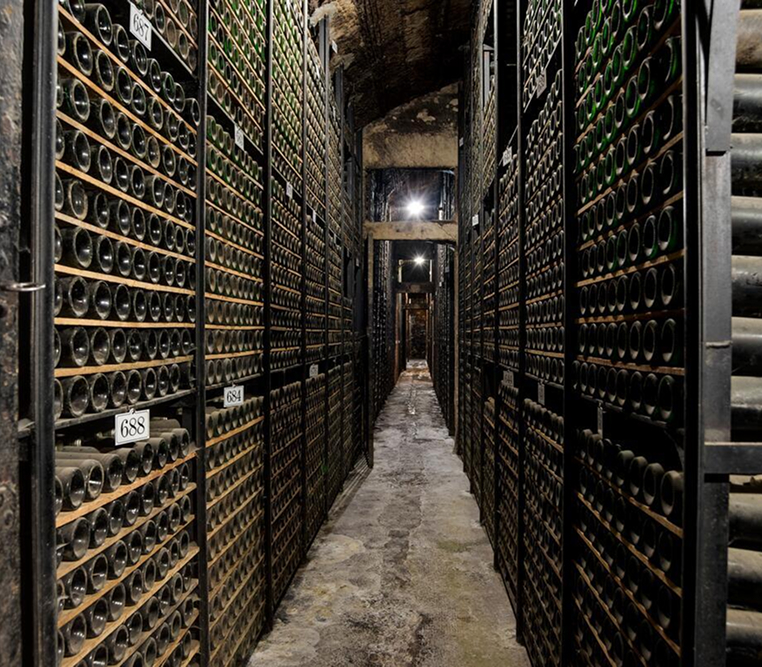
That pioneering spirit has never faded. In 2024, Marqués de Riscal was named Best Vineyard in the World in the World’s Best Vineyards awards. Its underground cellars – some lined with wines more than a century old – bottle this legacy, while the hotel above celebrates its evolution. And naturally, when you’re here, you don’t just feel invited into art but rather connected to a lineage of centuries of success and transformation.
A retreat for more than just your palate
We’ve established that wine at Marqués de Riscal is more than a drink; it is a philosophy of life, transformation, and renewal. That same spirit flows into the Spa Vinothérapie® Caudalie, where the healing power of the grape becomes a ritual for the body as much as for the palate.
Here, the setting feels completely organic. Cool stone meets warm light, complemented by cedar and teak, to create an utterly seductive space that pleases the senses – all while vineyards peek through panoramic windows stretching across the back wall. Gehry designed this space to touch the soul and harness inner peace, because wellness is never selfish; it is selfless.
Unsurprisingly, many treatments incorporate grapes – not as a novelty, but for their proven benefits. Partnering with the prestigious French cosmetics brand Caudalie, the spa uses products made from grape pips and pulp to naturally exfoliate and rejuvenate. Recognized worldwide by doctors and surgeons, the vine is rich in antioxidants, polyphenols, and resveratrol, which protect the skin, boost collagen, and improve circulation.
The story began in 1995, when Caudalie’s founders Mathilde and Bertrand Thomas discovered that grape seeds contained some of the most powerful natural antioxidants known, at their family vineyard in Bordeaux. They imagined a sanctuary far from modern distractions but surrounded by vines to create a place where “bodies are soothed and souls are regenerated.” Their vision of Vinothérapie® became a reality in 1999, pairing beauty treatments with the ritual of wine culture – and they haven’t looked back since. Today, there are four spas in the world dedicated to the practice of Vinothérapie®. Marqués de Riscal is one of them – and it’s the only location outside of France.
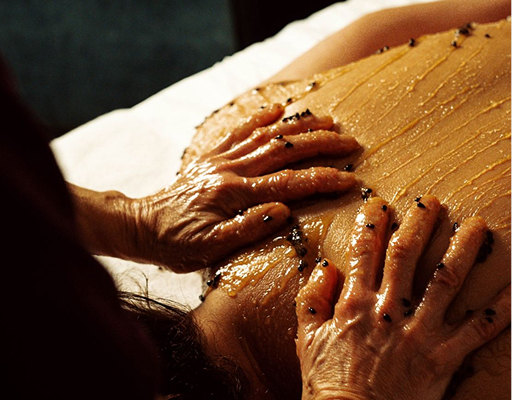
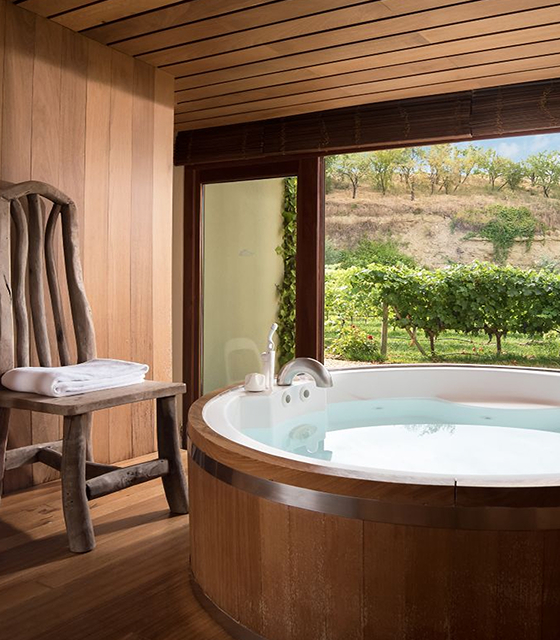
At the hotel’s spa, you can expect indulgent treatments like the Caudalie Grand Facial, a signature treatment that relaxes, restores, and renews to leave your complexion rested and radiant. Or perhaps the Crush Cabernet Scrub, a massage blending grape oil, seeds, honey, and essential oils into your skin leaving it moisturized and smooth. Or even a warm soak in tubs shaped like oak barrels, infused with vine extracts and oils, designed to relax muscles and promote detoxification.
Whichever treatment you choose, you remain connected to nature at every step. It is indulgence and science in harmony – a ritual that leaves you feeling as though the vineyard itself has shared its vitality with you, unfolding like wine: in layers, moments to savor, and a finish that lingers. Like Gehry’s architecture and Riscal’s wines, every treatment is rooted in tradition yet reimagined as something new.
Dare to unwind
Of course, indulgence doesn’t always look like stillness — sometimes it’s found in movement (or in a glass or two of wine).
For those seeking balance and mindfulness, a light-filled yoga studio welcomes both seasoned practitioners and curious beginners. The hotel’s heated indoor pool, lined with black tiles that reflect natural light in dramatic ways, offers a striking place to swim or simply float.
Or step outside and allow nature to add perspective. Bike along winding vineyard paths, past ancient chapels, to the lush banks of the Ebro River. Even a walk through the cobblestone medieval streets of Elciego feels like part of the ritual, reminding you that wellness here is as much about place as it is about practice, where time seems to pause even as it continues to flow.
Wellness here is never one-dimensional. Whether you’re stretching in sunlight, pedaling past vines, or losing yourself in the quiet lanes of Elciego or Gehry’s ribbons, it exists in moments meant to be savored slowly. Everything is done with purpose.
“Some places are remembered for their beauty, others for their history. Marqués de Riscal is unforgettable because it dares you to ask a different question.”
At El Marqués de Riscal, Gehry’s daring design and the vineyard’s centuries of excellence come together to create something singular – a place where art, wine, and life are inseparable. It is a retreat that doesn’t simply offer luxury but dares you to embrace it.
Stay in a Gehry masterpiece? Drink wines crowned the best in the world? Reset at a spa powered by the vineyard? Why not.
One of my favorite songs is Vienna by Billy Joel. In fact, it’s my most played song year after year. I remember the first time I really heard it – not the melody, but the lyrics.
I was a senior in high school facing a pile of incomplete college applications, sitting in my red Subaru outside my ballet studio at 8 p.m., the car still in park.
“You’ve got your passion, you’ve got your pride But don’t you know that only fools are satisfied? Dream on, but don’t imagine they’ll all come true When will you realize, Vienna waits for you?”
That night, I drove around my town, the only place I’ve known, with the song on repeat. My future felt uncertain, but these lyrics reassured me that I didn’t need all the answers yet – only faith that the path would wait for me, and time to heal.
Path, journey, roadmap. Different words for how we move forward – toward a goal, a realization, a transformation. Some stretches are smooth, others rocky, and sometimes the signs vanish altogether. But even when we’re lost, we trust that some inner compass will guide us where we need to be.
But what is it about a path that brings clarity? Is it the way it shifts beneath us? The challenges it demands we face? What if the path didn’t have to be invisible? What if there were a trail we could follow that confirmed we were moving in the right direction?
And there is. But you’ll have to go to Spain to find your answers.
The field of stars
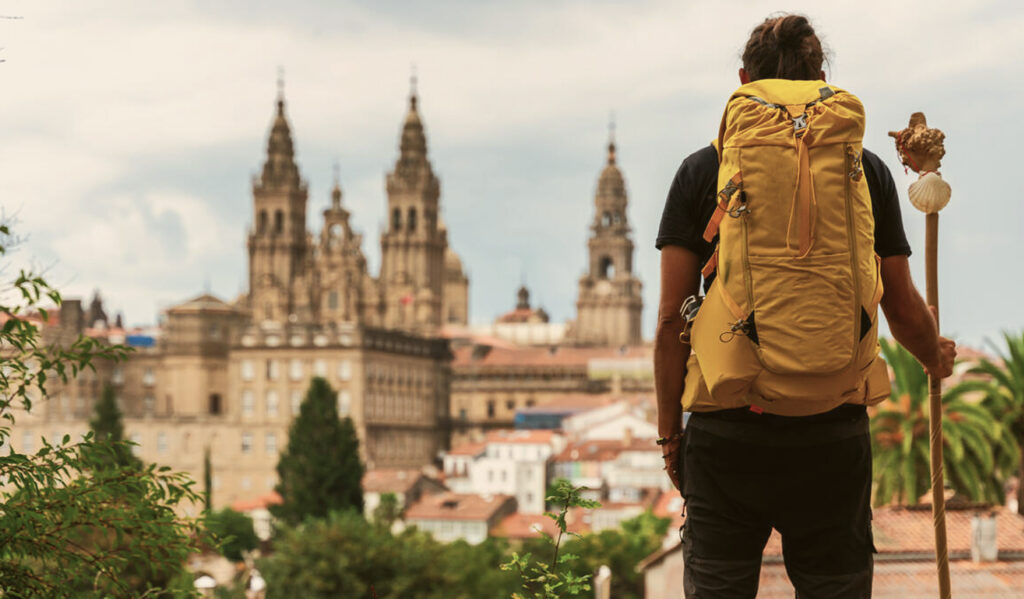
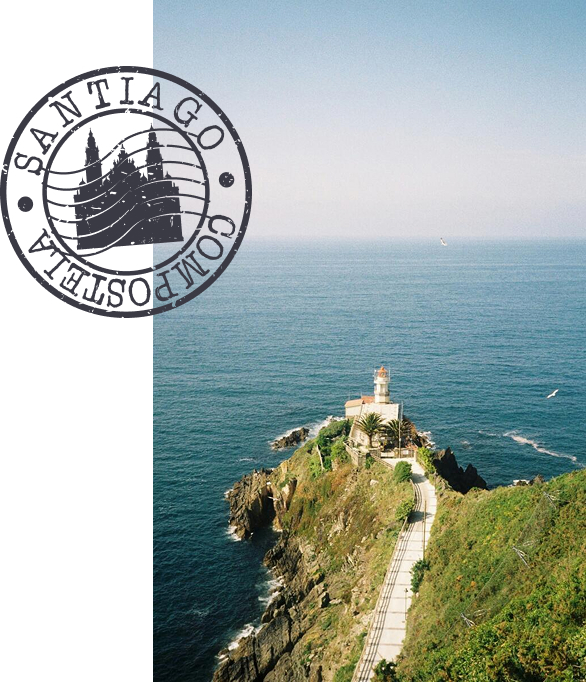
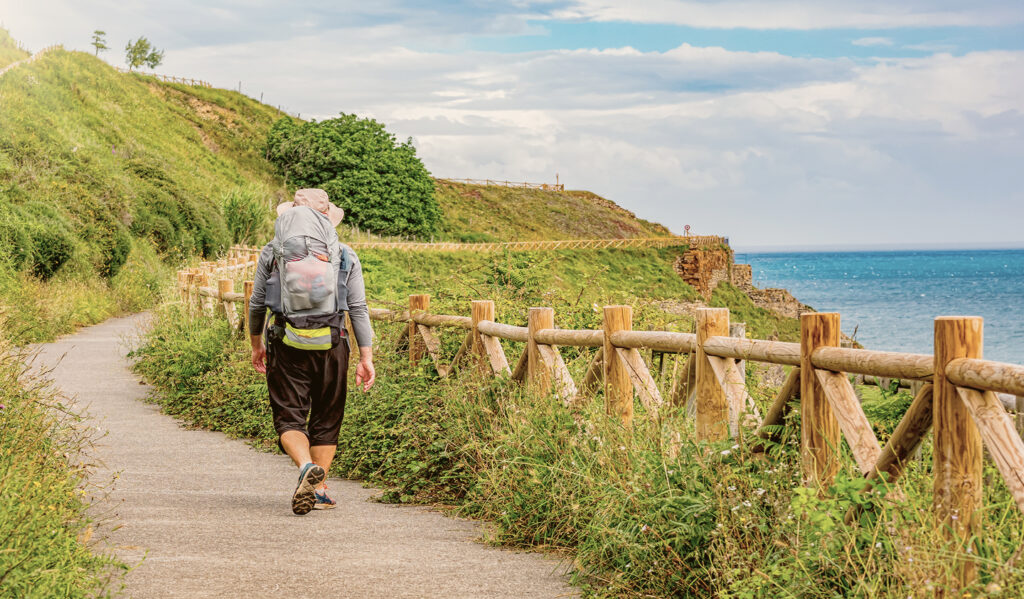
The Camino de Santiago, or the Way of Saint James, is a pilgrimage route that has drawn travelers across Spain for over a thousand years. Some begin in France or Portugal, others in small Spanish towns, but through coastal cliffs, mountains, woods, vineyards, and historic villages, all roads converge on Santiago de Compostela, where the body of Saint James the Apostle is said to rest.
The name Santiago de Compostela means ‘Saint James field of stars.’ In the 9th century, mysterious lights revealed a Roman tomb said to hold the remains of Saint James. King Alfonso II built a basilica on the site, and the Camino was born. For centuries, pilgrims have followed these trails – not simply to reach a cathedral, but to search for meaning, great and small, along the way. It might be the pilgrimage of a saint, but it’s a journey that is entirely yours.
Medieval pilgrims once walked the Camino seeking penance, forgiveness, or salvation. Today, many still walk for faith, but some arrive seeking healing, carrying loss, or chasing questions with no easy answers. To unplug. To reset. To indulge in something that cannot be purchased, but found in stillness, silence, and space to breathe.
Onward and upward
It’s no easy journey. The full Camino Francés runs nearly 480 miles, around 900,000 steps over thirty days. That’s like walking from New York City to Toronto, or Los Angeles to the Grand Canyon. But there’s no one “right way” to do it – you can join at any point in Spain, walk a shorter stretch, or choose a coastal or mountain route. Though if you want to earn the official Compostela certificate, you must walk 62 miles or bike 124 miles and present a stamped passport. But in truth, what matters is not how far you go, but what you discover along the way.
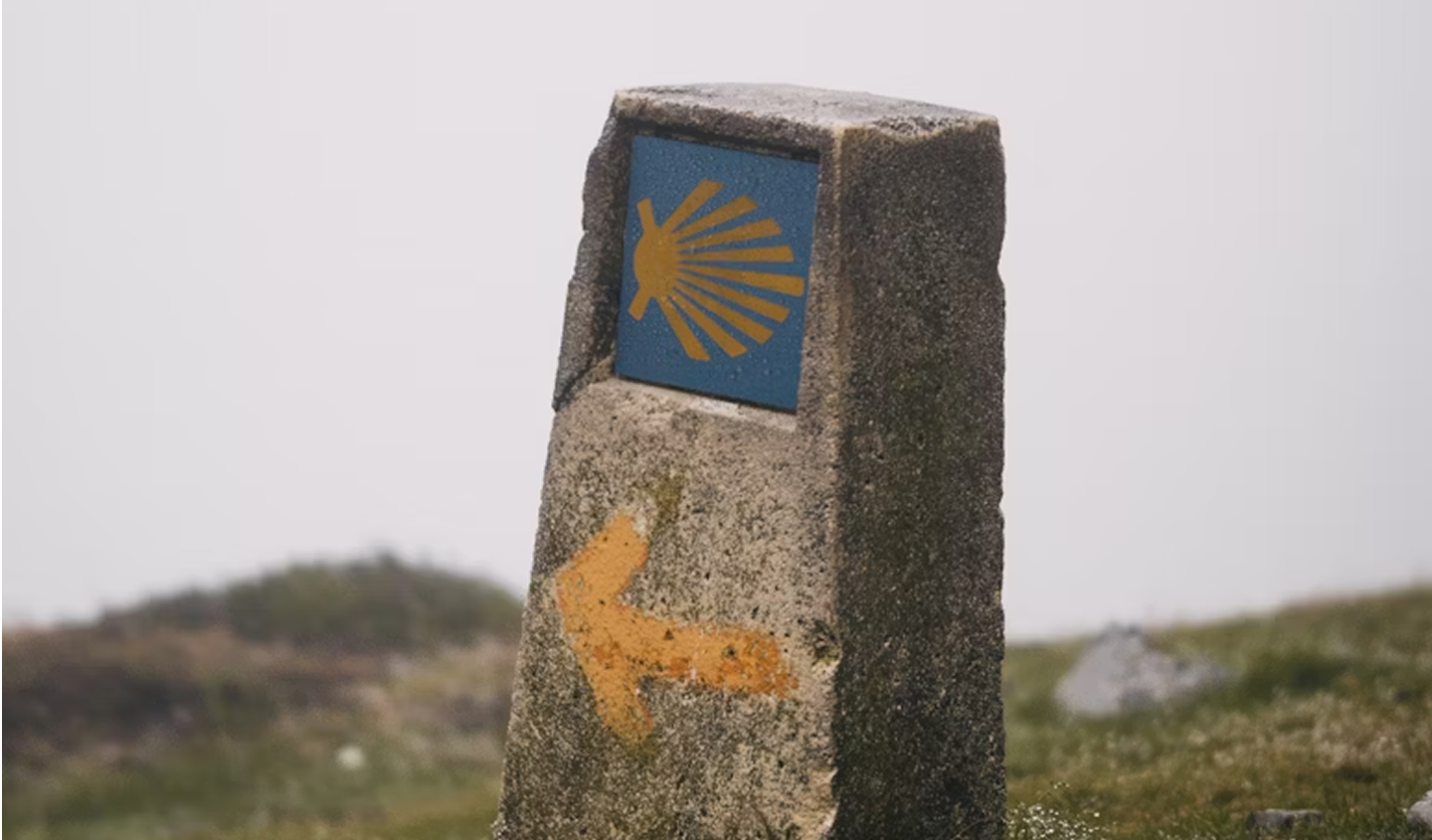
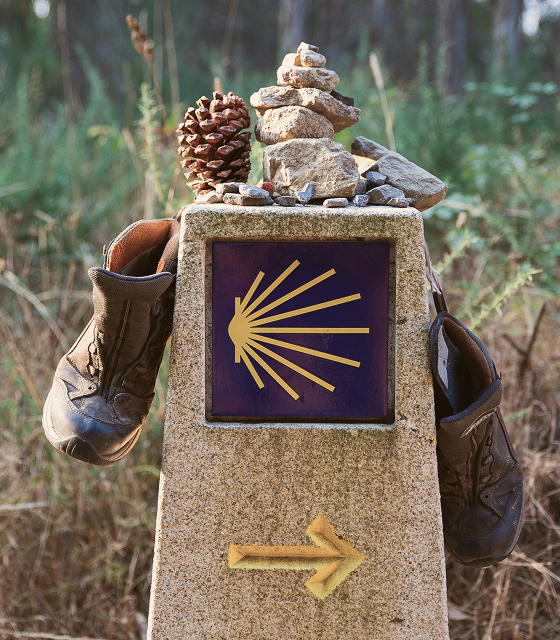
And be careful to look for the yellow arrows and the scallop shells that have marked this path for centuries, because if you don’t look hard enough, you might not find what you’re searching for.
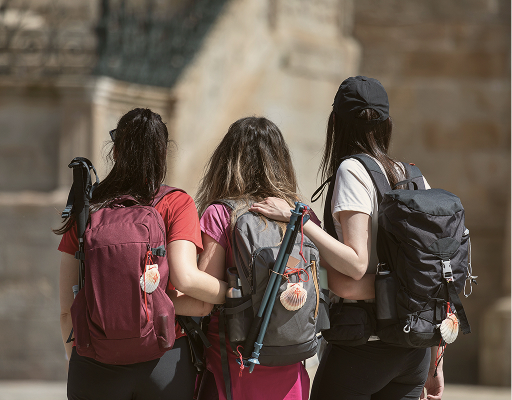
By the third day, your shoes will betray you, your backpack will feel like a boulder, and your legs will ache in places you didn’t know existed. And yet, when you drop that backpack on the floor of a stone albergue, surrounded by strangers who share bread, wine, tears, and laughter, you’ll realize that by morning they won’t feel like strangers at all, and you’ll keep walking.
The Camino strips life down to its essentials: walking, eating, resting, moving forward. That’s it. Through that simplicity – which we rarely allow ourselves these days – the noise of the world fades. What’s left is something sharper: the steady rhythm of your body, the quiet of your mind, the reminder that harmony begins with solitude. Because when your body is in motion, so is your mind.
Buen Camino
The Camino teaches us that no two paths are the same. Yes, you might walk alongside the same group of people, but the map you follow is different. The people you meet, the pain you endure, the strength you uncover, the clarity you gain – they are entirely yours. We aren’t meant to live identically. What unites us is not uniformity, but the strength of spirit we carry forward with each step.
So why do people walk it? To find themselves again. To rediscover a version buried beneath the weight of work weeks, schedules, headlines, and glowing screens. To ask: who am I, if I live my one precious life at half capacity?
We all deserve time. Not time filled with distraction, but time that grounds us in the natural world, reminding us it’s enough simply to exist. Thoreau once wrote that he went to the woods to “live deliberately.” The Camino is much the same – a path where nature, simplicity, and spirit co-exist.
To know that you’ve accomplished something both physically and mentally challenging and rewarding. To stand before the basilica and recognize the strength it took to get there. To see yourself in a new light – resilient, capable, renewed. And to carry that strength home, knowing that if you can do this, as daunting as it seems, you can face anything.
The path that already exists
I’ll share a secret: I didn’t write this with a specific path in mind. I knew what I wanted to say, but I didn’t know exactly how I’d get there. And maybe that’s the lesson. Sometimes you don’t need to create a new path when yours already exists. You only need to trust the one beneath your feet.
The Camino reminds us of this truth: the path forward has been waiting all along – and walking it is how we find our way.
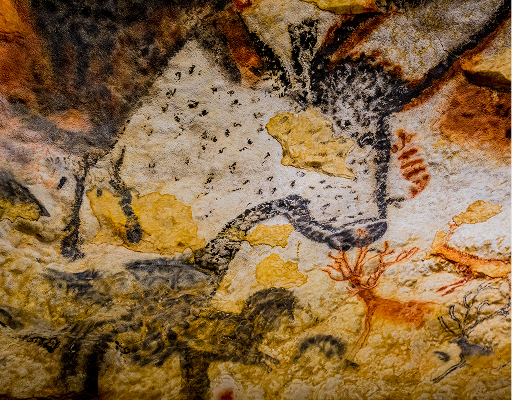
Discovered in 1940 in the Dordogne Valley, the original Lascaux cave holds one of the world’s most extraordinary collections of Ice Age art: over six hundred painted animals and more than a thousand engravings, dating back some seventeen thousand years. The cave was opened to the public after World War II, but within two decades, the presence of visitors began to damage the fragile pigments. In 1963, Lascaux was permanently closed.
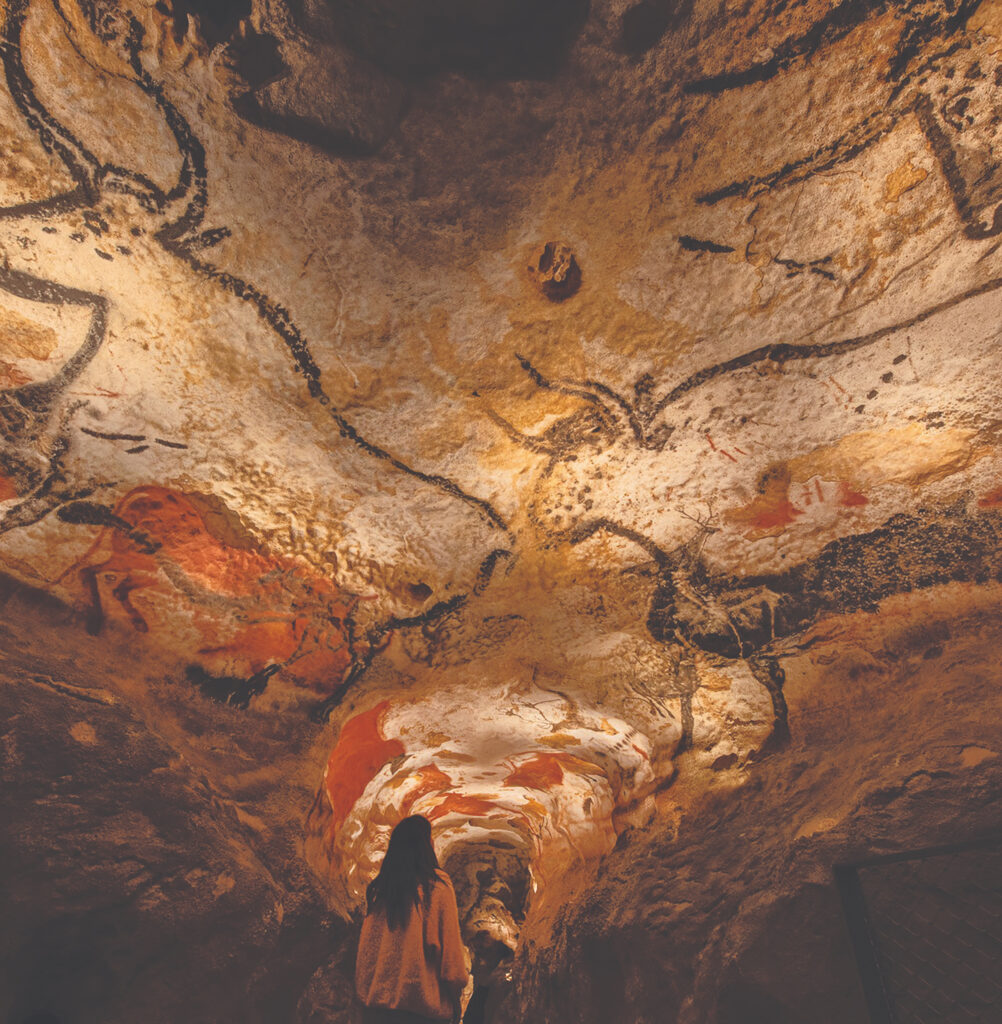
What visitors experience today at Lascaux II is a meticulous recreation of the caves’ two most celebrated chambers, crafted by artists and scientists with the same care once given to the paintings themselves. Every curve of the rock, every pigment and shadow, has been reproduced in full scale underground, creating an experience that is immediate, convincing, and astonishingly true to the original. Unlike Lascaux IV, which offers a comprehensive museum-style interpretation of the entire cave system, Lascaux II is deliberately intimate. By focusing only on the heart of the site, it gives visitors the closest possible experience of stepping into the original cavern – quiet, concentrated, and astonishingly true to place.
DISCOVERY: FOUR BOYS AND A DOG
History sometimes begins with a simple wrong turn. In 1940, four teenagers and their dog wandered into a hollow near Montignac in the Dordogne Valley. The dog disappeared through a gap in the rocks; the boys followed with a lantern. What they found was not treasure, but something older and stranger: paintings sprawling across the walls and ceilings of a hidden cavern.
Word spread, and soon scholars and photographers descended. For the first time, modern eyes were confronted with Ice Age art not as scattered fragments in museums, but as a vast, continuous environment — a complete world painted onto stone. The discovery quickly became a global touchpoint – but for most of us, cave paintings have only appeared in unexpected places: on a classroom wall chart, in a dog-eared textbook, or flickering across a classroom TV during a grainy documentary.
A TIMELINE ETCHED IN STONE
1940
Discovery of the caves by Marcel Ravidat and friends
1948
Opened to the public; thousands arrive weekly
1963
Closed to protect the paintings from damage caused by humidity, CO₂, and fungi
1983
Lascaux II replica opens, meticulously recreated
2016
Lascaux IV, an expanded museum and digital interpretation center, opens
Stepping Into the Darkness
The entrance to Lascaux II is purpose-built, set discreetly into the Dordogne hillside. You don’t descend into a wild cavern but into a carefully crafted reconstruction – one that mirrors the contours and atmosphere of the original.
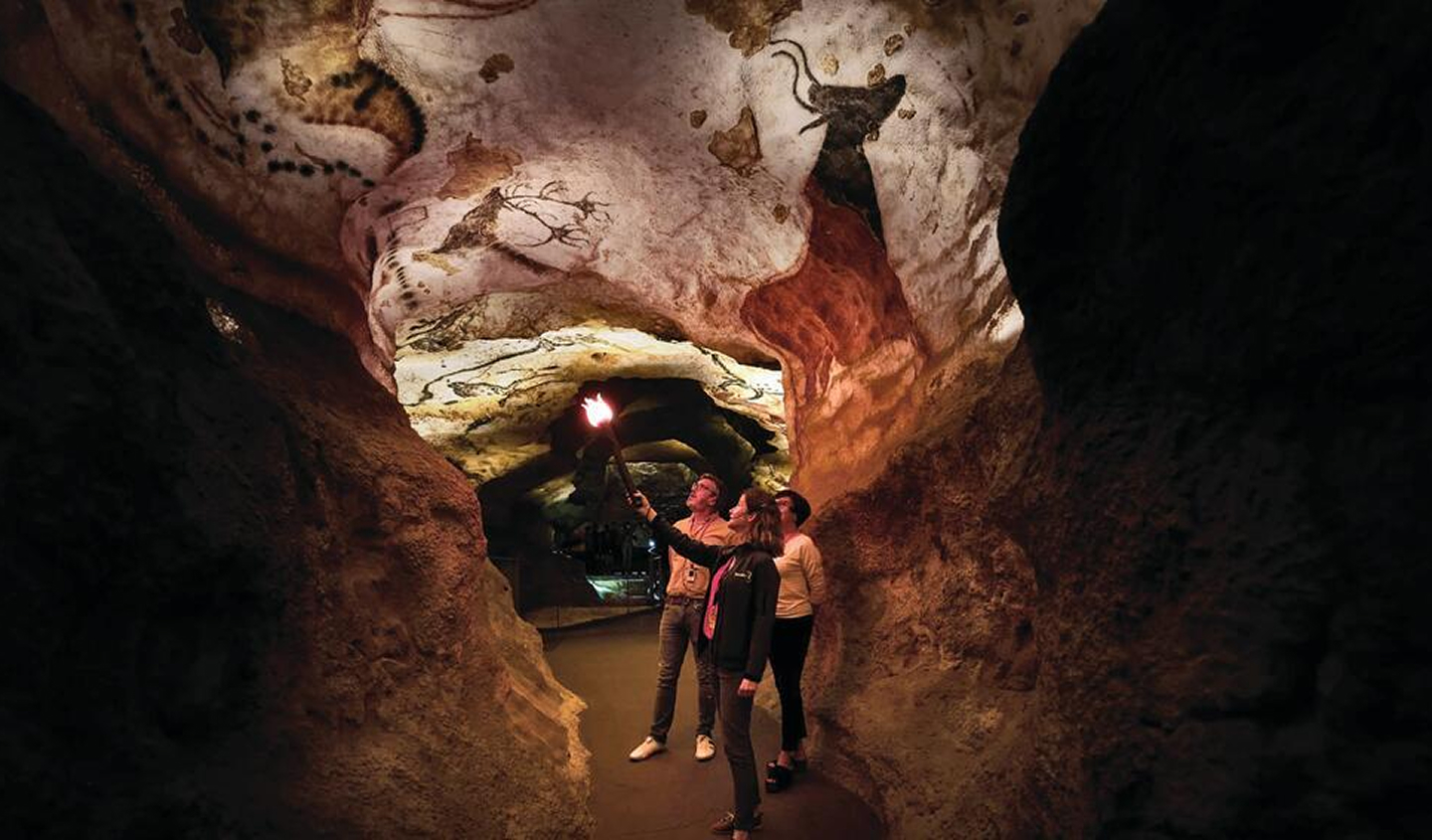
The air inside is cool and faintly damp, the hush immediate. Guides use handheld lamps to cast shifting light across the walls, recreating the flicker of fire that once revealed the art. Shapes emerge from shadow: a horse with its neck arched, a bull with its horns lowered, stags branching upward across the rock. The experience is deliberately staged to echo how the art would once have been seen.
A private visit shifts the mood even further. There’s no glass in front of the walls, no crowd pressing close, no noise competing with the silence. It’s just you and the paintings, re-created with extraordinary precision, on their own terms
Walking Into the Chill
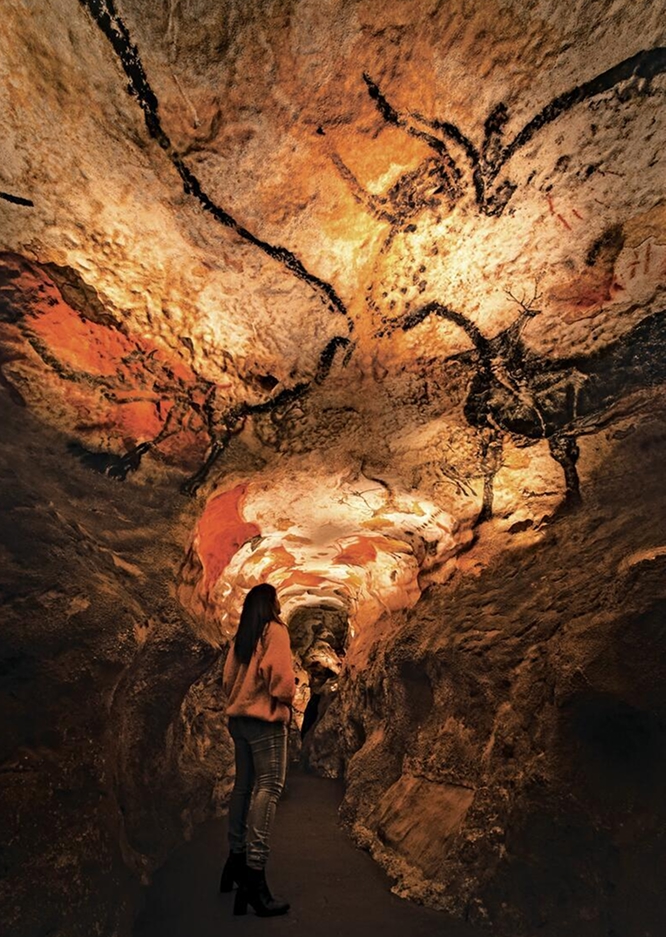
Inside Lascaux II, the cave walls curve and narrow exactly as they do in the original. Ceilings rise and fall, spaces feel alternately tight and expansive. Some chambers brim with overlapping figures; in others, a single animal waits alone in the stone.
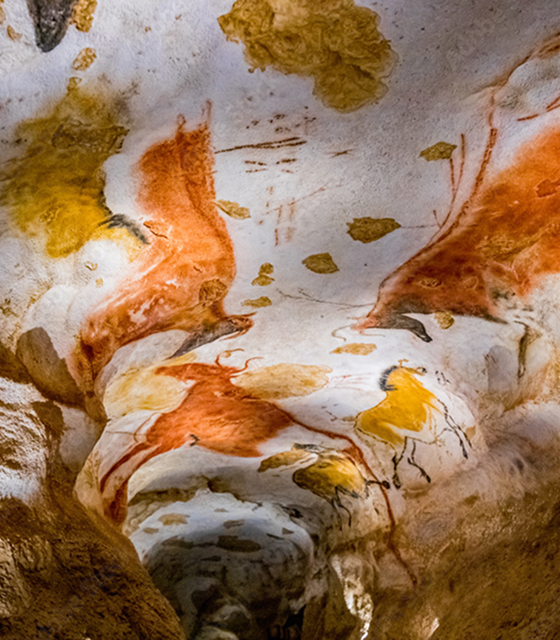
The sense of scale is surprising. Horses run in sequences, bison crowd together, stags stretch upward with antlers too large to be real but balanced in motion. The colors – ochre, black, deep red – are drawn from iron oxides, charcoal, manganese. Simple materials, re-created with absolute fidelity.
What strikes you most is how assured it all feels. These weren’t experiments. They were decisions. And in another chamber, a single handprint appears among the animals – not a symbol or a scene, just a presence, pressed into stone seventeen thousand years ago, now preserved for us here.
Did You Know?
More than 600 animals and 1,500 engravings cover the cave walls.
Lascaux has been called “the Sistine Chapel of Prehistory.”
Some researchers suggest the paintings may mirror star constellations.
The Hall of the Bulls
Perhaps the most famous chamber, the Hall of the Bulls, is overwhelming in its density. Horses run in multiple directions, their outlines overlapping. Four massive bulls dominate the space, one stretching more than seventeen feet across. Their bodies are powerful and imposing, horns exaggerated, yet their lines are economical and confident, almost casual.
In the dimmed light, the chamber reveals itself as it once did: figures that shift with every step, shadows that hide and reveal. What comes through is not grandeur but presence – the sense of people working methodically, image by image, until the stone became the story.
“To stand beneath the bulls in silence is to feel both small and connected.”
Why It Matters
What stands out in Lascaux II is not only the artistry of the original works but the precision of the reconstruction. It is no substitute, but it allows us to encounter the Ice Age painters’ vision without endangering the fragile originals.
The walls aren’t marked with random images – they’re composed with rhythm and balance. Animals overlap deliberately, their proportions adjusted for effect, their movements caught mid-stride.
The paintings aren’t primitive sketches. They’re complex works: layered, shaded, composed. They don’t just depict animals; they capture how they move, how they gather, how they scatter.
What you realize standing here is not nostalgia but continuity. The instinct to create, to record, to interpret – it’s older than history, older than language. And that is why it matters: Lascaux II preserves for us the experience of Lascaux itself, reminding us that imagination is not a modern invention, but the oldest human inheritance we have.
Preservation and Privilege
By the early 1960s, thousands of daily visitors were taking a toll. Carbon dioxide, humidity, even the heat of human bodies began to damage the pigments. Mold and algae followed. In just a few decades, the art faced more risk than in the previous seventeen thousand years.
In 1963, the caves were closed to the public. Replicas followed, each more sophisticated than the last. Lascaux II was the first, and remains the most intimate, designed for visitors to experience the art without compromising the original.
That limitation is part of the experience. You enter not just as a viewer, but as a caretaker of memory, entrusted to carry forward what can no longer be seen directly.
Beyond the Cave: The Dordogne
Your Lascaux visit is only one layer of the Dordogne. The river winds between cliffs and castles, past medieval towns like Sarlat-la-Canéda. Markets brim with walnuts, truffles, and duck. Renaissance manors rise over farmland, and vineyards stretch across plateaus.
This is a region where eras stack visibly on top of one another – prehistoric, medieval, Renaissance, modern. Lascaux is the anchor, but the story doesn’t end at the cave mouth.
The Last Word from Lascaux
The painters of Lascaux lived seventeen thousand years ago, yet their work is still clear – what remains isn’t accidental. It reflects intention. Their world is gone, but the drive to make meaning endures.
That’s why the caves matter – and why Lascaux II matters. To step inside isn’t to travel backward in time, but to recognize that the instinct to make meaning – scratched and painted onto stone – is the same force that still drives us today.
“The paintings remind us that creativity is the oldest human inheritance.”