Don’t get me wrong. I’ve stayed in plenty of vacation rentals. If you’re traveling with three families, need four bedrooms and a full kitchen, they make a lot of sense.
But as I’ve gotten older, they’ve started feeling less like vacations and more like temporary homeownership. To-do list included.
None of those things are all that difficult. It’s just that I already have my own chores waiting for me when I get home. While I’m on vacation, I don’t want to rent someone else’s.
MAYBE I’M THE ONE WHO CHANGED
When I was younger, I thought you could measure luxury.
A bigger room. A bigger kitchen. More bedrooms. More space.
These days it’s taken on a whole new meaning.
Luxury is someone else making the bed. Luxury is not wondering where the extra garbage bags are. Luxury is asking the concierge for a recommendation instead of scrolling through reviews for an hour.
Luxury isn’t having more square footage. It’s having fewer responsibilities.
That’s why, these days, you’ll usually find me in a hotel instead of a vacation rental.
THERE ARE SOME THINGS YOU JUST CAN’T RENT
You can rent a house. But you’re never going to find a vacation rental where…
…your afternoon ends with a complimentary rooftop cocktail overlooking San Miguel de Allende.
…your “room” floats through the Douro Valley while you enjoy a glass of wine on the Sun Deck.
…your lobby is also home to one of Japan’s Michelin-starred restaurants, just an elevator ride from your room.
…you wake up at a private game reserve in South Africa, head out on safari, and come back to cocktails around the fire.
These places aren’t just where you sleep. They’re part of the reason you went in the first place.
AND THE BEST PART?
Someone else folds the towels, makes the bed, takes out the trash – and cleans whatever that is that my son left in the sink.
I simply get to enjoy my vacation.
I know rentals work for a lot of people. They’ve worked for me.
But now?
I’d much rather spend my last morning on vacation lingering over a breakfast I didn’t cook than wondering if I remembered to put the keep-the-bears-out bungee cords back on the trash bins.
Switzerland’s capital often surprises first-time visitors. While Zurich hums with business and Geneva buzzes with international diplomacy, Bern feels remarkably relaxed. No need to impress, no need to rush – just quiet confidence in its Swiss identity.
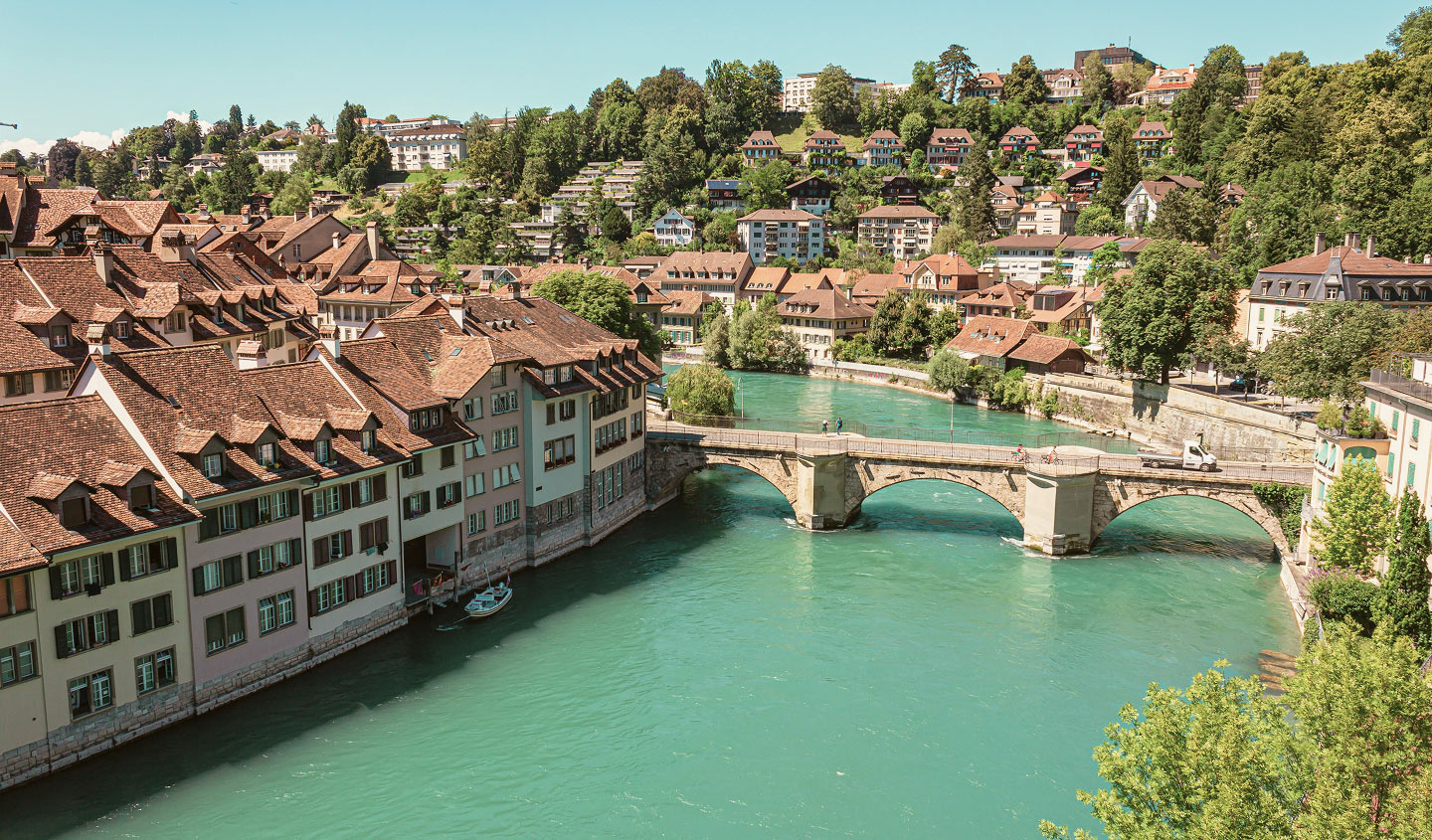
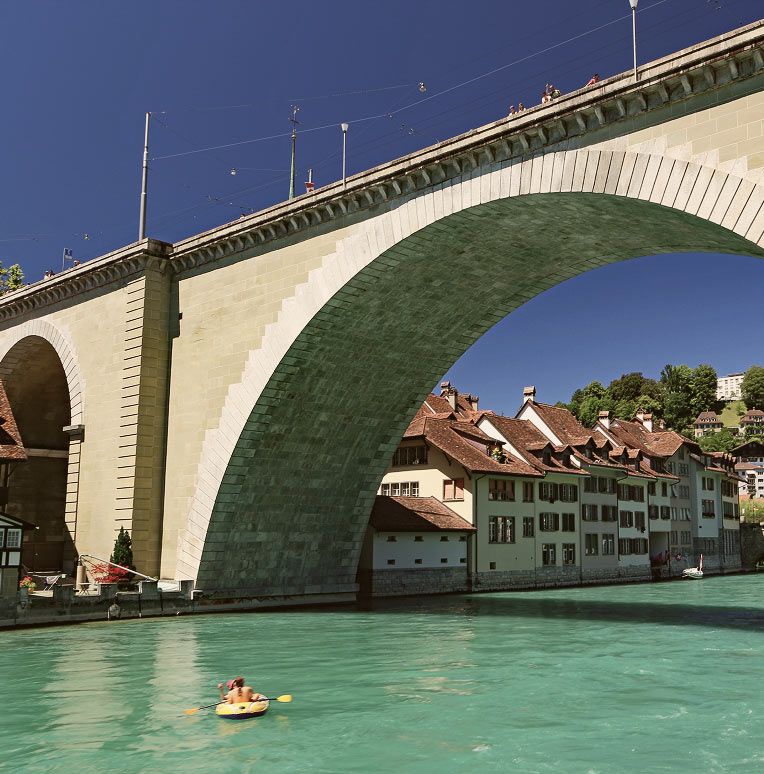
Built on a peninsula, this UNESCO-listed Old Town wraps around a bend in the emerald-green Aare River beneath stretches of medieval arcades and soaring steeples. One of the best-preserved medieval cities in Europe, Bern charms with centuries-old fountains that feel like pages from a storybook, each one revealing local legends, heroes, and historic events.
There’s no other way to say it: the city feels suspended in time.
BERN IN REWIND
In 1902, a 23-year-old patent clerk moved to Switzerland’s capital city and rented an apartment on the second floor in Bern. By day, Albert Einstein worked at the Swiss Patent Office, evaluating inventions. In the evenings, on walks through the city, and during hours carved out from a demanding work schedule, he wrestled with ideas that would change the world.
Over the seven years he lived in Bern, Einstein published the groundbreaking papers that became known as his Annus Mirabilis. He showed that atoms really exist. He demonstrated that light behaves in unexpected ways. He revealed that mass and energy are interchangeable. And perhaps most famously, he showed that space and time are connected.
Not bad for a side project.
I promise this isn’t a physics lesson, and I won’t even attempt to explain Einstein’s genius. But there is something fitting about thinking of his discoveries here in Bern.
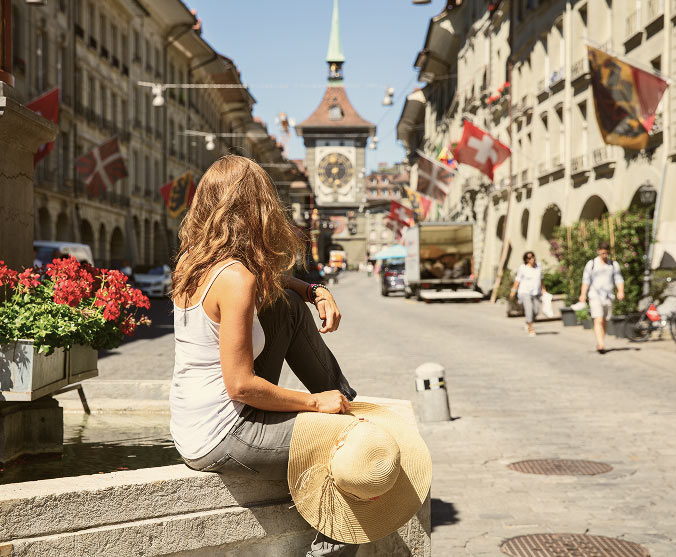
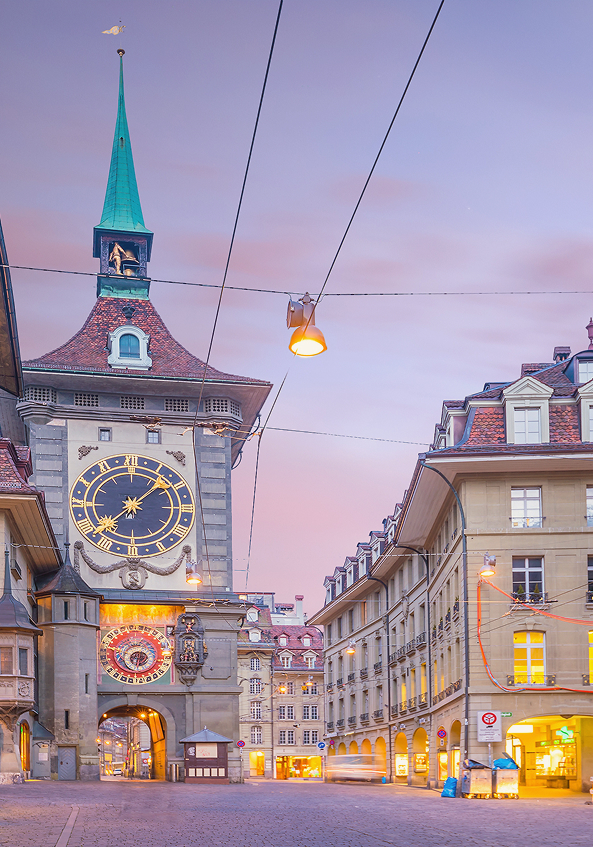
Einstein’s theory of relativity showed that time is not fixed but relative. More than a century later, Bern still feels like a city that invites you to think about time. The medieval Zytglogge Clock has been marking the hours for more than 500 years. Arcaded streets wind through the Old Town much as they did in Einstein’s day. And around every corner is a reminder that our time, unlike the clock’s, is limited.
When you’re visiting somewhere for the first time, that realization feels especially relevant. You want to spend your time wisely. To see everything. To experience everything.
The good news? Bern doesn’t demand that kind of pace.
Here are some of the best ways to spend your free time in Bern – because not every brilliant use of time needs to change the course of physics.
HAVE AN HOUR? START HERE.
Visit Einstein House
Step inside the apartment where Einstein, his wife Mileva, and their son Hans Albert lived from 1903 to 1905. The modest flat offers a glimpse into his daily life in Bern and the years that led to some of his most revolutionary ideas. Located along Kramgasse, it’s a fascinating stop for anyone curious about the man behind the theories.
Browse the Weekly Market
If you only have one hour in Bern, this is where you should wander.
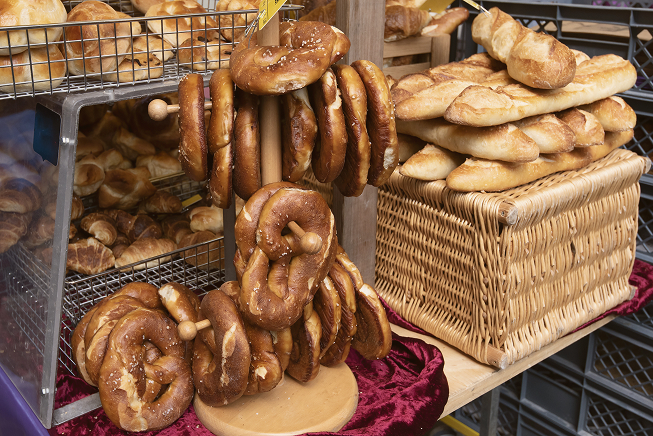
I’ve always thought farmers’ markets are the best reflection of a destination. It’s where local artisans, farmers, bakers, and cheesemakers come together to showcase what defines a place. Year-round, Bern hosts markets that fill the city squares with fresh produce, flowers, breads, and regional specialties. It’s one of the best ways to experience daily life in Bern and discover what makes this city tick.
HOW TO SPEND AN AFTERNOON WELL
Float or Stroll Along the Aare River
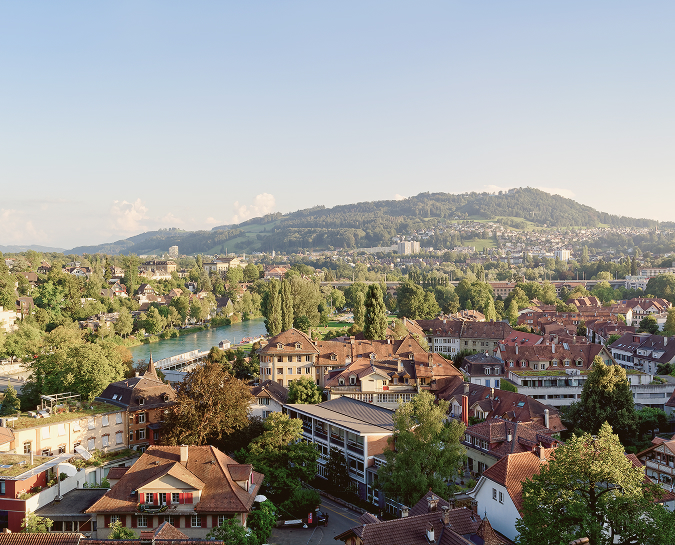
The crystal emerald-green Aare River that loops around Bern isn’t just one of the city’s greatest natural treasures – it falls somewhere between a playground and a highway.
If there’s one local experience I’d put at the top of my Bern wish list, it’s floating down the Aare. During the summer months, locals use the glacier-fed river for everything from afternoon swims to commutes home from work. If the weather is warm and you’re feeling adventurous, join them by letting the gentle current carry you downstream – a uniquely Bernese tradition and one of the most memorable ways to experience the city.
Prefer to stay dry? Walking the scenic riverside paths offers equally beautiful views. Either way, spending time along the Aare is one of the most Bernese experiences you can have.
Wander Kramgasse
The historic heart of Bern was once known as “Grocers Alley.” Today, Kramgasse is lined with boutiques, cafés, and shops tucked beneath the city’s iconic arcades.
And yes, Einstein House is here too, making it easy to combine a little shopping with a little science.
Explore the Matte Quarter
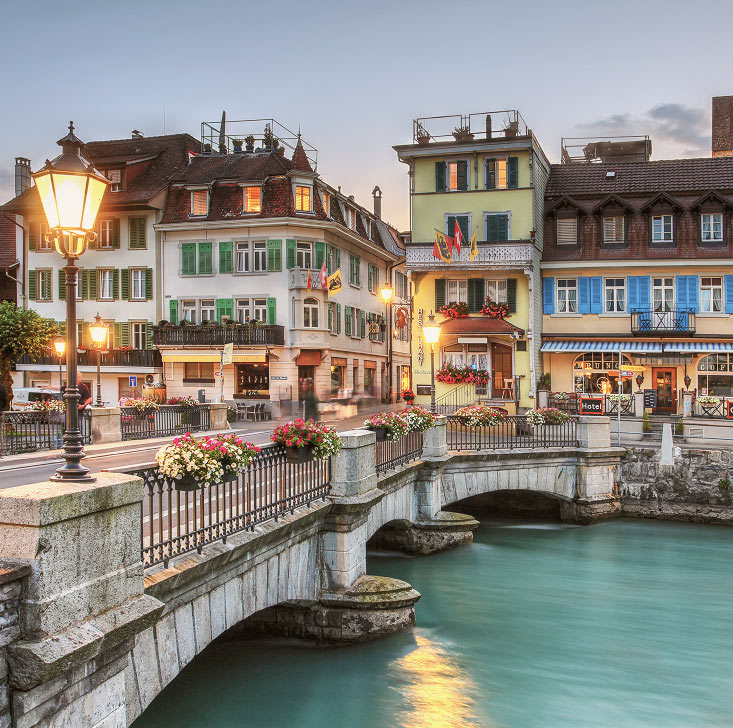
Tucked along the river below the Old Town, the Matte Quarter feels like a village hidden within the city. Colorful buildings, riverside cafés, and quieter streets offer a different perspective on Bern away from the busiest areas.
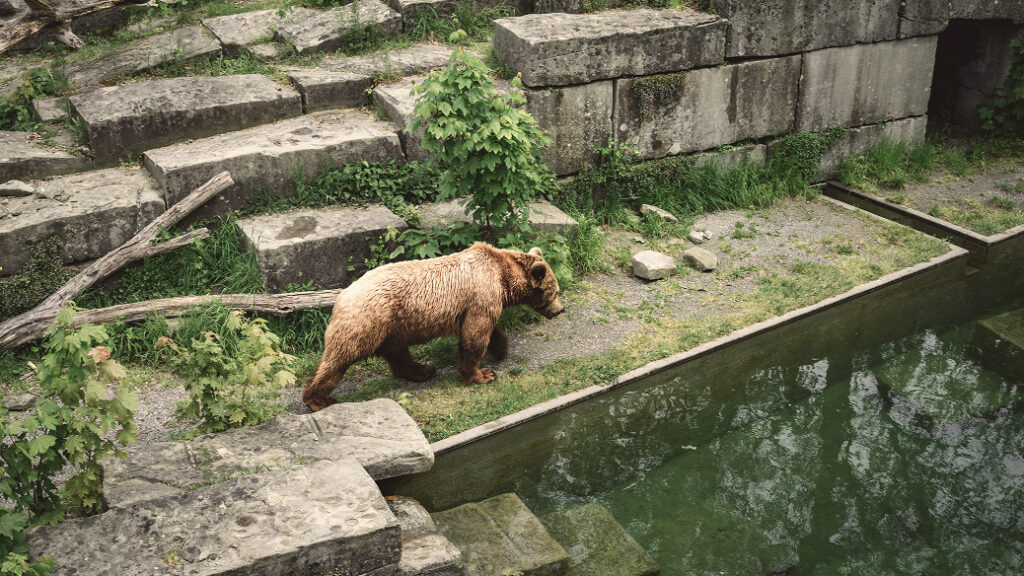
Meet Bern’s Iconic Bears at BärenPark
Like the city’s famous clock tower, bears are woven into Bern’s identity. In fact, the city’s name is believed to derive from the German word for bear.
Legend has it that Duke Berchtold V, the founder of Bern, named the city after the first animal he encountered on a hunt – a bear. For centuries, Bern’s beloved mascots lived in a moat beside the Old Town. Thankfully, today’s bears enjoy far more room to roam.
Today, the city honors its symbol in BärenPark, a spacious riverside habitat where visitors can observe the animals in a much more natural environment while learning about one of Bern’s most enduring traditions.
LOOKING FOR LOCAL FLAVOR
Sample Chocolate in Its Birthplace
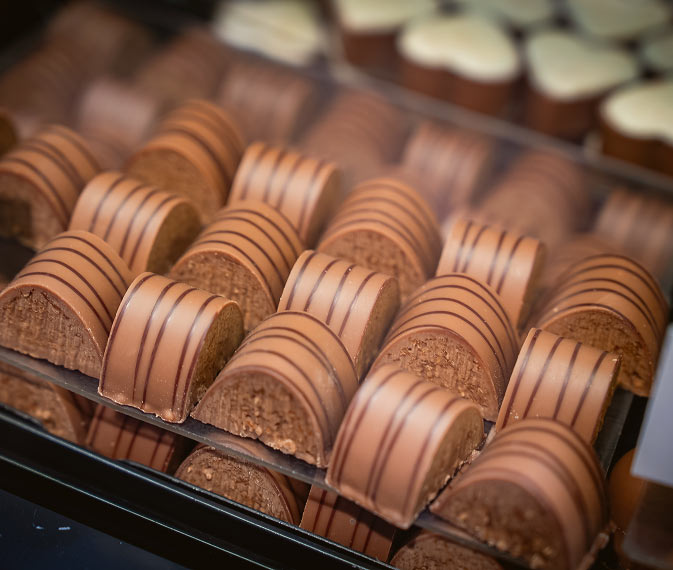
The Swiss are known for their chocolate, but Bern helped shape the chocolate we know today.
In 1879, Bern-born Rodolphe Lindt invented a process that transformed gritty cacao into the smooth, melt-in-your-mouth chocolate that would become famous around the world. From Lindt to Toblerone and countless local chocolatiers, Bern’s sweet legacy is everywhere.
As someone who never passes up the chance to sample local sweets, I’d happily spend an afternoon comparing Bern’s chocolatiers.
Try a Berner Platte
Every traditional dish tells a story about the place that created it.
Biting into dishes that have been around for generations is how you taste the soul of a place and the history it has lived through.
A hearty feast of meats, sausages, potatoes, sauerkraut, and turnips, Berner Platte is one of the region’s most iconic dishes. Its origins date back to 1798 when Bernese soldiers celebrated victory at the Battle of Neuenegg with a communal meal. Today, it remains a comforting local favorite found in traditional taverns throughout the city.
LOOKING FOR THE BEST VIEWS?
Rosengarten
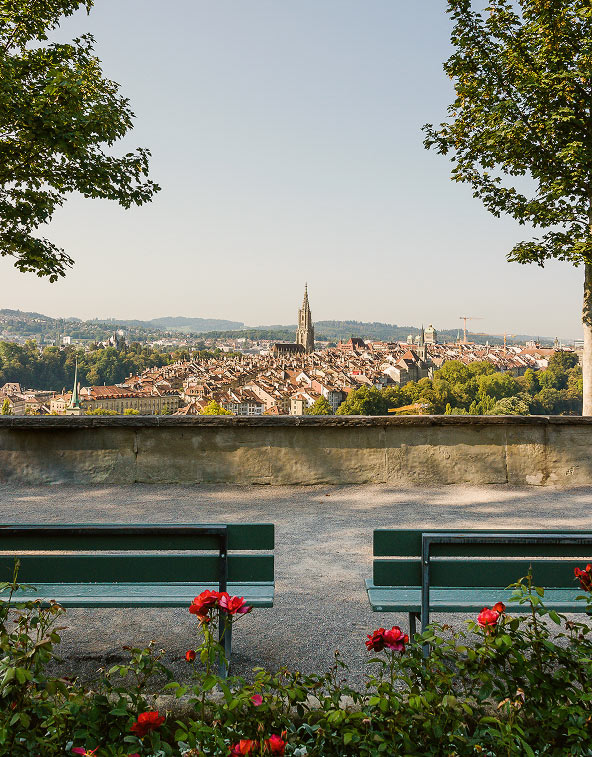
With more than 400 varieties of roses and irises, Bern’s Rose Garden is beautiful in its own right. But the real star is the view.
Overlooking the Old Town and the curve of the Aare River, it’s one of the most photogenic spots in the city. Bring a coffee, pick up a few treats from the market, and enjoy a picnic while taking in one of Switzerland’s prettiest urban panoramas.
If you’re anything like me, this is the kind of place where one quick photo somehow turns into an hour spent simply soaking in the view.
Pro tip: Visit just before sunset when the city glows in golden light.
Gurten Mountain
Bern isn’t technically an Alpine city, but this is still Switzerland, and mountains are never far away.
Known affectionately by locals as the “Güsche,” Gurten offers panoramic views of Bern, the Aare River, and the snow-capped peaks of the Bernese Oberland. Whether you hike its trails, join locals for a picnic, stargaze, or simply enjoy the scenery, it’s an easy escape into nature without leaving the city behind.
Climb the Cathedral of Bern
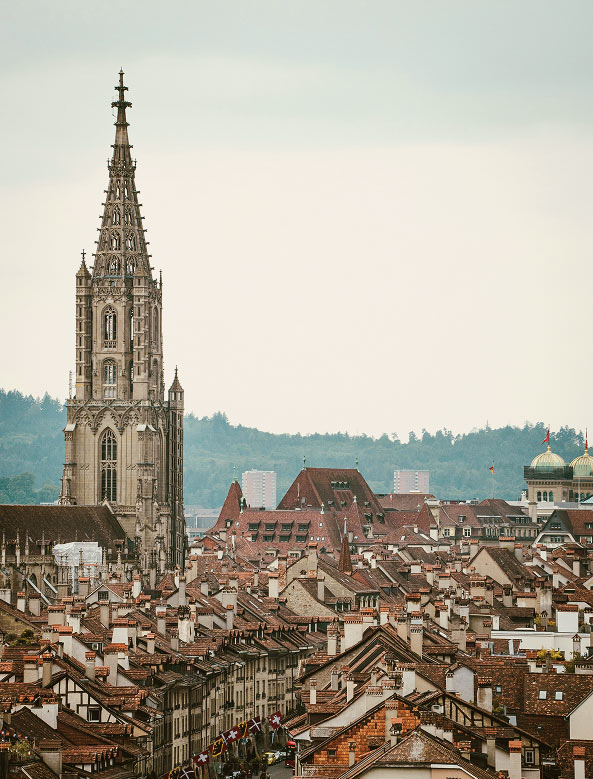
Switzerland’s tallest cathedral rises above the Old Town and rewards those willing to tackle its 344 steps.
The climb may leave your legs questioning your decisions, but the view quickly makes up for it. From the top, you’ll see the Aare curling around the city, rooftops stretching toward the horizon, and, on a clear day, the distant Alps standing watch over Bern.
FINDING THE TIME IN BERN
Einstein spent years in Bern thinking about time. More than a century later, visitors come here for a different relationship with it. Time seems to move differently in Bern. Not because there’s less to see.
Bern seems to whisper the opposite of what the clock suggests. Slow down. Linger a little longer over coffee. Take the scenic route. Spend an extra hour wandering beneath the arcades or alongside the river.
On our Bern & the Matterhorn journey, free time isn’t an afterthought – it’s built into the experience.
Mornings are spent with curated moments, from going behind the scenes of the Zytglogge Clock to biking through the scenic Emmental countryside en route to a local cheese factory. Included is a Swiss Travel Pass – your key to exploring Switzerland independently, whether that means hopping aboard a train, visiting a museum, or simply following your curiosity.
Whether you’re exploring the weekly market, relaxing beside the Aare, climbing Gurten for the view, or discovering Bern’s chocolate heritage, the choice is yours.
After all, that’s the beauty of free time.
As someone who’s usually trying to squeeze every last sight into a day (I once squeezed a three-day itinerary into a 24-hour layover in Paris), Bern feels like the rare city that would convince me to slow down instead. The more I learned about it, the more I realized it isn’t a place that asks you to race from landmark to landmark – it’s one that rewards curiosity, lingering a little longer, and embracing the unexpected. It sounds like exactly the kind of city I’d fall in love with.
Einstein once said, “Put your hand on a hot stove for a minute, and it seems like an hour. Sit with a pretty girl for an hour, and it seems like a minute. That’s relativity.”
I think you’ll find that Bern feels a bit like the latter.
Hours seem to disappear here. Not because you’re rushing to see everything, but because you’ve stopped trying to.
And somehow, in a city so connected to the idea of time, Bern makes it feel as though there is always a little more of it.
There are some experiences that look incredible on screen. And there are others that can only be understood in person.
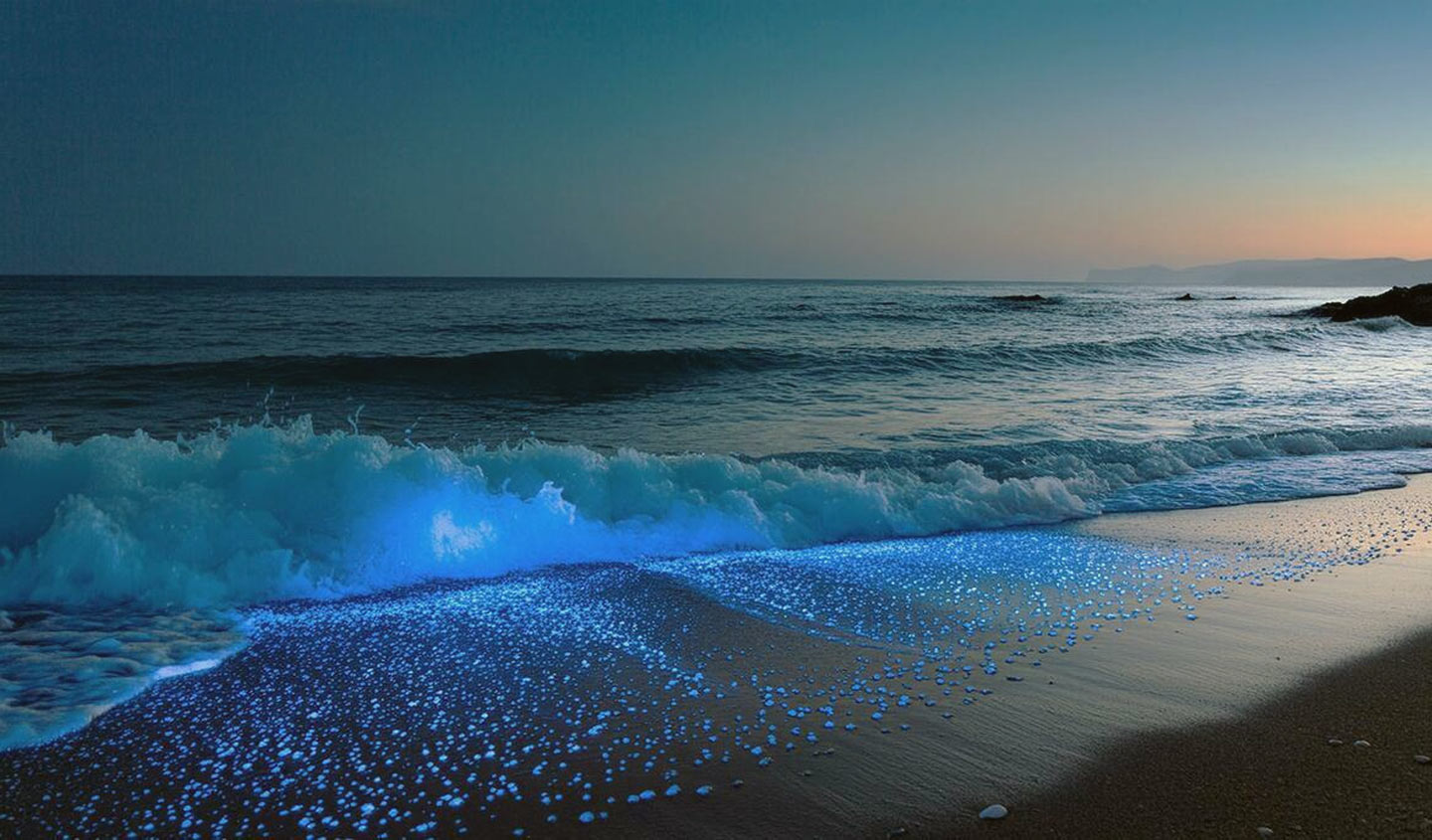
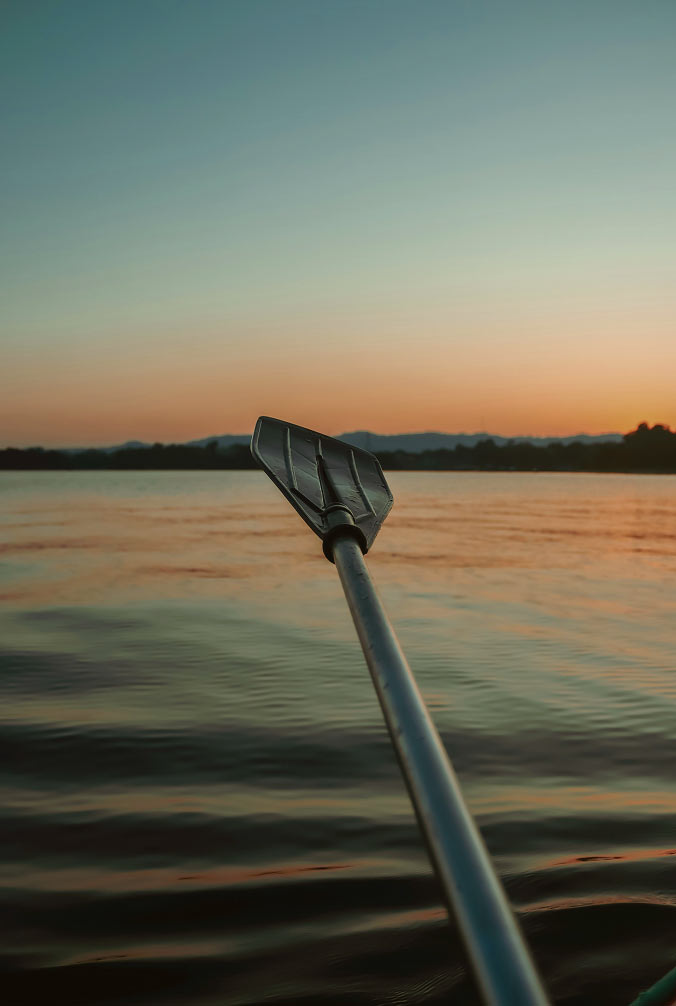
Bioluminescent kayaking on Tomales Bay falls squarely into the second category. As darkness settles in, millions of microscopic organisms light up the water with every paddle stroke, creating an almost unbelievable display of electric blue beneath the night sky.
By now, you may be wondering: Couldn’t I just pull up a YouTube video? Is it really that different in person?
It’s a fair question. As an avid YouTube watcher myself, I spend hours watching DIY projects, interviews, travel videos, home repairs, and just about everything in between. Video is an incredible way to learn, discover, and experience places from afar.
But it’s not a one-to-one replacement.
So yes, I could send you a YouTube video. You’d see the same glowing water. You’d understand what it looks like. I could even describe the way the bay sparkles around you, as if someone scattered stars across the surface of the sea.
But to answer your question.
Yes, it really is that different in person.
Because a video only lets you see it.
Being there lets you feel it.
Because a video can’t recreate the silence that settles over the water. It can’t capture the slight resistance of your paddle, or what it’s like to trail your hand through the sea and feel millions of tiny organisms drift between your fingers, each one lighting up for just an instant before disappearing back into the darkness.
That’s something you can only understand by being there. It’s like what the late, great Robin Williams said in Good Will Hunting:
“If I asked you about art, you’d probably give me the skinny on every art book ever written. Michelangelo, you know a lot about him. Life’s work, political aspirations, him and the pope, sexual orientations, the whole works, right? But I’ll bet you can’t tell me what it smells like in the Sistine Chapel. You’ve never actually stood there and looked up at that beautiful ceiling.”
And that’s the beauty of travel. It isn’t just about seeing remarkable places or checking destinations off your bucket list. It’s about the moments that stay with you long after you return home: the aroma of an unexpected meal, the view from your bedroom window, the feeling of ancient stone beneath your fingertips, or the glow of millions of tiny organisms as your paddle hits the water.
So, if you’d like, here’s that YouTube video of the bioluminescent kayaking ride.
But something tells me you’d rather experience it for yourself.
When I was a sophomore in college, I had a history professor who completely changed the way I thought about the subject.
Most history classes felt like an endless list of dates, names, and facts you were expected to memorize just long enough to survive a test. His classes felt more like episodes of a really good TV drama.
He told stories. Not “history stories.” Human stories. And we, his students, found ourselves binging world history decades before binging became a thing.
In his classroom, kings, generals, politicians, and ordinary people weren’t names in a textbook. They were characters. They had flaws. They succeeded. They failed. They loved. They worried. And many times, they made spectacularly bad choices.
History wasn’t something that happened. It was something people lived through.
For our final research paper, he gave us an assignment I’ve never forgotten. We had to write in the first person, using actual historical sources, and tell a story. I chose to write from the perspective of a Roman soldier stationed in Pompeii during the eruption of Mount Vesuvius.
Spoiler alert: I didn’t survive. But I did get an A on the paper. (I’m pretty sure I still have it somewhere.)
More importantly, I developed a fascination with Pompeii that stuck with me long after the semester ended.
THE PLACE I NEVER THOUGHT I’D SEE
For years, Pompeii existed only in books, documentaries, and my imagination. Then, about fifteen years later, my wife and I found ourselves in Rome on our honeymoon. We decided to take a day trip south.
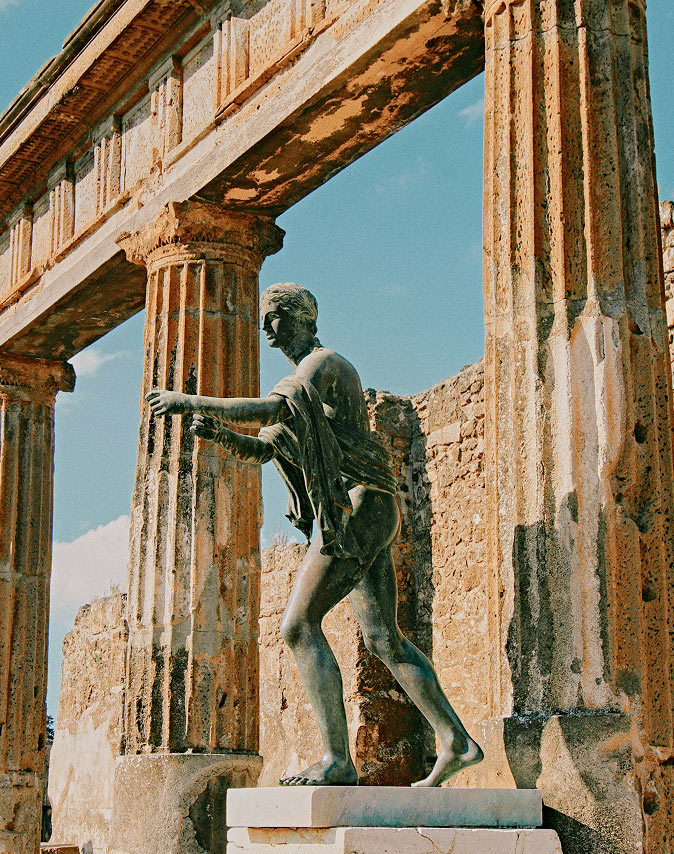
Suddenly, I wasn’t reading about Pompeii anymore. I was standing in it. And it was every bit as incredible as I hoped it would be.
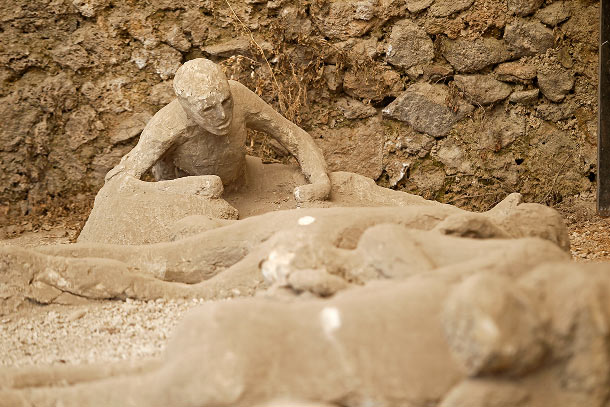
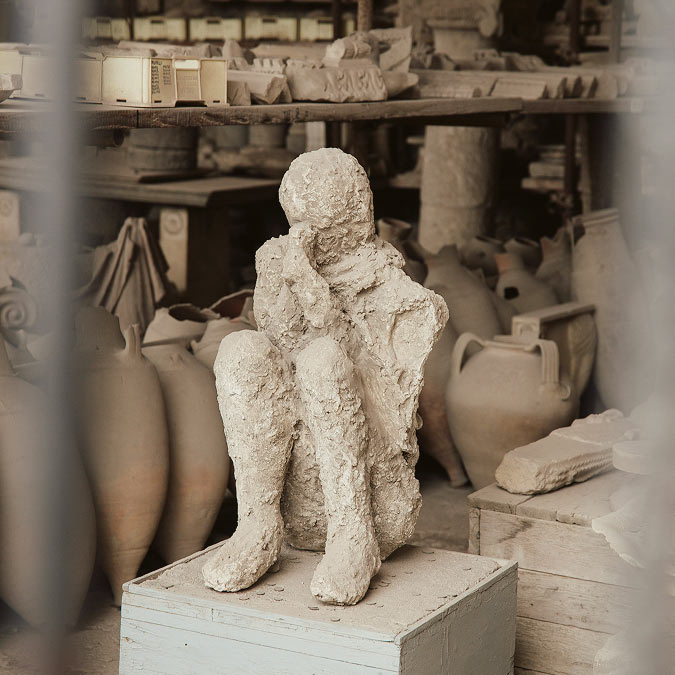
What’s funny is that when people talk about Pompeii, they usually focus on one thing: the casts. Those haunting figures frozen in time. They’re remarkable, of course. And seeing them in person is powerful. But they’re not what I remember most.
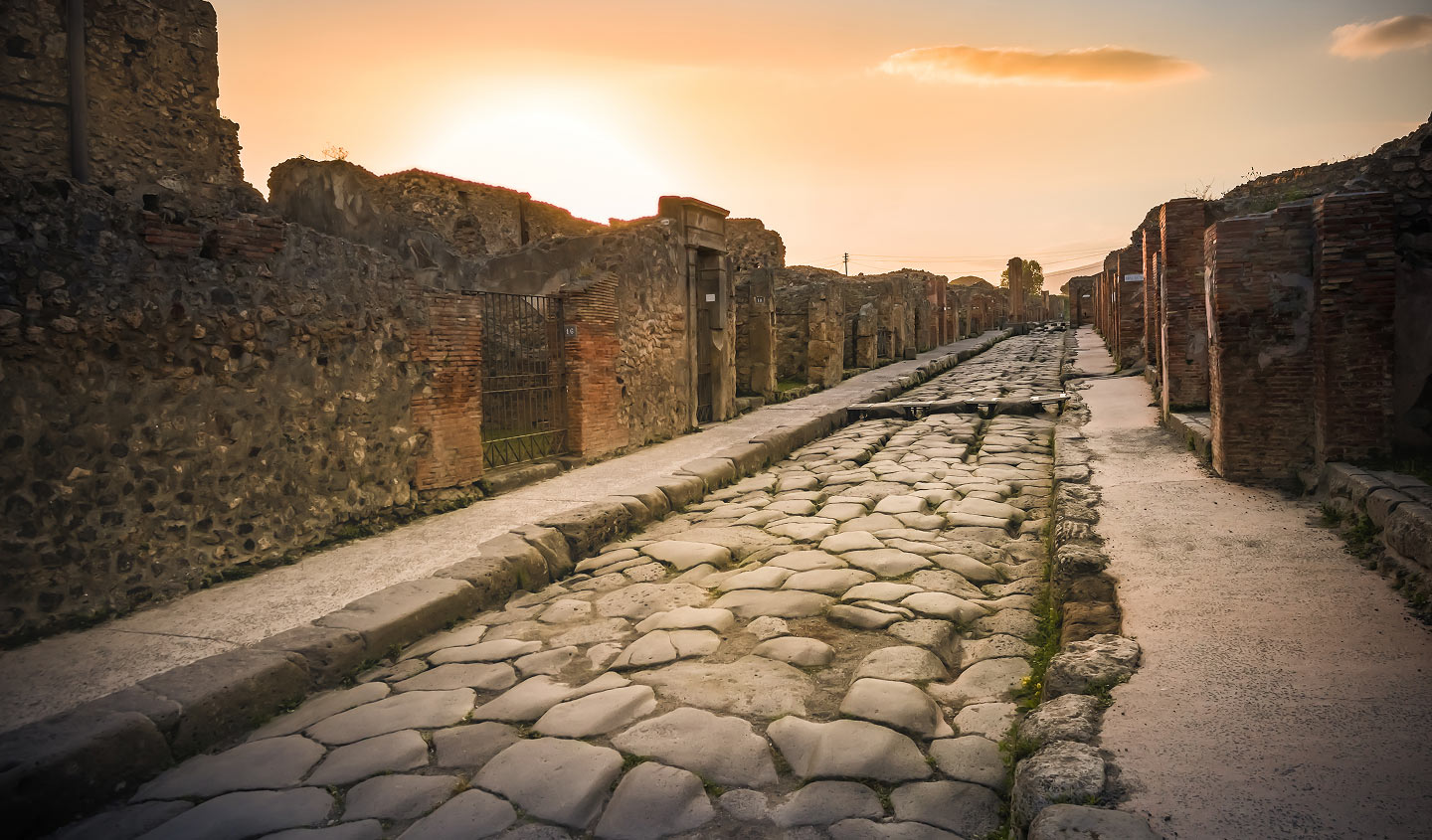
I remember the deep wagon-wheel ruts carved into stone streets by generations of traffic.
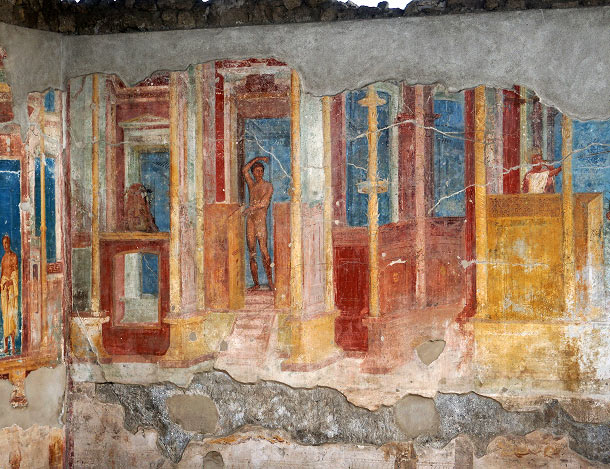
I remember faded paintings that somehow still cling to walls after nearly two thousand years.
I remember standing where gladiators once trained.
I remember walking through homes and courtyards and realizing that, despite all the centuries between us, the people who lived here weren’t all that different from me.
And I remember Mount Vesuvius. You can see it from just about everywhere. And even now, it feels like it’s watching.
THE STORY MOST PEOPLE DON’T KNOW
Here’s something many visitors don’t realize.
Those famous figures aren’t actually people turned to stone. When Vesuvius erupted in 79 AD, the city – and thousands of its inhabitants – were buried beneath volcanic ash and debris. Over time, the bodies of the victims decomposed, leaving hollow spaces in the hardened ash. Centuries later, archaeologists discovered these voids and carefully filled them with plaster.
What we see today are casts of the spaces people once occupied.
Not the people themselves, but the traces they left behind.
In a strange way, I think that’s even more moving.
LOOKING BEYOND THE SPECTACLE
Pompeii attracts millions of visitors every year. And understandably so. It’s one of the most extraordinary archaeological sites on Earth.
But it’s also easy to reduce it to a spectacle. To focus on the eruption. The tragedy. The dramatic final moments.
The longer you spend there, though, the more you realize that the real story isn’t how Pompeii ended. It’s how Pompeii lived.
The bakery where bread was made. The shops that opened each morning. The homes filled with artwork. The streets crowded with merchants, workers, travelers, and children.
The details are what make Pompeii feel surprisingly emotional. They’re familiar.
History often feels distant because we focus on what makes people different from us. But, when you’re there, Pompeii reminds us how much we actually have in common.
A STORY THAT ISN’T FINISHED YET
One of the most fascinating things about Pompeii is that archaeologists are still uncovering new pieces of the city today.
The story isn’t finished.
On Roam by Tauck’s Rome, Sicily & Malta journey, guests have the rare opportunity to go beyond the areas most visitors see and step into a restricted active excavation zone, where new discoveries continue to emerge from beneath the ash, helping historians better understand what everyday life looked like before the eruption.
It’s a chance to see history while it’s still being revealed. And, for someone who has been fascinated by this place since a college history class decades ago, that’s pretty incredible to think about.
THE TRACES WE LEAVE BEHIND
While I was thinking about what to write for this post and doing a little research, I found myself trying to remember the name of that professor. I’m ashamed to say I couldn’t.
But I did come across an old university article about a beloved history professor who passed away just a few years after I took that class.
I can’t say with complete certainty that it was him. But some details line up in a way that makes me think it probably was. (I actually ordered my transcript to find out for sure – but unfortunately it doesn’t show professors’ names.)
If that’s true, it’s strange to realize that someone whose name had slipped from my memory still managed to shape the way I experience places like Pompeii all these years later.
And maybe that’s why Pompeii still matters.
We don’t know the names of most of the people who lived there. We don’t know what made them laugh. We don’t know what they talked about at dinner.
We don’t know what they planned to do on a tomorrow that never came.
But pieces of them remain. A painting on a wall. A groove in a road. A loaf of bread preserved in ash. A home they loved.
Enough to remind us they were here. Enough to make them impossible to forget.
Professor, I hope you’re resting easy. I wish you could know what an impact your class and that assignment had on me. It was one of the first times I realized I might be able to turn this whole writing thing into a real career. Wherever you are now, just know that your story – like all those stories you told us years ago – lives on.