Switzerland’s capital often surprises first-time visitors. While Zurich hums with business and Geneva buzzes with international diplomacy, Bern feels remarkably relaxed. No need to impress, no need to rush – just quiet confidence in its Swiss identity.
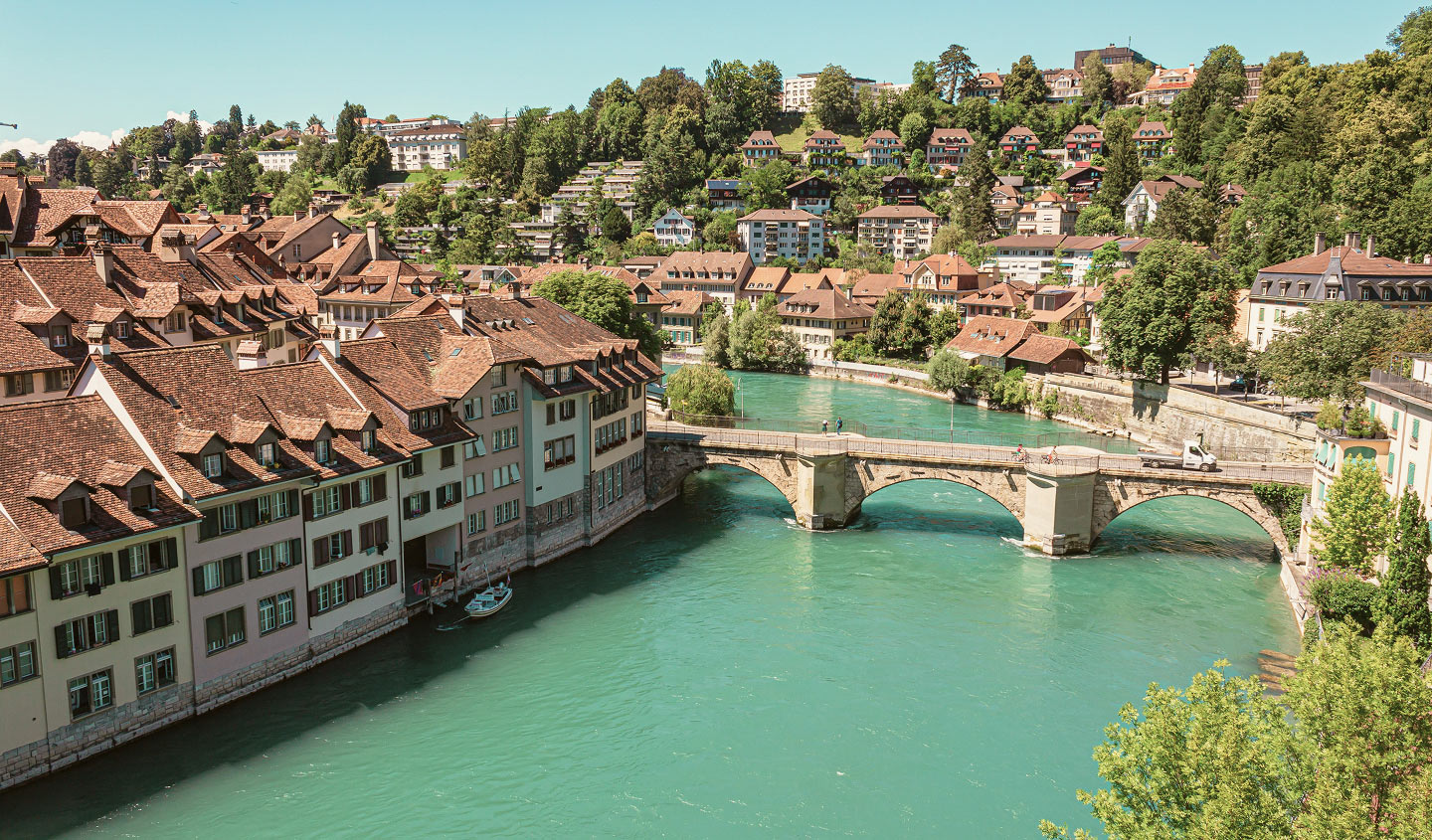
Built on a peninsula, this UNESCO-listed Old Town wraps around a bend in the emerald-green Aare River beneath stretches of medieval arcades and soaring steeples. One of the best-preserved medieval cities in Europe, Bern charms with centuries-old fountains that feel like pages from a storybook, each one revealing local legends, heroes, and historic events.
There’s no other way to say it: the city feels suspended in time.
BERN IN REWIND
In 1902, a 23-year-old patent clerk moved to Switzerland’s capital city and rented an apartment on the second floor in Bern. By day, Albert Einstein worked at the Swiss Patent Office, evaluating inventions. In the evenings, on walks through the city, and during hours carved out from a demanding work schedule, he wrestled with ideas that would change the world.
Over the seven years he lived in Bern, Einstein published the groundbreaking papers that became known as his Annus Mirabilis. He showed that atoms really exist. He demonstrated that light behaves in unexpected ways. He revealed that mass and energy are interchangeable. And perhaps most famously, he showed that space and time are connected.
Not bad for a side project.
I promise this isn’t a physics lesson, and I won’t even attempt to explain Einstein’s genius. But there is something fitting about thinking of his discoveries here in Bern.
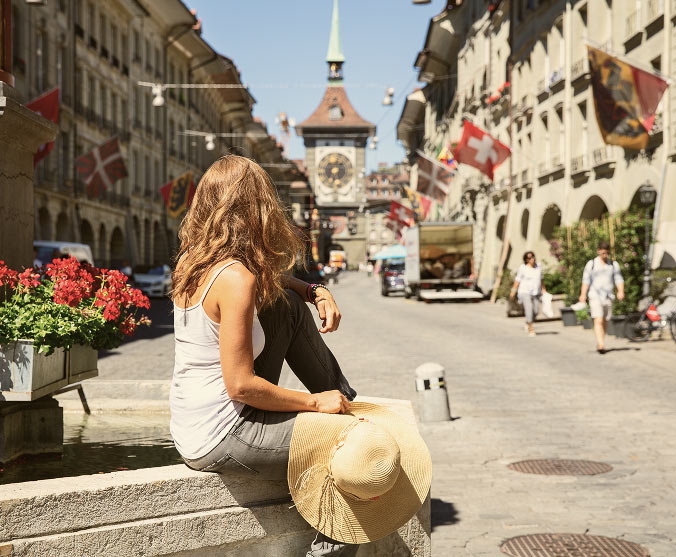
Einstein’s theory of relativity showed that time is not fixed but relative. More than a century later, Bern still feels like a city that invites you to think about time. The medieval Zytglogge Clock has been marking the hours for more than 500 years. Arcaded streets wind through the Old Town much as they did in Einstein’s day. And around every corner is a reminder that our time, unlike the clock’s, is limited.
Interested in learning more about Switzerland’s remarkable relationship with time? Read Kevin’s deep dive into Swiss timekeeping before your visit to Bern.
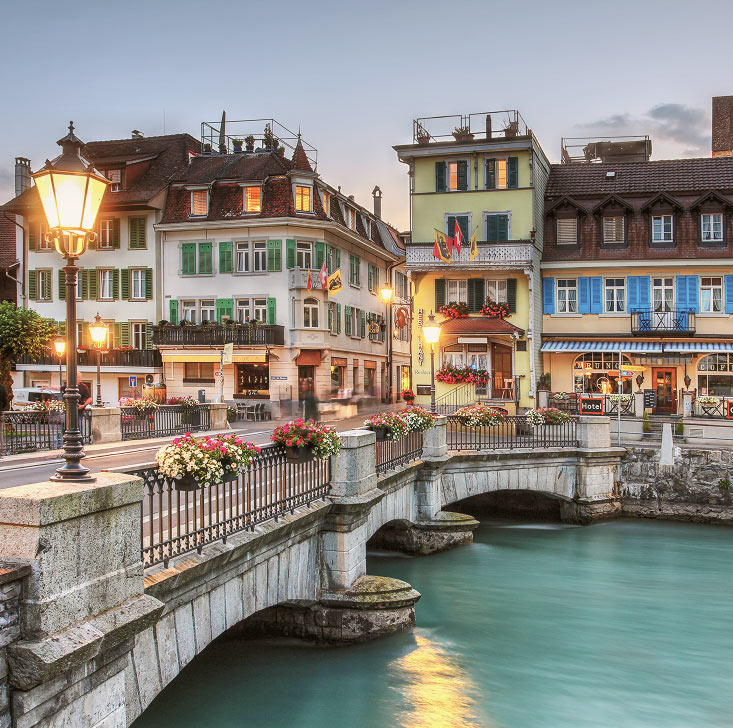
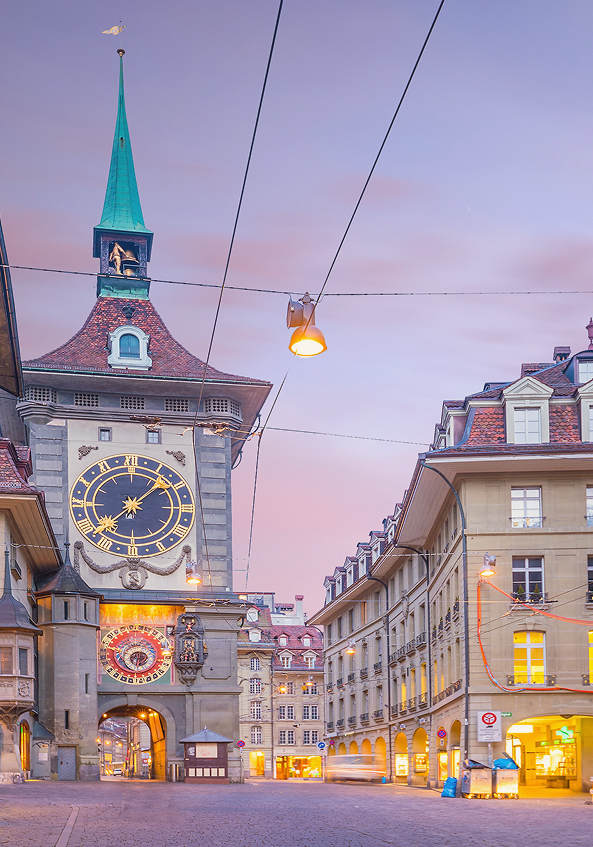
When you’re visiting somewhere for the first time, that realization feels especially relevant. You want to spend your time wisely. To see everything. To experience everything.
The good news? Bern doesn’t demand that kind of pace.
Here are some of the best ways to spend your free time in Bern – because not every brilliant use of time needs to change the course of physics.
HAVE AN HOUR? START HERE.
Visit Einstein House
Step inside the apartment where Einstein, his wife Mileva, and their son Hans Albert lived from 1903 to 1905. The modest flat offers a glimpse into his daily life in Bern and the years that led to some of his most revolutionary ideas. Located along Kramgasse, it’s a fascinating stop for anyone curious about the man behind the theories.
Browse the Weekly Market
If you only have one hour in Bern, this is where you should wander.
I’ve always thought farmers’ markets are the best reflection of a destination. It’s where local artisans, farmers, bakers, and cheesemakers come together to showcase what defines a place. Year-round, Bern hosts markets that fill the city squares with fresh produce, flowers, breads, and regional specialties. It’s one of the best ways to experience daily life in Bern and discover what makes this city tick.
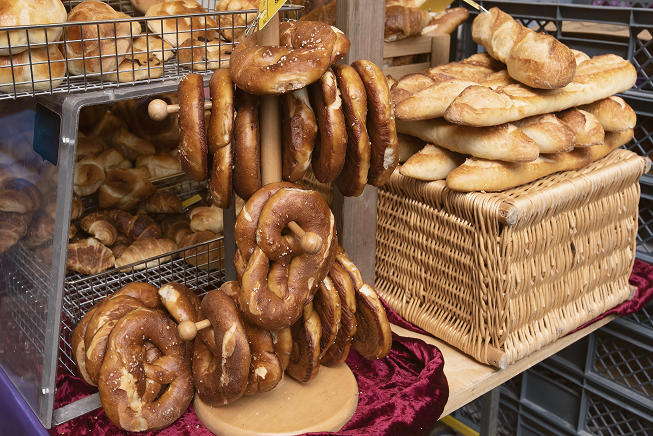
HOW TO SPEND AN AFTERNOON WELL
Float or Stroll Along the Aare River
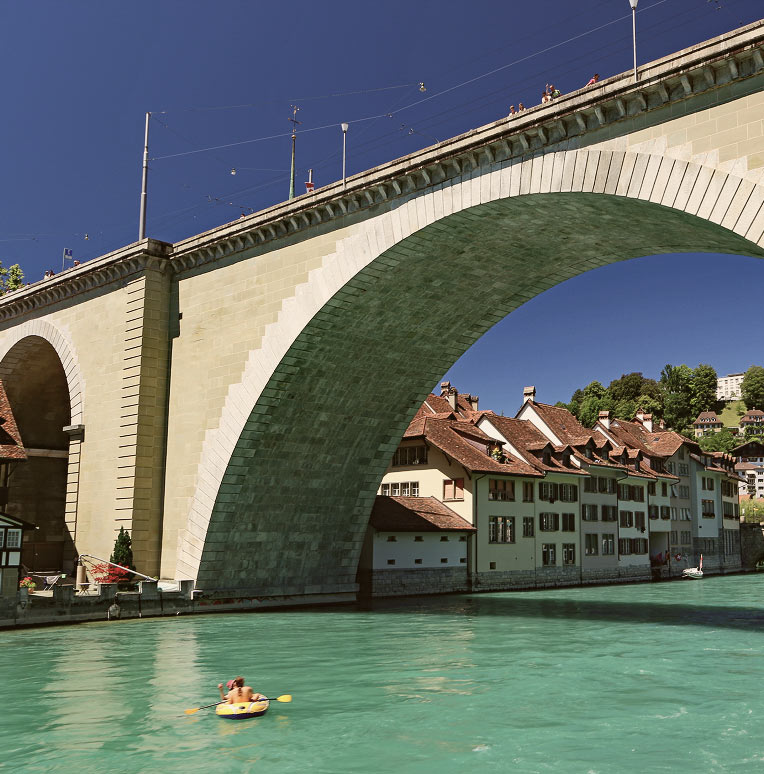
The crystal emerald-green Aare River that loops around Bern isn’t just one of the city’s greatest natural treasures – it falls somewhere between a playground and a highway.
If there’s one local experience I’d put at the top of my Bern wish list, it’s floating down the Aare. During the summer months, locals use the glacier-fed river for everything from afternoon swims to commutes home from work. If the weather is warm and you’re feeling adventurous, join them by letting the gentle current carry you downstream – a uniquely Bernese tradition and one of the most memorable ways to experience the city.
Prefer to stay dry? Walking the scenic riverside paths offers equally beautiful views. Either way, spending time along the Aare is one of the most Bernese experiences you can have.
Wander Kramgasse
The historic heart of Bern was once known as “Grocers Alley.” Today, Kramgasse is lined with boutiques, cafés, and shops tucked beneath the city’s iconic arcades.
And yes, Einstein House is here too, making it easy to combine a little shopping with a little science.
Explore the Matte Quarter
Tucked along the river below the Old Town, the Matte Quarter feels like a village hidden within the city. Colorful buildings, riverside cafés, and quieter streets offer a different perspective on Bern away from the busiest areas.
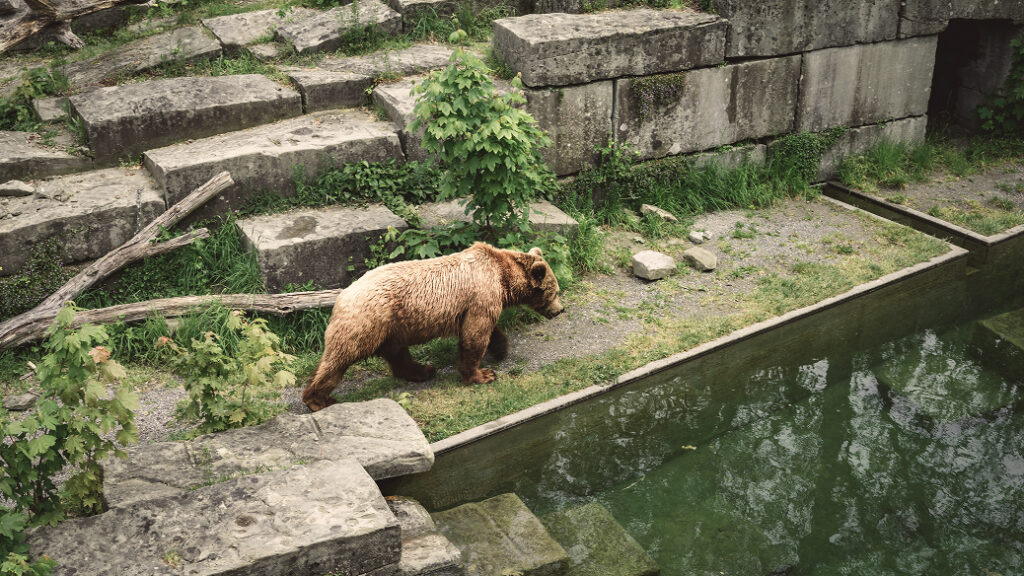
Meet Bern’s Iconic Bears at BärenPark
Like the city’s famous clock tower, bears are woven into Bern’s identity. In fact, the city’s name is believed to derive from the German word for bear.
Legend has it that Duke Berchtold V, the founder of Bern, named the city after the first animal he encountered on a hunt – a bear. For centuries, Bern’s beloved mascots lived in a moat beside the Old Town. Thankfully, today’s bears enjoy far more room to roam.
Today, the city honors its symbol in BärenPark, a spacious riverside habitat where visitors can observe the animals in a much more natural environment while learning about one of Bern’s most enduring traditions.
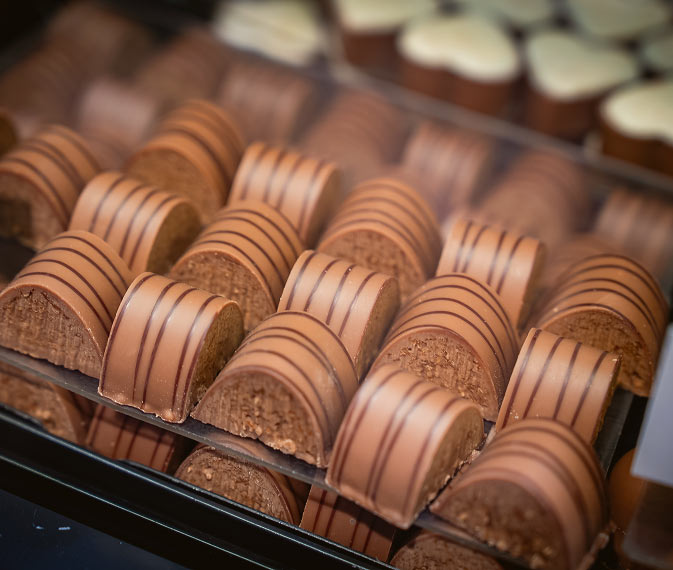
LOOKING FOR LOCAL FLAVOR
Sample Chocolate in Its Birthplace
The Swiss are known for their chocolate, but Bern helped shape the chocolate we know today.
In 1879, Bern-born Rodolphe Lindt invented a process that transformed gritty cacao into the smooth, melt-in-your-mouth chocolate that would become famous around the world. From Lindt to Toblerone and countless local chocolatiers, Bern’s sweet legacy is everywhere.
As someone who never passes up the chance to sample local sweets, I’d happily spend an afternoon comparing Bern’s chocolatiers.
Try a Berner Platte
Every traditional dish tells a story about the place that created it.
Biting into dishes that have been around for generations is how you taste the soul of a place and the history it has lived through.
A hearty feast of meats, sausages, potatoes, sauerkraut, and turnips, Berner Platte is one of the region’s most iconic dishes. Its origins date back to 1798 when Bernese soldiers celebrated victory at the Battle of Neuenegg with a communal meal. Today, it remains a comforting local favorite found in traditional taverns throughout the city.
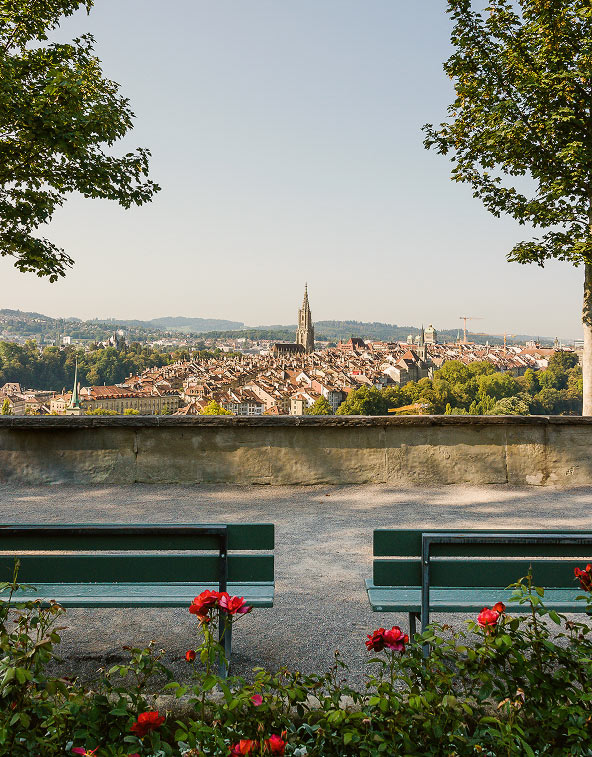
LOOKING FOR THE BEST VIEWS?
Rosengarten
With more than 400 varieties of roses and irises, Bern’s Rose Garden is beautiful in its own right. But the real star is the view.
Overlooking the Old Town and the curve of the Aare River, it’s one of the most photogenic spots in the city. Bring a coffee, pick up a few treats from the market, and enjoy a picnic while taking in one of Switzerland’s prettiest urban panoramas.
If you’re anything like me, this is the kind of place where one quick photo somehow turns into an hour spent simply soaking in the view.
Pro tip: Visit just before sunset when the city glows in golden light.
Gurten Mountain
Bern isn’t technically an Alpine city, but this is still Switzerland, and mountains are never far away.
Known affectionately by locals as the “Güsche,” Gurten offers panoramic views of Bern, the Aare River, and the snow-capped peaks of the Bernese Oberland. Whether you hike its trails, join locals for a picnic, stargaze, or simply enjoy the scenery, it’s an easy escape into nature without leaving the city behind.
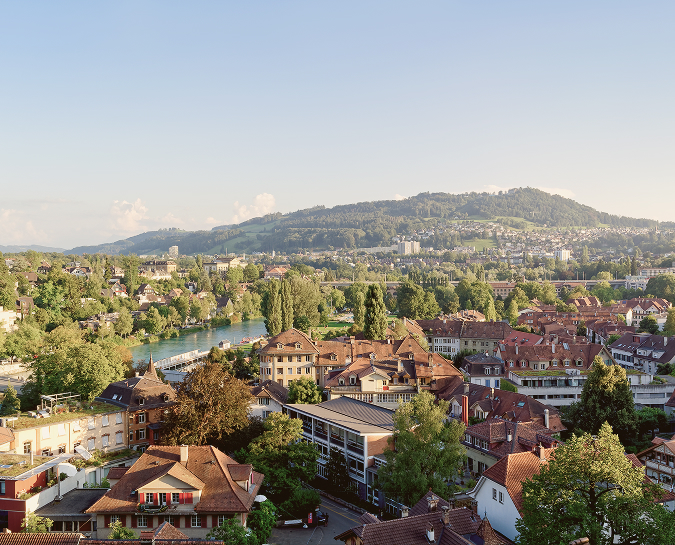
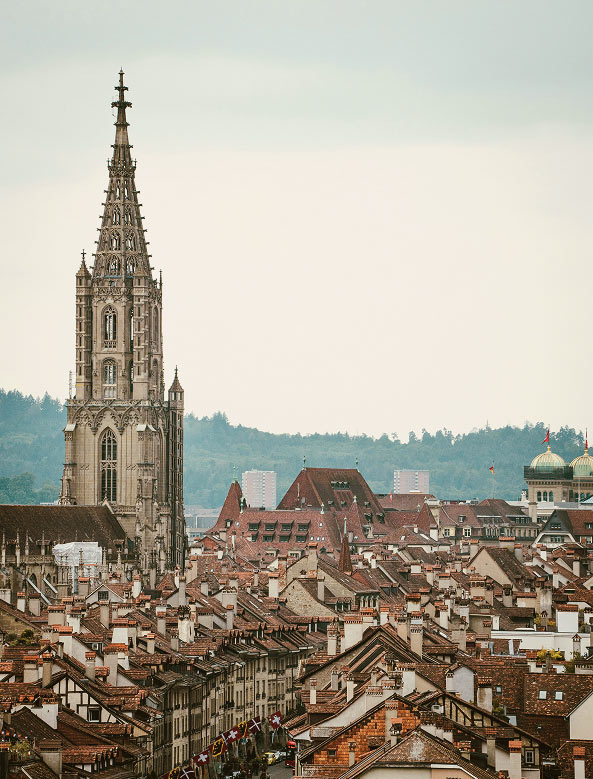
Climb the Cathedral of Bern
Switzerland’s tallest cathedral rises above the Old Town and rewards those willing to tackle its 344 steps.
The climb may leave your legs questioning your decisions, but the view quickly makes up for it. From the top, you’ll see the Aare curling around the city, rooftops stretching toward the horizon, and, on a clear day, the distant Alps standing watch over Bern.
FINDING THE TIME IN BERN
Einstein spent years in Bern thinking about time. More than a century later, visitors come here for a different relationship with it. Time seems to move differently in Bern. Not because there’s less to see.
Bern seems to whisper the opposite of what the clock suggests. Slow down. Linger a little longer over coffee. Take the scenic route. Spend an extra hour wandering beneath the arcades or alongside the river.
On our Bern & the Matterhorn journey, free time isn’t an afterthought – it’s built into the experience.
Mornings are spent with curated moments, from going behind the scenes of the Zytglogge Clock to biking through the scenic Emmental countryside en route to a local cheese factory. Included is a Swiss Travel Pass – your key to exploring Switzerland independently, whether that means hopping aboard a train, visiting a museum, or simply following your curiosity.
Whether you’re exploring the weekly market, relaxing beside the Aare, climbing Gurten for the view, or discovering Bern’s chocolate heritage, the choice is yours.
After all, that’s the beauty of free time.
As someone who’s usually trying to squeeze every last sight into a day (I once squeezed a three-day itinerary into a 24-hour layover in Paris), Bern feels like the rare city that would convince me to slow down instead. The more I learned about it, the more I realized it isn’t a place that asks you to race from landmark to landmark – it’s one that rewards curiosity, lingering a little longer, and embracing the unexpected. It sounds like exactly the kind of city I’d fall in love with.
Einstein once said, “Put your hand on a hot stove for a minute, and it seems like an hour. Sit with a pretty girl for an hour, and it seems like a minute. That’s relativity.”
I think you’ll find that Bern feels a bit like the latter.
Hours seem to disappear here. Not because you’re rushing to see everything, but because you’ve stopped trying to.
And somehow, in a city so connected to the idea of time, Bern makes it feel as though there is always a little more of it.