I’ve always been… let’s call it time-aware.
I’m the one who shows up 10 minutes early to everything.
The one sitting in the car while everyone else is “just grabbing one more thing.”
The one who checks the time… and then double-checks the time just in case it changed by half a second.
Of course, my wife loves this about me.
(She does not, in fact, love this about me.)
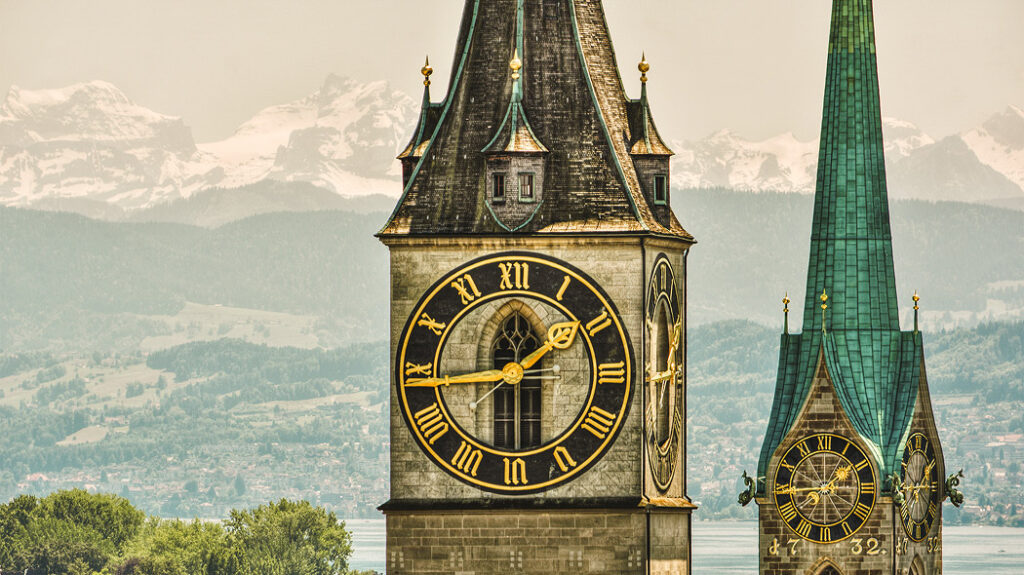
So, when I went to Switzerland the first time, something clicked – literally and figuratively. Everywhere I looked, there were clocks. Beautiful ones. Precise ones. Old ones that had clearly been ticking much longer than I have. And, for the first time in my life (pun intended), I felt like I was surrounded by people who understood the importance of knowing exactly what time it is.
It was, in many ways, my paradise.
So… why Switzerland?
Switzerland didn’t just stumble into becoming the world’s timekeeper.
It started in the 1500s, when reformer John Calvin banned flashy jewelry in Geneva. No gold chains. No decorative excess.
Which created a bit of a problem for all the jewelers.
So they pivoted. (Am I the only one who can’t hear that word without thinking of Ross and the couch moving scene from Friends?)
If they couldn’t make something decorative, they’d make something functional. Something precise. Something that required just as much skill – maybe more.
They started making watches and clocks.
Fast forward a few centuries, and Switzerland became synonymous with precision. Not just in watchmaking, but in everything… trains, engineering, chocolate, you name it.
They didn’t just keep time. They perfected it.
What makes Swiss clocks different?
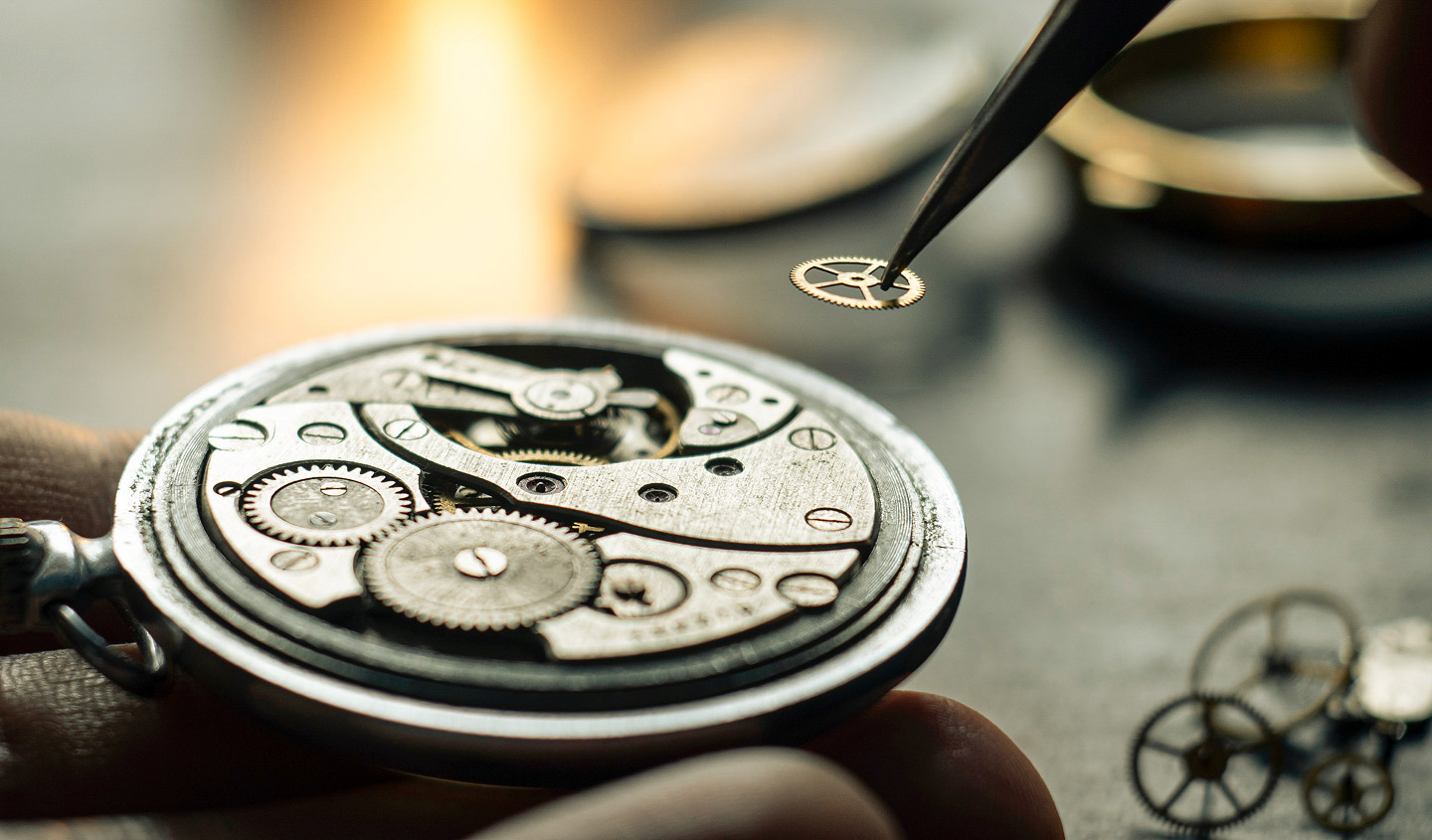
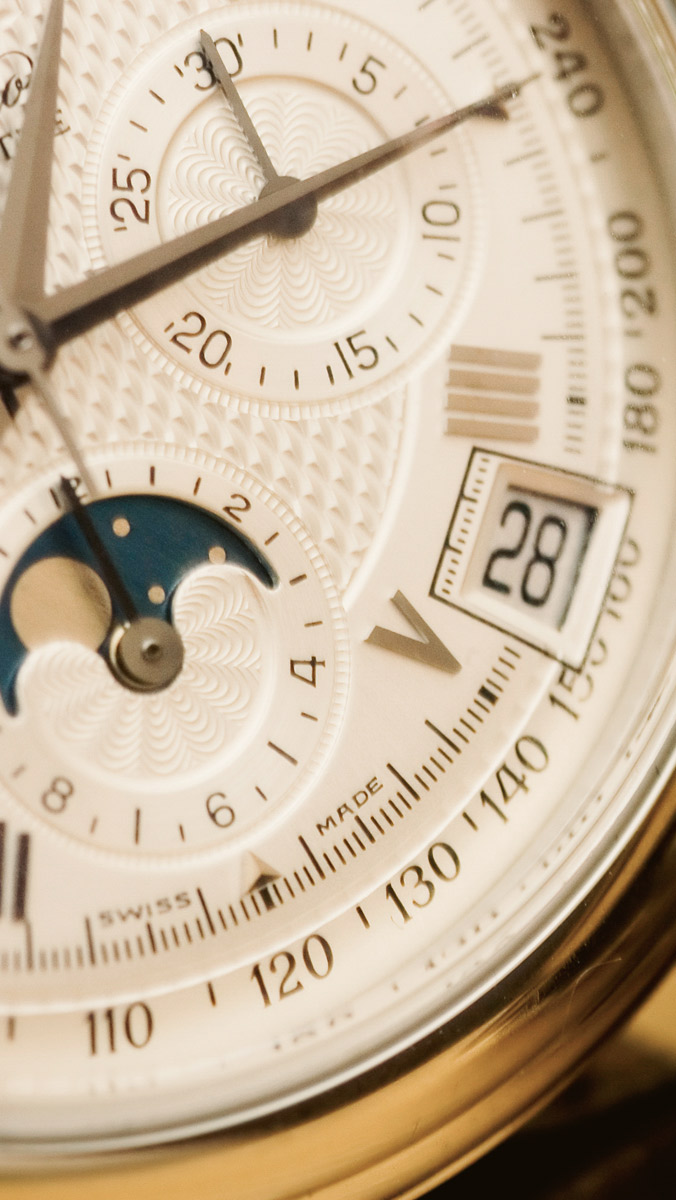
There’s a level of craftsmanship that borders on obsession. Tiny, intricate mechanical movements. Parts engineered to microscopic tolerances. Designs that are as beautiful as they are functional.
But it’s not just the mechanics that make me feel all warm and fuzzy. It’s the philosophy behind them.
Swiss clockmaking is about reliability. Longevity. Getting it right… and then getting it right again, every second, for years.
There’s something comforting about that. In a world where most things are built to be replaced (just ask my dishwasher and dryer), Swiss clocks are built to last.
A culture that respects time
In Switzerland, trains leave exactly when they’re supposed to. Meetings start when they’re scheduled. Clocks – whether they’re in a cathedral tower or on your wrist – just quietly do their job.
And the result is something we don’t talk about enough: Life feels calmer. Because when everything runs on time, you don’t have to spend your energy worrying about time. You can actually enjoy it.
The luxury of time
That’s really what makes this interesting.
Swiss clocks aren’t just about precision.
They’re about what precision gives you.
Time back.
The kind you don’t normally get at home.
Time to sit at a café a little longer.
Time to take the scenic train instead of rushing.
Time to wander without feeling like you’re falling behind – something Cindy captured perfectly in her blog post on Free Time: The Ultimate Luxury.

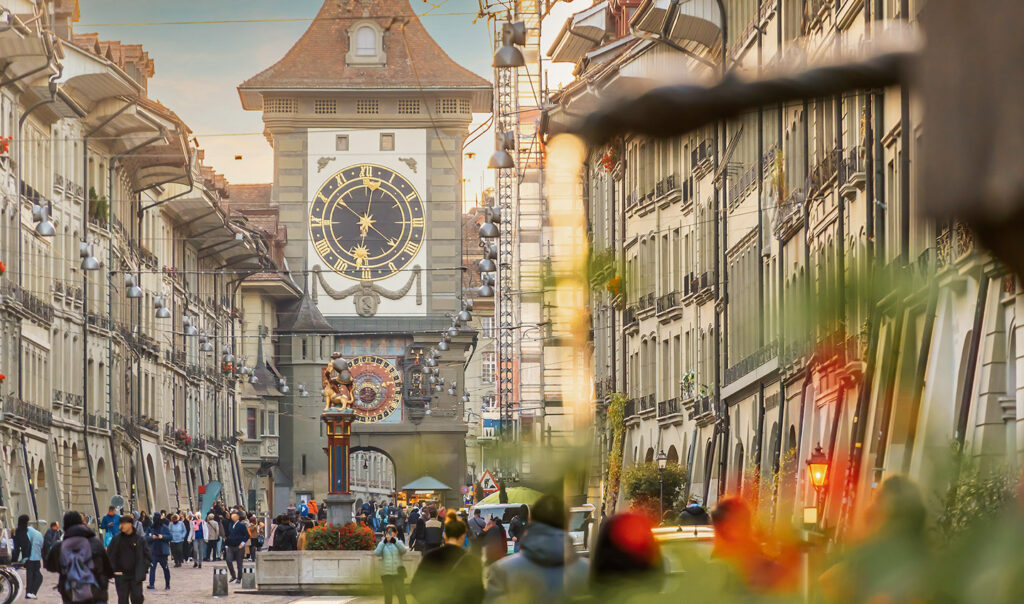
On our Bern & the Matterhorn journey, you experience that rhythm firsthand – from the medieval clock towers of Bern to the perfectly timed mountain trains that carry you into the Alps.
It’s a place where everything works exactly the way it should… which means you can stop worrying about it.
My kind of place
I still check the time way more than I should. I still show up early. I still sit in the car waiting. That’s not changing anytime soon.
But in Switzerland, it didn’t feel like a quirk. It felt like I just fit in. And honestly, that might have been the most relaxing part of the whole trip.
Now if you’ll excuse me, I’m almost late for a meeting.